Given its strategic location blended with the old maritime silk route legacy, China places Sri Lanka in the pole position of its maritime strategy.


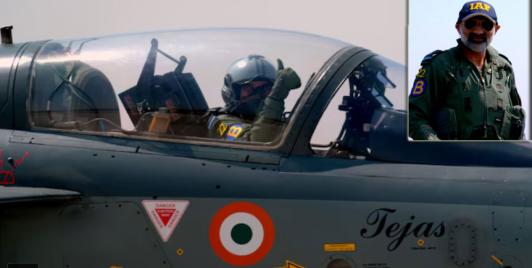
Air power will remain central to national security. Whether India has enough of it, in the right form, and can afford it in scarce dollars, is still an open question. ACM Singh is to be commended for his distinguished service and stellar leadership – and more importantly – rendering objective professional advice to the apex leadership, an increasingly rare trait in the current times.
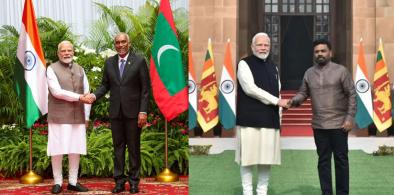
Under conditions of what is increasingly described as the "Great Fragmentation," Sri Lanka's geographic proximity to India should be viewed as a strategic advantage rather than a liability. Properly managed, this strategic reality could help transform Sri Lanka into a prosperous and stable nation.
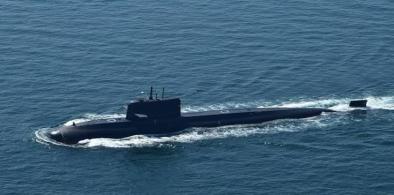
The September 27 firing is therefore best seen as the beginning of a new phase in Pakistan’s naval modernization. The larger strategic question is still open. Whether Hangor changes the regional maritime balance will depend on what comes next
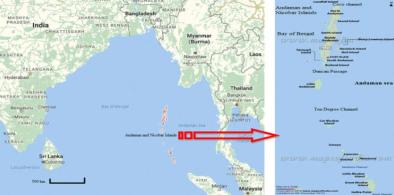
The Great Nicobar Island Development Project (GNIDP) is a mammoth venture by India to strategically strengthen its presence in the Andaman Sea and Southeast Asia with its own transshipment hub. The mega-infrastructure project spans approximately166.10 sq km covering about 15% of the total landmass of Great Nicobar Island at the southernmost tip of the Andaman and Nicobar archipelago.
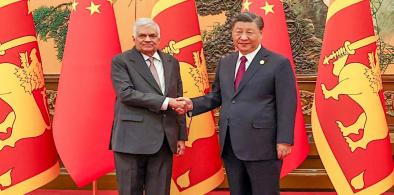
Given its strategic location blended with the old maritime silk route legacy, China places Sri Lanka in the pole position of its maritime strategy.

The EU recognises that emerging countries such as Bangladesh have a great need for cash for infrastructure development and it will be hard to turn these states away from Chinese influence unless they are provided with financial tools to meet that demand.

It is indeed intriguing to question how Nepal and India, despite similar cultural realities, have displayed contrasting interpretations.

The world may have witnessed a cricket match, but for Afghans, it was a moment of glory, pride, and unity. Afghanistan once again proves that it is more than just a country; it is a resilient and hopeful nation on the rise.

Against the backdrop of the very intimate Qatar-US relations and the US-led West supporting Israel, the charge against Indian naval veterans of spying for Israel is absurd.

In conclusion, it may be said that while South Asia, Central and West Asia and Pacific Asia showed improvement in sustainability indicators for environment and energy in 2020, they did not do so well in social and governance indicators.

The COVID-19 crisis has showcased global cooperation and a shared sense of humanity. Nations collaboratively navigated the pandemic, emphasizing a collective response and coexistence during challenging times
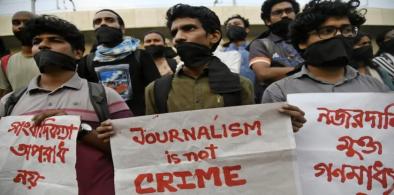
The imposition of draconian laws in Bangladesh and the government’s strenuous efforts to defend itself against the smear campaign and attacks against journalists and media persons reflect a familiar picture across South Asian nations like India and Sri Lanka where electronic surveillance and stifling dissent have become all too common

As Durga Puja approaches and the country's Hindu communities prepare themselves to embrace their beloved goddess, the leaders of the Bangladesh Hindu, Buddhist, and Christian Unity Council, a religious minority organisation, are concerned about a possible outbreak of communal strife in the nation.
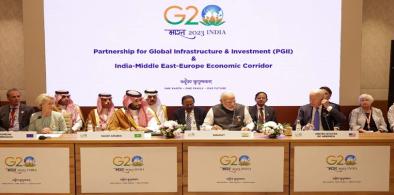
For India, IMEC is a strategic move to lessen dependency on its traditional trading partners while opening up a horizon of opportunities in markets ranging from technology to energy. Also, India is poised to countervail growing Chinese influence in South Asia if successful implementation of IMEC becomes possible.
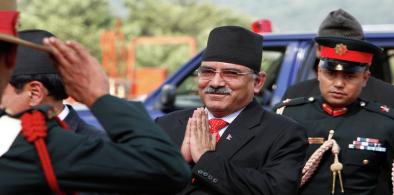
Nepal’s participation in bilateral infrastructure projects with China exemplifies its aspiration for mutual economic growth. Yet its decision to distance itself from the GSI indicates its commitment to remain neutral, given its deep-rooted ties with India.
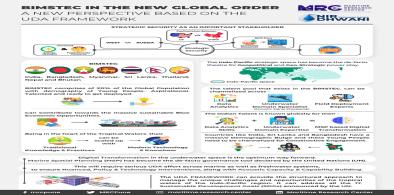
The talent pool that exists in the BIMSTEC - in countries like Bangladesh, Sri Lanka, and Thailand - can be channelized across areas of data analytics, underwater domain (acoustic signal processing) and for field deployment. Indian talent is known globally for its data analytics skills, and coupled with the underwater domain expertise, can work on the MSP-based digital transformation for the region.
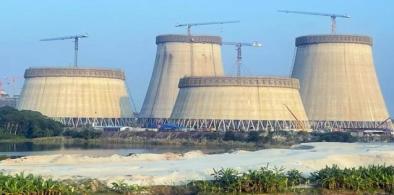
The successful operation of the Rooppur plant will underscore the commitment of Bangladesh to responsible and secure nuclear energy utilization
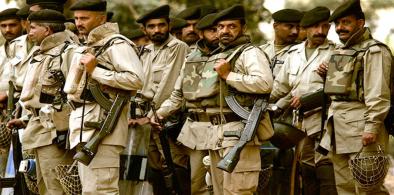
History has shown that whenever Pakistan sought peaceful relations with India, India responded positively. This held true during democratic governments and even during dictatorships in Pakistan.
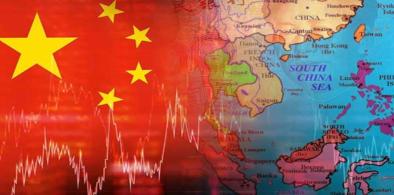
Muizzu’s regime in the Maldives in conjunction with Pakistan could be potentially sitting on China’s lap for decades, along with a pro-China government in Nepal, and Myanmar annyway drawn into China’s strategic sphere since the military coup in Nay Pyi Taw in February 2021.