
Black clouds floating over Kathmandu valley, at Swayambhu temple. Photo by Pragyan Srivastava.

Air Pollution Knows No Borders: Smog Over Kathmandu Is A Regional Failure

As the World Bank notes, isolated national actions are insufficient when pollution itself ignores borders. India, Nepal, Bangladesh, and Pakistan share the same airshed. Without cooperation, each country keeps breathing its neighbour’s mistakes. “As the government representing the largest population affected by air pollution, India should lead this effort. Instead, the region has drifted away from cooperation, and the cost has been catastrophic,” Dr Subedee said.

When Cricket Stops Being ‘Just Cricket’: South Asian Sporting Diplomacy in Retreat

This is certainly not a call to romanticise sport or overstate its diplomatic capacity. Neither did cricket ever resolve South Asia’s conflicts. But it softened their edges. It reminded the public that despite borders and disputes there existed a cultural language. The erosion of that language should now concern the whole of South Asia. Because when even the simplest forms of cultural exchange become difficult, rebuilding trust happens to be infinitely harder.      

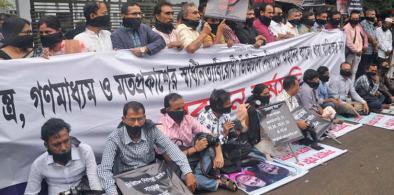
Bangladesh’s February Referendum and the Future of Secularism

Bangladesh, though Muslim‑majority, has historically significant Hindu, Buddhist, Christian, and Indigenous minorities. Removing secularism would create a profound democratic dilemma as it is the safeguard against majoritarian dominance and structural exclusion. The South Asian experience shows the risks of privileging religion in constitutions.

With India-EU Trade Deal, It's Time To Recast India's Foreign Policy

What India next needs to consider is opening a dialogue with Beijing, while remaining mindful of its security concerns. Years of hostility and China’s anti-India posturing, coupled with its hegemonic aspirations, have understandably created an atmosphere of deep distrust. However, the atmospherics are now right for a rethink as to whether current distancing serves mutual interest. The middle path approach justifies seeking out areas of collaboration, especially through enhanced trade and thereby dilute the overdependence on the US market, both for China and for India.

More on Spotlight

Trump visit: US can help India shore up its naval power

Just before the American  president  sets  course for India, a senior US official noted  that  the US wants an India that is strong with a capable military that supports peace, stability, and a rules-based order in the Indo-Pacific region, writes Cmde C Uday Bhaskar (retd) for South Asia Monitor 

Despite intense efforts, Pakistan remains on FATF grey list

Having understood the American game plan, India acted swiftly to minimise the danger by ensuring that Pakistan did not get off the 'grey list' till its compliance is fully confirmed, writes Brig Anil Gupta (retd) for South Asia Monitor

Trump visit may be high on optics, low on substance

The visit will be high on optics and low on substance as both Trump and Indian Prime Minister Narendra Modi seek relief from domestic pressures and revalidation before their citizens, writes Arul Louis for South Asia Monitor

To win war against polio, Pakistan must first win war against extremism

The issue of polio eradication has taken a perilous form in Pakistan due to the deadly mixture of militancy and developmental issues, writes Sanchita Bhattacharya for South Asia Monitor

When Trump comes calling, tech collaboration should be high on agenda

Technology collaboration by removing tariff and non-tariff barriers, specifically in the high technology segment, could be great lever of strategic and public policy partnerships for both countries, writes Kumar Deep (@kumar_deep) for South Asia Monitor

Can India enhance foreign investor confidence?

India may have jumped the rankings in The World Bank’s Ease of Doing Business but foreign and domestic investors seek improvements in the ease of doing business on the ground, especially in the states, writes N Chandra Mohan for South Asia Monitor

Modi government balancing structural reforms with ideological commitments

The 'tax charter' ushers India into a new era where the rights of taxpayers in terms of imposition and payment of taxes are recognized for the first time, writes Arun Anand for South Asia Monitor

For India's growth to revive, needed deep-going structural reforms

India Inc’s confidence will certainly be boosted with a more transparent and non-adversarial tax regime and a business-friendly policy framework that improves the conditions for doing business on the ground, especially in the various states, writes N Chandra Mohan for South Asia Monitor 

For a place at the global high table, India’s maritime strength needs bolstering

The IN has been at the forefront in supporting the country’s security and diplomatic initiatives in the region through extensive bilateral and multilateral interaction, writes Cmdre Anil Jai Singh (retd) for South Asia Monitor

India should take the lead in regional connectivity and integration

If India has to progress towards deeper engagement under the ‘Neighborhood First’ policy, it has to integrate some of the genuine concerns of its strategic regional partners, writes Kumar Deep for South Asia Monitor 

India's 'Neighbourhood First' policy: Need to put money where its mouth is

The enthusiasm Modi has shown towards the neighbourhood, through his numerous visits has not got translated in overall policy during these years, writes Alakh Ranjan  for South Asia Monitor

Popular apathy towards elections a sign of institutional shortcomings in Bangladesh?

Fracturing political institutions like the Election Commission, Parliament and the Judiciary are also responsible for the popular apathy and political decay in Bangladesh, writes Akmal Hossain for South Asia Monitor

Delhi defeat is BJP's fourth successive state loss: Is there a lesson in it for PM Modi?

The BJP may have also harmed itself by its poisonous communalism which cannot but have put off some of the party’s own sensible supporters, not to mention the Left-Liberals, writes Amulya Ganguli for South Asia Monitor

US pullout from Iraq will embolden Taliban in Afghanistan

The US pullout from Iraq, which will be perceived as withdrawal under pressure, will have a fallout in Afghanistan, writes Lt Gen PC Katoch (retd) for South Asia Monitor

Fate of a film: How Pakistan is stifling creativity at the altar of extremism

In a country like Pakistan, where freedom of expression is strictly curtailed, guaranteeing that everything is in line with an openly orthodox and conservative interpretation of religion will only multiply the problem, writes Sanchita Bhattacharya for South Asia Monitor