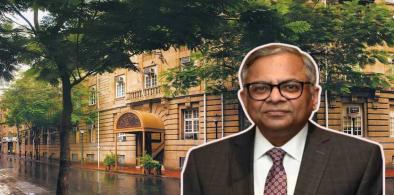
Somnath temple

Somnath Temple: Instrumentalizing History As A Political Tool

History is not a tool to divide society and perpetuate the injustices of the past. It is there to show us what wrongs have happened in the past which should not happen again. We need to march towards a just society where all live the life of dignity and respect, a society where all of us enjoy equal citizenship rights.

Sri Lankan Government In A Fix Over Proposed Education Reforms: PM Under Pressure

Public opposition towards the reforms escalated after a web link to a gay dating site was found in one of the lessons in the grade six English language module.  This website was subsequently blocked by the regulator for internet users in Sri Lanka.  The lesson was intended to teach ten-year-old kids how to make online friends.

India's Celebrated Space Programme Under Cloud: ISRO’s second successive rocket failure Raises Uncomfortable Questions

Producing satellites for any purpose is an expensive endeavor. Failure to launch them has a profound impact not just on the client entities’ bottom lines but even the quality of science and services they may be seeking to pursue. Fifteen out of the sixteen satellites on the failed mission were from foreign entities, which constitute a lucrative market for ISRO. If they begin to nurse misgivings about ISRO’s reliability it can seriously dent not only the agency’s revenue but, more important, its reputation

Internationalisation Of Higher Education In India Is Key To India's Social Progress And National Strength

Internationalisation also plays a crucial role in addressing the long-standing issue of brain drain. For decades, large numbers of Indian students have pursued higher education abroad, particularly in North America, Europe, and Australia. While this has strengthened India’s global presence, it has also resulted in substantial outflow of talent and financial resources. Many students who leave choose not to return, contributing their skills to other economies.


More on Perspective

Can India ever catch up with China? Third-largest economy is stuck in middle-income trap

The first “I” of the World Bank stands for investment, which India must increase to 40 percent of GDP. It must also increase labour force participation of women from 35 to 50 percent.  The second “I” refers to infusion of new technologies, by linking with global value chains, by trade agreements, and reducing tariffs and barriers to foreign investment.  The third “I” is innovation, meaning enabling greater investment in research and development

Was Dr. Yunus’s Resignation Drama In Bangladesh Mere Bluff And Bluster?

The real motive behind Sheikh Hasina’s removal, as widely suspected, lies in her steadfast refusal to allow a U.S. military base on St Martin’s Island—an outpost that would give America strategic leverage over Southeast and East Asia. Her resistance to such neocolonial imposition sealed her fate.

Does Shashi Tharoor have a future in the Congress party?

If Tharoor is indeed disciplined, the Congress Party would have confirmed the popular perceptions of its aversion to intra-party democracy. The extreme form of punishment, of course, would be his expulsion, something that the leadership is unlikely to risk given its electorally vulnerable position. With 99 parliamentary seats, the Congress Party cannot afford to lose any of its members no matter how some of them may step out of the line occasionally.

Pahalgam Tragedy: Need To Stem The Rising Spiral of Hatred

The path forward lies in returning to the principles espoused by former Prime Minister Atal Bihari Vajpayee—Insaniyat (humanism), Kashmiriyat (the unique cultural identity of Kashmir), and Jamhooriyat (democracy). As Vajpayee aptly said, “Friends can change, but not neighbours.” The vilification of Pakistan by the Hindu Right, amplified by a hate-spewing media, has real consequences for Indian Muslims. It poisons the domestic atmosphere and jeopardizes social cohesion.

After The Ceasefire: India Has More At Stake To Keep The Peace

So high military spending is inevitable. But it is clear that peace is not possible without economic prosperity at home. It is also clear that projecting power abroad is not possible without high, sustained and inclusive economic growth.  It is clear that a conflict free, relatively peaceful India will attract the maximum foreign capital in the world.  For this to happen, we have to invest in building peace, and reiterate to the world, that this is not an era of war.

Baying for blood cannot be the way to peace: Case for restraint in a time of conflict in South Asia

Gender politics pervades security decisions. The war-mongering media chorus was mostly male; the decision-makers at the televised but closed-door meetings were mostly male; those who will go into battle and therefore, those killed or injured will be mostly male; and those whose words about security get read and quoted are mostly male. Women still play a minor role in all these areas but are largely the majority of those bereaved, displaced, assaulted sexually, left supporting families and without assets.

Vizhinjam Port Project: A Turning Point in India's Communist Movement?

The commissioning of the Vizhinjam Port under a public-private model reflects a progressive shift in the Indian communist movement without compromising its core values. It demonstrates that modern communism in India can adapt pragmatically while upholding its commitment to equity.Can one then say that the Vizhinjam Port is a symbol of ideological transformation and a turning point for the communist movement in India?

Can Indus waters issue be de-linked from historic grievances? (Reproduction of a 2010 piece by late Harvard professor and water resources expert John Briscoe)

If Baglihar was the only dam being built by India on the Chenab and Jhelum, this would be a limited problem. But following Baglihar is a veritable caravan of Indian projects – Kishanganga, Sawalkot, Pakuldul, Bursar, Dal Huste, Gyspa. The cumulative live storage will be large, giving India an unquestioned capacity to have a major impact on the timing of flows into Pakistan

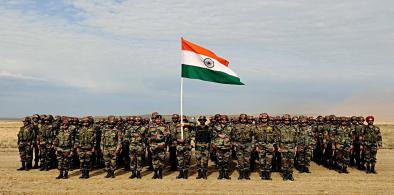
IPKF denied official battle honours for 35 years for Sri Lankan operation

In 2019 the National War Memorial was at long last constructed in Delhi and from 2021 IPKF veterans and their family members began getting together there in March every year to commemorate the sacrifices of their comrades.  This year, marking the fifth get-together since 2021, the response for the get-together was well over hundred Veterans, Veer Naris (widows of personnel killed in action) and various family members, including some grandchildren of the IPKF personnel.

'Terrorists enjoying safe havens today can easily turn against their hosts tomorrow'

Islam is a great religion, and its followers have a responsibility to ensure that extremists do not continue to tarnish its image. While the global community must persist in its fight against terrorism, the voice of the Muslim community carries special weight in this context. It is imperative that Muslims around the world help reclaim their faith from those who misuse it to justify violence.

Will the lament of a crash-killed fighter pilot’s mother move the nation to act?

IAF is also the only major air force that operates seven different fighters – Su-30MKIs, upgraded MiG-29 Ms, retrofitted Mirage 2000Hs, Jaguars, MiG-21s and Rafales, making their maintenance, repair and overhaul (MRO) an ordeal.

Ambedkar had warned of potent dangers to India's democracy

Thanks to Ambedkar, India adopted modernity via an extremely enlightened constitution which is a living, throbbing document, open to amendments. But constitutional morality is not in our genes. It has to be cultivated as a habit. In our actions and administration; the spirit of the constitution must not be forgotten. This is but one of innumerable exhortations of one of the tallest leaders of modern India

Reaching healthcare to a rural, remote world: Doctor sensitisation is the key

Doctors from India, Australia, America, New Zealand, Norway, Nepal and Sri Lanka discussed rural healthcare challenges at the three-day World Rural Health Summit in Bengaluru

Dilemma of dealing with a fractured America in a disrupted world order

This is not the new world order that was envisaged when the WTO was formed, or indeed when the series of multilateral institutions took shape in the aftermath of the chaos of the World Wars, or indeed the world in which countries like India agreed to go with frameworks like the new intellectual property rights regime 

A New Era of Regional Unity under Yunus’s Leadership in BIMSTEC?

At the 6th BIMSTEC Summit, Dr. Muhammad Yunus assumes leadership, signaling a transformative era for regional cooperation. His four-point proposal emphasizes people-centric growth, climate action, digital equality, and youth leadership—offering a visionary path for South and Southeast Asia.