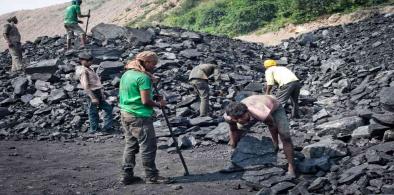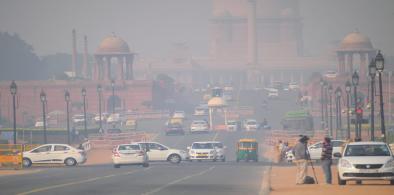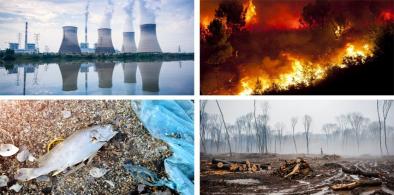

Despite various programs—green hydrogen, EVs, biofuels—India’s fossil fuel consumption and import dependency are still growing. The current strategies appear insufficient to reverse this trend. There is a critical need for out-of-the-box thinking
The rhetoric targeting these nations ignores the fact that they steer the very firms—Google, Microsoft, Adobe—that sustain Western dominance. This wasn't "loophole" migration. It was strategic resource acquisition. During the Y2K crisis, the U.S. was desperate for Indian talent to prevent a digital infrastructure collapse.
Authorities must ensure transparent and impartial investigations, free from political or communal bias. Corporations like TCS should proactively counter misinformation and reinstate employees found to be innocent. At the same time, the Indian media must uphold professional standards of verification and accountability.
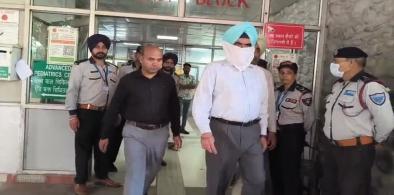
The effect of the award of a death sentence to as many as nine policemen in one go can be electrifying in the way it can jolt a system that has resisted all reform. The signals this verdict sends out will hopefully serve to warn law enforcers across the county that the law will catch up with them too and make them pay a heavy price for crossing boundaries. Society has to begin seeing custodial deaths and their attendant staged killings, called as "fake encounters", and extra judicial killings as cold-blooded murders for which the nation must have zero tolerance.
In a world moving toward multipolarity, information itself has become contested terrain. Events are no longer just events; they are immediately absorbed into competing narratives. The same incident is read differently depending on where one stands and what one is inclined to believe.
Despite various programs—green hydrogen, EVs, biofuels—India’s fossil fuel consumption and import dependency are still growing. The current strategies appear insufficient to reverse this trend. There is a critical need for out-of-the-box thinking
One has to bear in mind that the two pilots, Captain Sumeet Sabharwal, 56, and First Officer Clive Kunder, 32, were very familiar with the aircraft. Captain Sabharwal had logged approximately 15,600 flight hours, including nearly 8,600 hours on the Boeing 787 and Kunder had around 3,400 flight hours, with over 1,100 hours on the 787. It is impossible to imagine that either of them was not fully knowledgeable that turning off and turning on fuel switches is a function that requires deliberate physical action.
While it is true that “socialist” and “secular” were inserted in the preamble by the 42nd Constitutional Amendment Act during the Emergency, which remains a dark chapter in the history of free India, it is not true that the values go against the grain or the spirit of the constitution. These are effectively the only parts of the amendment that sit today 50 years down the line.
However, a point will come soon when he has to make a choice and that choice is not necessarily the BJP even in the unlikely event of him being offered the position of India’s foreign minister in place of Subramanyam Jaishankar. The choice is also not necessarily leaving the Congress Party even if it means being treated cavalierly. The problem with him is that his entire appeal comes from his seemingly defiant equidistance from both the main parties.
What stands out amidst this global indifference is the Dalai Lama’s unwavering grace. He harbours no ill will—not even towards China. In a world increasingly defined by conflict, coercion, and fractured diplomacy, the Dalai Lama remains an embodiment of moral strength and compassion, committed to the principles of non-violence and interfaith harmony.
There is increasing evidence that Trump has offered Pakistan advanced military equipment and financial aid in exchange for strategic cooperation—particularly access to airbases and logistics. How this plays out remains to be seen. India, meanwhile, finds itself once again let down by the U.S. Trump appeared unable to tolerate that India succeeded in neutralising Pakistan’s military and terror assets without American help and refused to validate his false claims of mediation.
The optics of the lunch are certainly not to India’s liking, but its consequences may not turn out to be as unsettling as might be apprehended in certain quarters. It surely gives Pakistan a profile in Washington that it was craving to have.
India will soon need to focus on reducing relative poverty and inequality too since the spoils of high economic growth cannot be cornered by a small few at the top. The elimination of extreme poverty in the next five years is a good shot in the arm, but in the journey toward a developed nation India has much work to do.
While New Delhi was responding to Islamabad’s military provocation, Pakistan’s narrative machinery moved with sophistication, especially within Western media ecosystems. Coordinated messaging from Pakistani Foreign, Defence and Information Ministers, amplified by diaspora networks and international broadcasters, often outpaced India’s more formal communication approach. Moreover, several Western media outlets, operating on incomplete information, questioned the legitimacy and proportionality of India’s actions
On the streets of Dhaka, terror reigns, as well as across the country. Anti-establishment students are roughed up for speaking out. Extremist mobs roam with impunity. Police stations are besieged and overrun, as in the shocking Shahbag incident. Women are threatened into silence. Hindu families are forced to cancel weddings under threat of religious violence.
In a consumption-driven economy like India, expanding credit access—through microfinance NBFCs and fintech lenders—is crucial. However, regulators aInd policymakers must closely monitor this space to avoid large-scale defaults. While underserved consumer segments depend on such loans for upward mobility, repayment capacity must not be overlooked. Sustainable livelihoods and employment generation will be essential to ensuring both credit access and creditworthiness.
We are living in strange times where religion is being blatantly used in pursuit of a political agenda. The Buddha temple is being led on a Brahminical path; Sufi shrines are being Brahmanized. The agitation by Buddhist monks to restore their sacred place to their norms and beliefs is one such example of opposition to impose values that run counter to those of equality and non violence preached by Lord Gautam Buddha.
The Happiness Survey reveals mega cities have increased stress levels despite employment opportunities. Overcrowding, social disconnection, and environmental issues disturb the urbanites. Small cities and villages report higher happiness due to stronger social bonds and lower cost of living.
India should also explore other avenues to reduce crude oil imports. Ethanol production can be increased through alternate, non-food feedstock like algae. Algae can grow on wastelands or coastal areas, requires no freshwater, and thrives on sunlight and carbon dioxide. Algae species contain around 20% oil, making them ideal for biofuel.
The first “I” of the World Bank stands for investment, which India must increase to 40 percent of GDP. It must also increase labour force participation of women from 35 to 50 percent. The second “I” refers to infusion of new technologies, by linking with global value chains, by trade agreements, and reducing tariffs and barriers to foreign investment. The third “I” is innovation, meaning enabling greater investment in research and development