In Ladakh, it is not just 150 sq km of pasture land allotted to corporates for solar power projects, but also the mining on land of corporate choosing. Why bother about the ecology, environment and disasters?


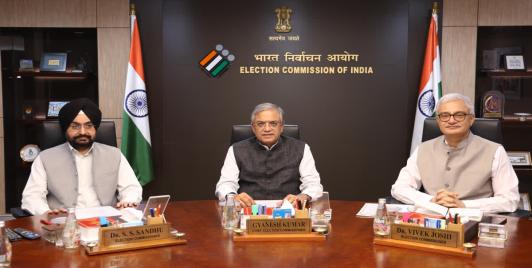
The Election Commission belongs neither to the government of the day nor to the Opposition. It belongs to the people of India. Its first duty is to protect the citizens' vote. That is the standard by which the CEC, the two ECs should be examined.
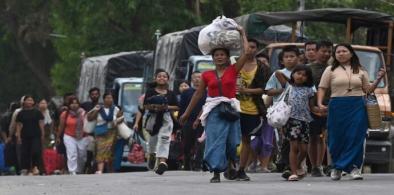
Manipur therefore needs to move beyond the language of relief and towards the language of restoration. The ultimate measure of recovery will not be how many camps have closed. It will be how many families can safely return, rebuild their livelihoods, educate their children, access justice and live without fear.

The Chopra siblings' murder in 1978, the Nirbhaya case of 2012, R.G. Kar Kolkata in 2024 and Kalkaji in 2026 belong to different historical contexts. Yet they reveal a recurring difficulty in Indian governance: we are capable of extraordinary mobilisation after extraordinary violence, yet less consistent at converting that mobilisation into permanent institutional practice.

The Tata group is a national icon, a picture of enterprise, growth and service packed in a business model that many Indians cherish and hold as an exemplar. That model, in which the bulk of a great enterprise’s profits flows to charitable trusts for the public good, is rare anywhere in the world.
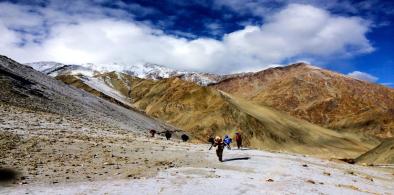
In Ladakh, it is not just 150 sq km of pasture land allotted to corporates for solar power projects, but also the mining on land of corporate choosing. Why bother about the ecology, environment and disasters?
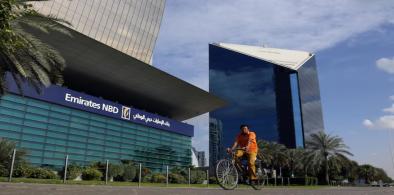
If executed smoothly, this transaction will serve as a template for future cross-border collaborations, especially within the framework of CEPA and the broader India–UAE economic corridor. It demonstrates that when capital, strategy, advisory prowess and bilateral ambition converge, remarkable outcomes follow.
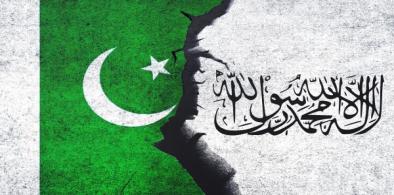
With nine terrorist camps destroyed by India in Op Sindoor, the Lashkar-e-Taiba (LeT) and Jaish-e-Mohammed (JeM) camps in Pakistan are being relocated deeper inside – in the Khyber Pakhtunkhwa region. This could bring them in conflict with the TTP, unless they decide to join hands. Notably, Pakistan has formed an alliance between the LeT and the Islamic State Khorasan Province (ISKP or ISIS-K)

A possible model based on Spirituality + Technology = Sustainability and Happiness may help in reducing greed, provide equitable distribution of resources and provide a new paradigm of development not only for India but for mankind. Once the mighty engine of innovation starts in India then the Darwinian evolution of the disruptive model of Phillipe Aghion and Peter Howitt will follow.
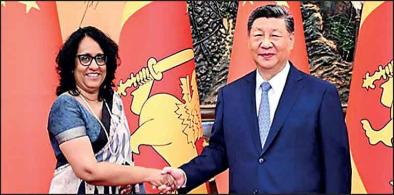
The island-nation’s strategic location in the Indian Ocean has placed it at the centre of intensifying geopolitical competition and rivalry between China and India. Sri Lanka’s experience in balancing its own priorities and needs with the competing interests and concerns of India and China through the lens of project financing has largely succeeded despite occasional hiccups
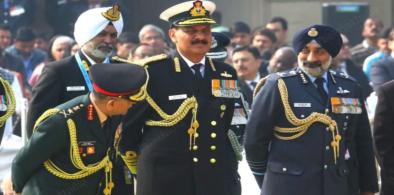
Theatreisation of military, while conceptually appealing, is not a one-size-fits-all solution. India’s strategic geography — with two contiguous adversaries, interlinked land-sea challenges, hybrid threats, and extraordinarily diverse terrain — does not lend itself to neat theatre divisions.
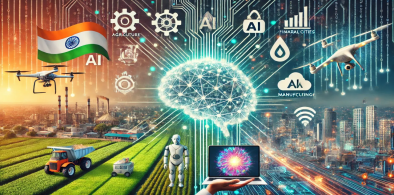
AI is proving to be more than just a digital tool; it is becoming a fiscal multiplier. By tightening compliance, improving revenue forecasts, preventing leakages, and guiding expenditure, AI is reshaping India’s fiscal landscape. Recent tax reforms under the GST regime adjusting slabs to reduce rates on essentials while taxing luxury goods higher were made possible through AI-driven fiscal analytics.
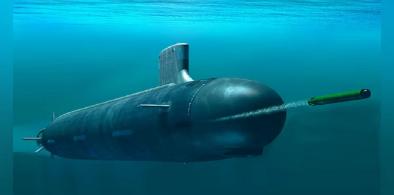
India’s underwater defence remains a top priority. The Navy currently operates 19 submarines—16 conventional and three nuclear-powered (including two ballistic missile submarines and one leased nuclear attack submarine). China, by contrast, possesses 60–70 submarines, including 12 nuclear-powered platforms, and aims to grow to 80 submarines within the decade
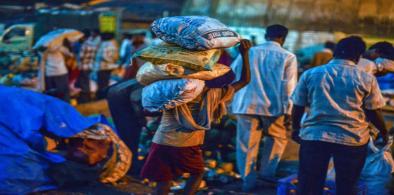
When companies see they can get away with violation of labour laws or erode the dignity of workers or do worse with regard to their workforce, more violations of the kind will follow. The only antidote is to put down illegality with an iron hand, to impose exemplary costs on businesses that have little regard for people and to send the message that violations will be met with firm and swift action.

This controversial project of the mid-1980s, inspired by Israeli models, ultimately failed to achieve its intended outcomes. Nevertheless, Israeli involvement left a lasting imprint on the Mahaweli Development Project and agricultural settlements in Sri Lanka. The continuing association between the military and the Mahaweli Development Project may, in part, be attributed to practices introduced by Israeli advisers during the 1980s.

India’s economic self-reliance is not about shutting the doors to the world. It is about standing firm during crises, reducing vulnerabilities, and becoming globally competitive. The philosophy of Atmanirbhar Bharat represents a pragmatic approach: be self-reliant in areas where dependence is dangerous, and globally integrated in sectors where India can lead.

The Indian software and IT services giants have for long been accused of running body shops, a business fashioned out of what essentially is labour arbitrage turned into a fine art. The sector has consistently denied this, arguing that they have moved up the value chain and that they compete on quality, not price.

When I think back to Wagah, what stays with me is not the barbed wire, but the wind -- the same wind moving across the border without asking permission. I think of rivers that carry stories of children whose laughter sounds the same in Lahore, Delhi, Dhaka, and Kathmandu.
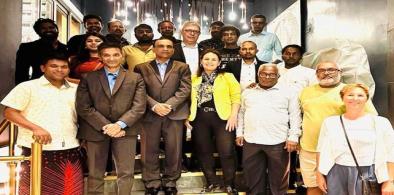
On the face of it, the misplaced hysteria surrounding the visit made by Sri Lankan journalists to Israel is fuelled by shadowy factors intending to promote a one-sided narrative in which the State of Israel stands as the perennial villain. The beguiling picture planted in Sri Lankan society is portrayed through the moral binaries: good vs evil, victim vs oppressor, and Palestine Vs Israel.
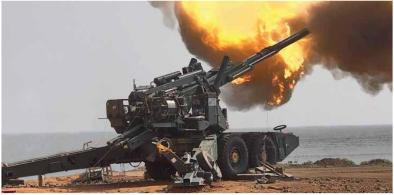
India has moved from being a buyer to a designer of world-class artillery. ATAGS exemplifies that shift. To convert design success into strategic mass production, India needs synchronized demand signals, targeted metallurgy R&D, modular manufacturing lines, automation, and rapid validation corridors — all underpinned by ACCCS-style digital integration. With these measures, ATAGS can transition from a technological showcase into the backbone of an Indian artillery corps