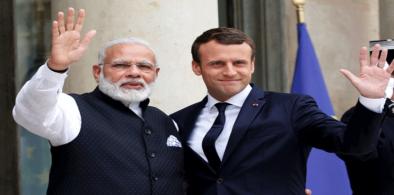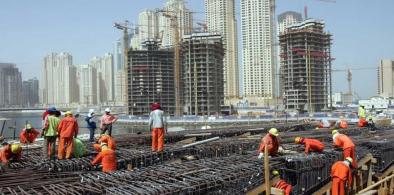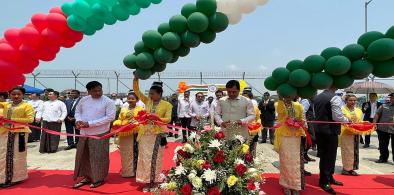
The CEPA’s larger significance is that it serves as a template for an FTA with the Gulf Cooperation Council (GCC) whose members include Saudi Arabia, Kuwait, Oman, Qatar and Bahrain, writes N. Chandra Mohan for South Asia Monitor
Moderator Khushi Kabir repeatedly situated Nepal’s uprising within a broader South Asian context, drawing parallels with recent mass movements in Sri Lanka and Bangladesh. She described Nepal’s experience as part of a regional reckoning driven by youth demanding accountability, dignity, and meaningful participation in governance.
With PNS Khaibar's delivery Pakistan and Türkiye are taking their relationship to a new level which is not limited to traditional political friendship. At the handover ceremony, Erdoğan described the relationship between the countries as "brotherly ties" and emphasised the need to further collaborate in defence production. The naval leadership of Pakistan also pointed to the fact that the partnership should benefit Pakistan in achieving its overall maritime modernisation.
What is unfolding in Bangladesh bears unsettling resemblance to trajectories seen in Pakistan and Afghanistan, where false blasphemy accusations have long been used to terrorize minorities and silence dissent. Once such violence is tolerated, it expands - devouring journalists, artists, reformist Muslims, and eventually the state itself.
The current strains in Bangladesh–India relations should therefore be seen not as an inevitable deterioration, but as a test of diplomatic maturity. Bangladesh and India share more than geography and history; they share a responsibility to ensure that temporary political frictions do not harden into structural mistrust. In a time of regional uncertainty, neither country benefits from a relationship defined by grievance or miscommunication.
The CEPA’s larger significance is that it serves as a template for an FTA with the Gulf Cooperation Council (GCC) whose members include Saudi Arabia, Kuwait, Oman, Qatar and Bahrain, writes N. Chandra Mohan for South Asia Monitor
The junta will likely leverage the hearings to gain substantial de jure recognition as the legitimate government of Myanmar within other UN bodies and beyond, writes Parvej Siddique Bhuiyan for South Asia Monitor
As of now, Pakistan’s much-sought ‘strategic depth’ with a friendly government in Afghanistan has proved elusive, writes Mahendra Ved for South Asia Monitor
Millions of Indian cricket fans across the globe are the real foundation of the Indian cricket board's financial power, writes Qaiser Mohammad Ali for South Asia Monitor
The Hindu rightwing gets its due provocation from Muslim communalism and extremism. Is there any role of Muslim communalists in fueling the hijab row?, writes Ram Puniyani for South Asia Monitor
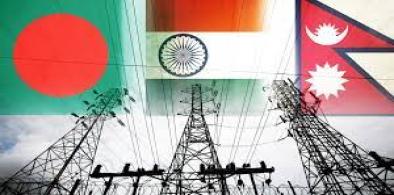
Nepal will be permitted to export power to Bangladesh via India at a later time in order to fulfill the expanding energy demands of that country, writes Benedict B. George for South Asia Monitor
Russia is well aware of how Pakistan has been facilitating the movement of ISIS cadres from Iraq-Syria into northern Afghanistan at the behest of the US, writes Lt Gen P.C. Katoch (retd) for South Asia Monitor
It takes no great political intelligence to point out that a tumultuous democracy like India desperately needs a credible national counter to Modi’s BJP, writes Mayank Chhaya for South Asia Monitor
One major reason the Indian Army has not allowed women officers in fighting arms and would not like to do so is that it does not want them captured by the enemy, writes Col Anil Bhat (retd) for South Asia Monitor
The recent trends in elections have shown undeniable evidence that women no longer remain passive voters, writes Shraddha Nand Bhatnagar for South Asia Monitor
Connectivity and infrastructural development with Bangladesh will also open up new routes to India's Northeast, Bhutan and Nepal, writes Benedict B. George for South Asia Monitor
Such recognition by UNESCO, whether of Durga Puja or Srinagar as a Creative City, helps to underline that India’s culture is a living culture, writes Amb Bhaswati Mukherjee (retd) for South Asia Monitor
Numbers have defied easy recording, whether Lata sang 25,000 songs or 30,000, for an estimated 1,000 films, writes Mahendra Ved for South Asia Monitor
The fact remains that as long as India, Nepal and Bhutan do not protest Chinese aggressive moves because of political compulsions China will keep having its way, writes Lt Gen P. C. Katoch (retd.) for South Asia Monitor
With heightened external geopolitical fissures in the region, balancing infrastructure diplomacy between China, India and the US is indeed a daunting challenge for Sri Lanka, writes Sugeeswara Senadhira for South Asia Monitor