

Crunch Point For World Cricket: Power Politics And Double Standards Unfairly Rob Bangladesh Of Participation
Ultimately, Bangladesh’s absence from the 10th edition of the T20 World Cup was the result of the BCCI’s ego and the ICC’s double standards where power politics and selective decision-making outweighed fairness and sporting integrity. Although many view the Pakistan Cricket Board’s support for Bangladesh positively, in reality it is also a strategic move to counter India for its own strategic benefit. If the match is boycotted, Bangladesh will suffer even greater financial and administrative losses.
 Feb 08, 2026
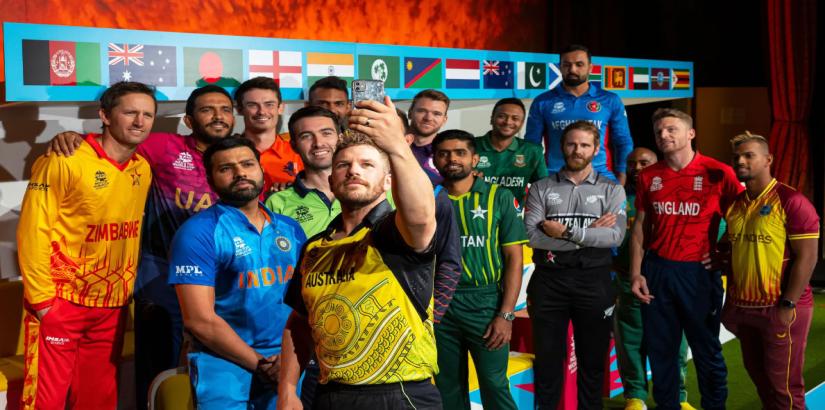
Cricket is now widely known as the second most popular sport. It is that kind of sport which connects people across all corners of the world. Even Test matches, One-day Internationals and modern Twenty-Twenty cricket matches are organised among teams from seven continents, which is not only a source of entertainment but also a pure source of revenue collection. The International Cricket Council(ICC) is the main body to control the sport. The law, the procedure, the arrangement and all its functions have been conducted by them to popualise the game which is now becoming an Olympic sport.
On 7th February, 2026 the 10th edition of Twenty-Twenty World cup commenced in India and Sri Lanka, who are joint hosts, among 20 countries who qualified through zonal competition. Where Bangladesh should have participated in the Group C along with England, West Indies, Nepal and Italy, ironically, they have been eliminated even without playing a single match.
However, In the wake of reports that Bangladesh’s star pacer Mustafizur Rahman was dropped by the Kolkata Knight Riders on 2nd of January,2026 amid alleged threats from Hindutva groups, the Bangladesh Cricket Board (BCB) formally approached the ICC on 4th January 2026, raising serious concerns about the security of Bangladeshi players in India and requesting that the tournament venues be shifted to Sri Lanka to ensure their safety. The BCB argued that player security was a fundamental obligation and that only a neutral venue would uphold fairness and equal treatment. However, the ICC rejected this request, Consequently, the BCB withdrew from the tournament to uphold institutional dignity and formally protested what it viewed as discriminatory and unequal treatment. Except for the Pakistan Cricket Board(PCB), no other cricket board reportedly supported Bangladesh.
Bangladesh Victim Of Unfairness
After 5th August 2024, a sustained diplomatic strain has persisted between Bangladesh and India, resulting in a deterioration of political relations between the two countries. It is inappropriate to use cricket as a political tool or a “cat’s paw,” something India appears to be attempting in order to manipulate outcomes or satisfy national ego. From the 2025 Asia Cup through to the Champions Trophy, India was permitted to play at neutral venues such as Dubai instead of participating in tournaments hosted in Pakistan, entirely in line with its own preferences. The primary justification cited was political tension between India and Pakistan that had given rise to security concerns. If this accommodation was granted to India, why should similar accomodation not be extended to Bangladesh? If security cannot be ensured for even a single player, how can it be guaranteed for an entire team? Yet, Bangladesh was asked to play the World Cup under such challenging circumstances, a situation that is nothing short of absurd.
The ICC has long maintained that political interference in cricket constitutes grounds for suspending or banning a member board if the sport is harmed politically. As stated in Article 2.4 of the ICC constitution, “a member board must be administered independently, without any governmental or external interference.” In the past, despite political tensions influencing cricketing relations between India and Pakistan, the ICC facilitated continued participation of both teams and against each other in ICC tournaments.
In contrast, Bangladesh appears to have faced a far harsher terms. When the team recently requested a change of venue on the grounds of player welfare and security concerns, the appeal was denied and Bangladesh ultimately became entangled in legal and administrative complications that led to its exclusion from the World Cup. This disparity raises serious questions about double standards in governance and whether the ICC applies its rules uniformly or selectively, depending on the teams involved.
Power Projection And Strategic Diplomacy
Taking advantage of the situation, Pakistan found another strategic avenue to strengthen its diplomatic relationship with Bangladesh by leveraging a symbolic act of soft power—boycotting a match against India. By explicitly stating that the boycott was carried out in support of Bangladesh, Islamabad is attempting to signal political alignment and goodwill toward Dhaka. This move reflects a broader objective: Pakistan appears keen to capitalize on the gradual diplomatic distancing between Bangladesh and India and to deepen that detachment further. From Pakistan’s perspective, any additional strain in India–Bangladesh relations could create space for a stronger and more cooperative Pakistan–Bangladesh partnership, driven by shared political sentiments and regional recalibrations rather than formal diplomatic mechanisms. Former England captain Nasser Hussain observed, “So maybe it is a real crunch point because the only way Pakistan can hurt the ICC or even India is with the money and the finances of that India–Pakistan game. That’s the only way,” he said on a podcast with Michael Atherton.
Ultimately, Bangladesh’s absence from the 10th edition of the T20 World Cup can be attributed to the BCCI’s ego and the ICC’s double standards, where power politics and selective decision-making outweighed fairness and sporting integrity. Although many view the Pakistan Cricket Board’s support for Bangladesh positively, in reality it is also a strategic move to counter India for its own geopolitical advantage. If the match is boycotted, Bangladesh will suffer even greater financial and administrative losses. This decision by the BCB nonetheless sends a clear message to the ICC and the international community about how unfairness towards one country can ruin the future of a game that is almost a religion across South Asia.
(The author is a foreign policy and security analyst and educator who holds a postgraduate degree from the Department of International Relations, Rajshahi University, Bangladesh. Views expressed are personal. He can be contacted at alaminislamshuvo16@gmail.com)





Post a Comment