The US has continued to support Pakistan for short-term geopolitical considerations. On the other hand, the US has been unfair to Bangladesh by alleging that the democratic process there had been disrupted.


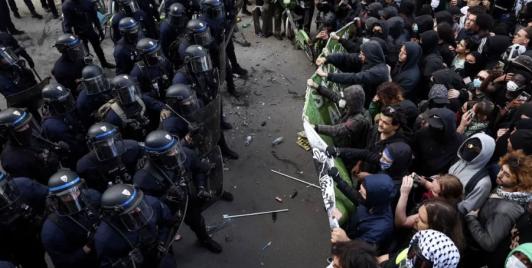
Southern Europe shows that mobilisation can reshape political agendas while leaving difficult economic questions unresolved. South Asia shows that a narrow grievance can become a challenge to the legitimacy of a governing system when trust has already been eroded. The real test of governance is whether institutions learn between storms—before the next generation concludes that the street is the only place where its voice can be heard.
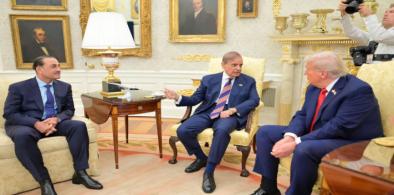
At independence, Pakistan's economy was competitive with India's. Today India's is more than ten times larger, and Pakistan is on roughly its 25th IMF program. Investors rarely abandon a country simply because it is poor. They leave when they cannot tell who actually decides.
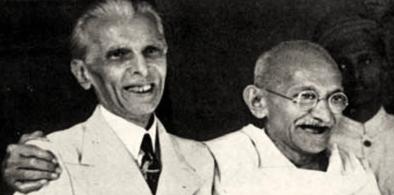
The young need not become another opposition. They could become an independent democratic force that questions every government but belongs to none; that protests when necessary but constructs continuously; that demands accountability from institutions while practising accountability itself.
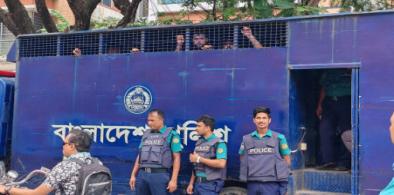
To what extent has the current BNP government been able to realise the vision that drove the 2024 mass uprising in Bangladesh? Will the BNP government, too, manipulate state mechanisms and law enforcement agencies to serve its own interests, much like the previous Sheikh Hasina regime, to suppress the opposition and silence critics? The government must therefore take serious steps to amend police laws and prevent deaths in police custody. This is one of the crucial reforms facing the administration.
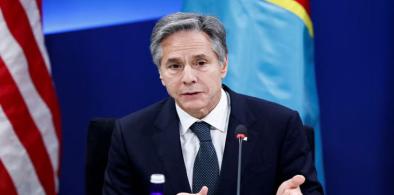
The US has continued to support Pakistan for short-term geopolitical considerations. On the other hand, the US has been unfair to Bangladesh by alleging that the democratic process there had been disrupted.
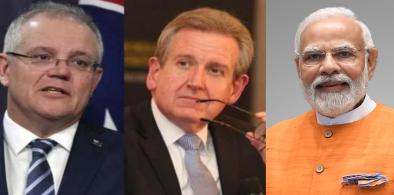
The relationship has grown with extraordinary speed. India and Australia are strategic partners – unthinkable a few years ago! An extraordinary bipartisan friendship reflects the way in which both countries have now come to see each other.
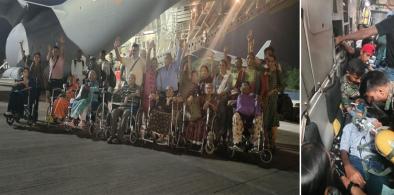
This approximately two-and-a-half-hour operation between Wadi Sayyidna and Jeddah, Saudi Arabia will go down in the annals of IAF history for its sheer audacity and flawless execution - akin to that carried out in Kabul, in which almost 400 Indians were brought back by the IAF in August 2021 in very challenging conditions following the Taliban takeover of Afghanistan.

The rise and fall of FTX’s co-founder Sam Bankman-Fried, a poster boy of the crypto world and seen as a genius, tells a story that has important learnings for all of us. A key learning is that, though talent or ingenuity can erect an empire of fame and riches in a short time, yet devoid of moral and ethical moorings, it can wreak havoc in the long run.
Since the late 1970s, the Indian Army has been paying a heavy price of losing good soldiers in asymmetric warfare waged by Pakistan, which involves having large bodies of regular troops committed on the ground for dealing with a 'handful' of the enemy.
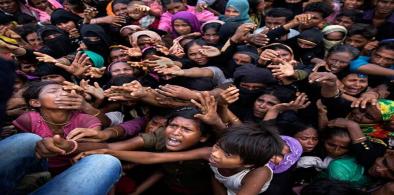
Analysts see the rice-potato trade between the two countries as an extension of their stepped-up bilateral diplomacy. Their expectation is that this incipient commercial relationship can play a major role in resolving the Rohingya humanitarian crisis
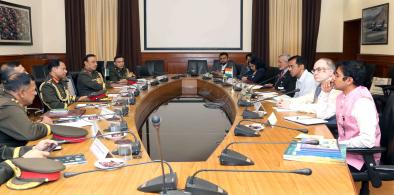
India can assist Bangladesh in achieving the goal of Bangladesh’s military plan “Forces Goal 2030,” a modernization programme that aims to transform Bangladesh's army into a technologically advanced, multi-domain force by 2030.
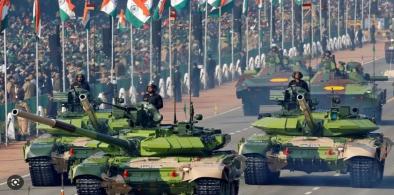
Military spending calculated as a share of the Gross Domestic Product (GDP) was 2.4 per cent for India, an estimated 1.6 per cent for China, 2.6 per cent for Pakistan.

On the one hand, India sees itself as the rising global power, the head of G20 today, and with an economy that is the fifth largest in the world by GDP. On the other hand, India is the story of flourishing gangsters who when they get too big must be taken to a secluded spot and shot.
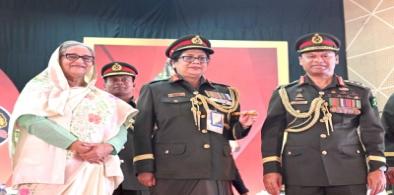
Bangladesh's zero-tolerance policy against militancy is bearing fruit. So far, eight militant organizations, namely JMB, Shahadat-e-al-Hikma, JMJB, Hizbut Tahrir, Huji-B, ABT, Ansar Al Islam, and Allahr Dal, have been banned by the government. Prime Minister Sheikh Hasina's tough stance has made it possible to virtually dismantle the militant network in Bangladesh.
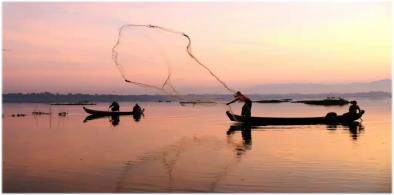
Herman Kumara, the national convener of the National Fisheries Solidarity Organization (NAFSO) in Sri Lanka, strongly opposes the practice of keeping arrested fishermen in jail even after their punishment has been served.

Today, what is needed is a genuine assessment of the population of different marginalized sections and to modify the country's policies so that the uneven growth of society is brought on the path of equality. The deaths of the likes of Rohith Vemula and Darshan Solanki should awaken India to the need to combat the biases constructed against the socially marginalized sections and strive for a future where ‘annihilation of caste’ is the central credo of our society.
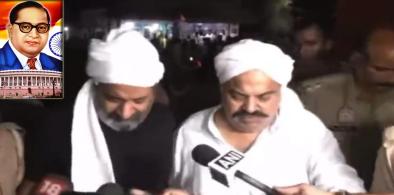
This is surely not the first or the last of the fake encounters (extra-judicial killing) in our country. Are people, including the police, losing faith in constitutional methods so earnestly championed by Dr. Ambedkar? What would he have said, had he been alive today?

Four years after the passage of the law, the promised Arbitration Council of India to authorise and regulate arbitration institutions has yet to be operationalised. Save for a small number of arbitration institutions established and funded by well-known law firms, some state governments do not support professionally established arbitration institutions.
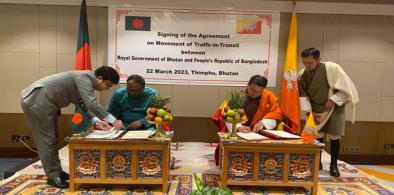
This transit agreement will pave the way for energy imports from Bhutan. A Free Trade Agreement (FTA) was signed between the two countries in 2009. After last month's agreement, the FTA will gain momentum. The agreement will enable Bhutan to use Bangladesh's air, railways, river ports, land and sea ports since Bhutan is a landlocked country and has no river or sea ports of its own.