The most important challenge for South Asia is to revive livelihoods, which the crisis has devastated across the region, writes Partha Pratim Mitra for South Asia Monitor


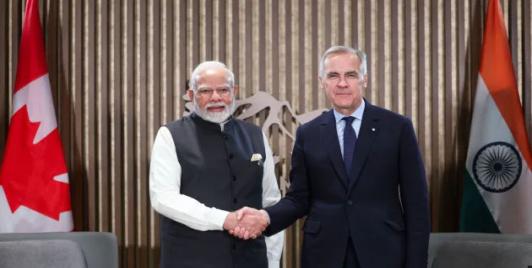
Canada hosts close to 1.9 million persons of Indian Origin (PIOs) and 3% of Canada’s population, one of the largest ethnic groups in Canada’s multiethnic and multicultural society. Although immigration policy of Canada has tightened in recent years, yet a lot of students who study in Canada prefer to stay back and work in Canada acquiring permanent residency and citizenship.
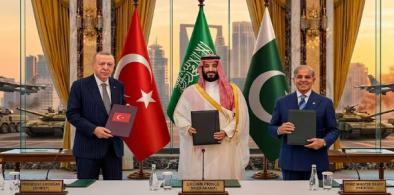
It would also explain why Pakistan is trying to preserve a distinction between supporting Saudi Arabia and fighting the Houthis. Pakistan has every reason to avoid another open-ended conflict in the Middle East. Its military is heavily committed to its own security challenges. Its economy cannot easily absorb the political and financial consequences
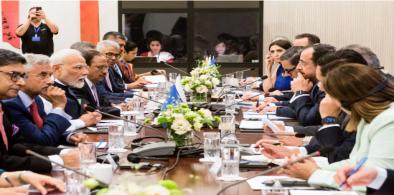
EU and India could establish a regular EU–India-Middle East Consultative Mechanism involving foreign-policy officials and experts. Its purpose would be to coordinate positions before major international gatherings and meetings.

For Sri Lankan politics, this is more than diplomatic sightseeing. It raises a fundamental question whether the JVP is developing a sophisticated strategy of balancing relations with India and China or is it gradually adapting itself to the organisational models of powerful one-party or dominant-party systems in China and India respectively?
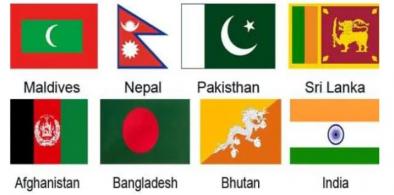
The most important challenge for South Asia is to revive livelihoods, which the crisis has devastated across the region, writes Partha Pratim Mitra for South Asia Monitor
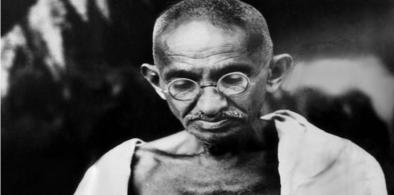
Paradoxically, but not surprisingly, over the last six decades, the collective commitment to truth as a principle to be adhered to with Gandhian conviction has been diluted progressively, writes Cmde C Uday Bhaskar (retd) for South Asia Monitor
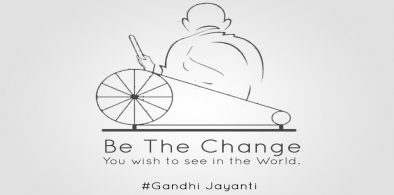
Gandhi believed in all-inclusive growth and felt that India can only become a great nation when its teeming and impoverished rural masses become better off, writes Anil K. Rajvanshi for South Asia Monitor
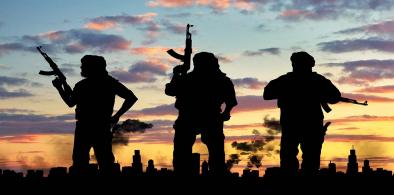
Terrorists and extremists need discourses in the inculcation of eternal moral values and practicing of yoga and meditation that can contribute immensely to attaining a perfect and balanced personality as described in ancient Indian classical texts, writes Prof. Sudhanshu Tripathi for South Asia Monitor

If Lata’s ‘Allah, Karam Karna’ and ‘Allah Reham” are popular among the Muslims, two of the Indian cinema’s best bhakti (devotional) songs, “Allah Tero Naam Ishwar Tero Naam” and “Prabhu Tero Naam” are sung six decades after she rendered them in Hum Dono, writes Mahendra Ved for South Asia Monitor
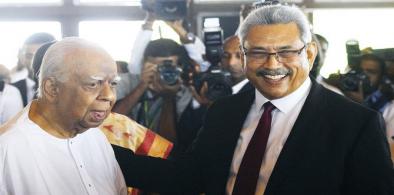
A section of the diaspora has taken a line that it needs to bury the past and open a line with India, which many blame for the plight of the Sri Lankan Tamils, writes M.R. Narayan Swamy for South Asia Monitor
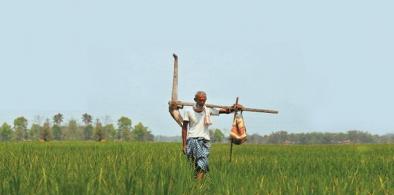
But will this productivity-driving initiative really take off when the most prosperous farmers belonging to the vanguard agrarian regions of Punjab, Haryana and western Uttar Pradesh firmly remain on the path of agitation against government efforts to fix agriculture through reform? writes N. Chandra Mohan for South Asia Monitor
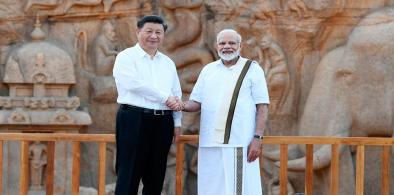
Examining new paradigms and alternate formulations often leads to game-changing events, writes Lt Gen PR Kumar (retd) for South Asia Monitor

Strangely, Kerry, while extracting ambitious emission cuts during his rounds of developing countries, does not talk about meeting the financial commitments given by President Barack Obama in Copenhagen in 2009. He talks only about initiating a ‘finance dialogue’ with developing countries, writes Rajendra Shende for South Asia Monitor

Pakistan is also one of the largest recipients of IAEA’s technical and financial help that shows Pakistan has achieved considerable expertise in the application of nuclear technology for peaceful purposes, writes Usman Ali Khan for South Asia Monitor
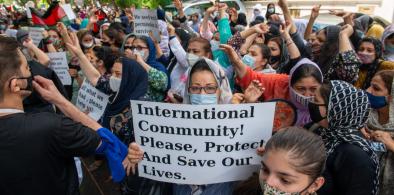
The political crisis in Afghanistan is closely linked with the flow of refugees from the country. The latter cannot be contained without solving the former, writes Anirban Sen for South Asia Monitor
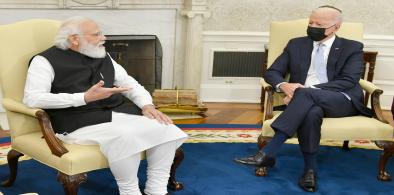
The positive roles played by the American community colleges and universities along with the contributions of the Indian diaspora in the grand American dream are among the key adhesives of the larger bilateral relationship between the two democratic giants, write Dr. Manan Dwivedi and Shonit Nayan for South Asia Monitor
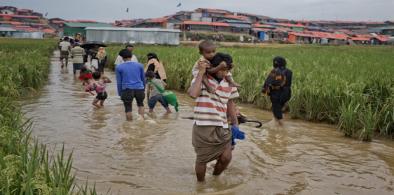
It is only meaningful and sincere cooperation between Bangladesh authorities and a wide array of non-governmental, inter-governmental and development organizations which has, so far, made supporting 1.1 million Rohingyas with such limited resources possible, writes Habibur Rahman for South Asia Monitor
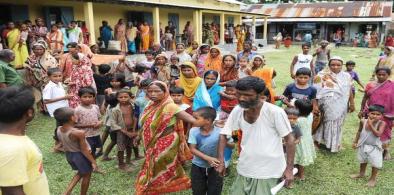
Having a refugee and asylum policy will improve India's standing in the global community and avoid unnecessary expenditure from the national and state exchequers, writes Amb Sarvajit Chakravarti (retd) for South Asia Monitor

While India inherited the British-era law regarding accounting of official gifts received by government leaders, Pakistan and Bangladesh enacted their respective laws only in 1974, writes Mahendra Ved for South Asia Monitor