Pakistan has shifted anti-India terrorist camps into Afghanistan and there is evidence of the Taliban allowing Harkat-ul Ansar (HuA) to push terrorists from Afghanistan into Kashmir, writes Lt Gen P. C. Katoch (retd) for South Asia Monitor


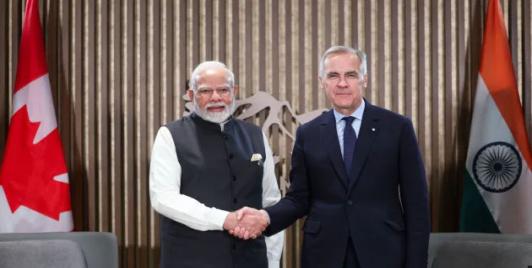
Canada hosts close to 1.9 million persons of Indian Origin (PIOs) and 3% of Canada’s population, one of the largest ethnic groups in Canada’s multiethnic and multicultural society. Although immigration policy of Canada has tightened in recent years, yet a lot of students who study in Canada prefer to stay back and work in Canada acquiring permanent residency and citizenship.
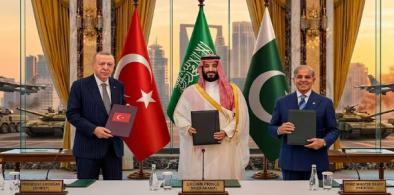
It would also explain why Pakistan is trying to preserve a distinction between supporting Saudi Arabia and fighting the Houthis. Pakistan has every reason to avoid another open-ended conflict in the Middle East. Its military is heavily committed to its own security challenges. Its economy cannot easily absorb the political and financial consequences
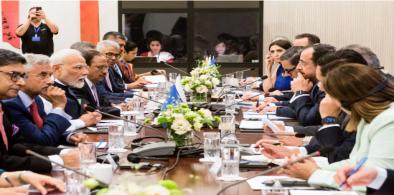
EU and India could establish a regular EU–India-Middle East Consultative Mechanism involving foreign-policy officials and experts. Its purpose would be to coordinate positions before major international gatherings and meetings.

For Sri Lankan politics, this is more than diplomatic sightseeing. It raises a fundamental question whether the JVP is developing a sophisticated strategy of balancing relations with India and China or is it gradually adapting itself to the organisational models of powerful one-party or dominant-party systems in China and India respectively?
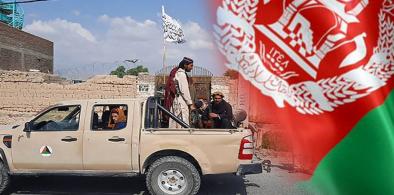
Pakistan has shifted anti-India terrorist camps into Afghanistan and there is evidence of the Taliban allowing Harkat-ul Ansar (HuA) to push terrorists from Afghanistan into Kashmir, writes Lt Gen P. C. Katoch (retd) for South Asia Monitor
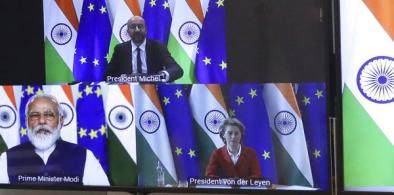
The new strategy is a most welcome development for India, which had been juggling its national security interests in this vast and volatile region with support, as usual, from France, writes Amb. Bhaswati Mukherjee (retd) for South Asia Monitor
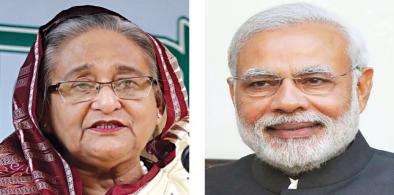
In this 50th year of Bangladesh’s liberation, need India remind them that in 1971 it sheltered over 10 million Bangladeshi refugees without a whimper, with hardly any foreign aid, and that all Indians kept paying for decades afterward to defray the cost to the nation?, writes Amb. Sarvajit Chakravarti (retd) for South Asia Monitor
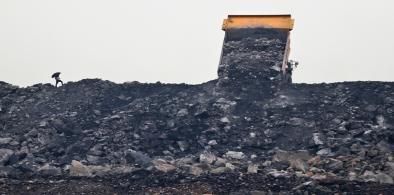
India’s energy problems, however, are not unique as its powerful neighbor, China, too, is experiencing serious shortages of electricity, writes N. Chandra Mohan for South Asia Monitor
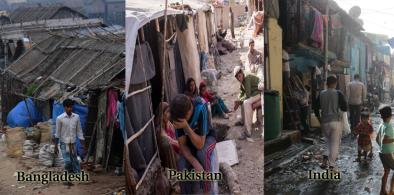
South Asia has an approximate population of 1.9 billion —about 23 percent of the world population — with a substantial number of slum dwellers and homeless, writes Nirupama Sekhri for South Asia Monitor

According to the Center for Economic and Business Research (CIBR), a British economic research institute, Bangladesh will be the 34th largest economy by 2025, 26th by 2030 and 25th by 2035 if its economy continues to grow and develop like it is now, writes Pathik Hasan for South Asia Monitor

Bangladesh is trying to utilize megaprojects as a lever to turn the country into a lucrative investment destination, writes Kazi Mohammad Jamshed for South Asia Monitor
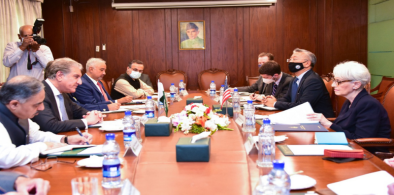
The world has moved on, but Pakistan - and its ideological fellow traveler, the Taliban - seem to be caught in a regressive time warp from which it is unable to extricate itself, writes Tarun Basu for South Asia Monitor

India’s dependence on China in the telecom sector is unlikely to reduce in the foreseeable future, writes N Chandra Mohan for South Asia Monitor
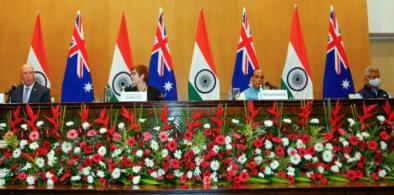
While forging these dialogues, India should not forget Bangladesh as the interests of the two neighbors are increasingly converging in recent times, writes Shubham for South Asia Monitor
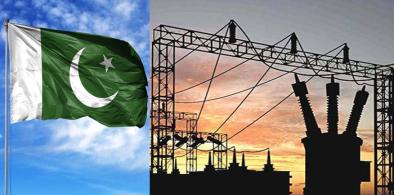
The Pakistan government has set a target of generating at least 20 percent renewable energy by 2025 and at least 30 percent in the next five years, writes Haris Mushtaq for South Asia Monitor
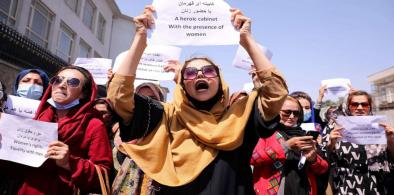
It is in India’s strategic interest to continue its engagement with the Taliban, but withhold any official recognition, and continue to wait and watch to see if the regime’s assurances are matched by its deeds, writes Nisha Sahai Achuthan for South Asia Monitor
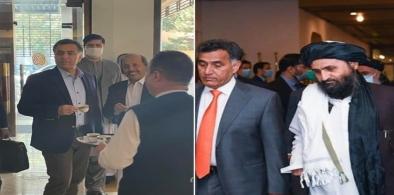
Engagement with the Taliban and the latter’s return to the driver’s seat in Afghanistan allows Pakistan to bring the Afghanistan issue to the forefront of the ‘South Asia regional security architecture’, writes Anuttama Banerji for South Asia Monitor
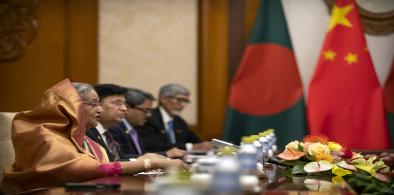
China’s growing investment and expanding economic activities in Bangladesh do not necessarily enable it to influence Dhaka’s foreign policy decisions, or seize infrastructure if loans are not repaid, or even potentially secure its support in a regional conflict, writes Rupak Bhattacharjee for South Asia Monitor
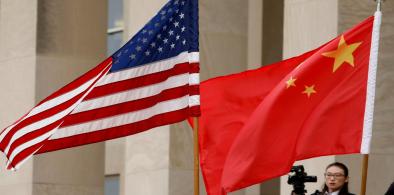
The bond between US intelligence agency CIA and Pakistan’s Inter-Services Intelligence (ISI) is well known and recently declassified British documents reveal MI-6 connived with Pakistan and Taliban in Afghanistan, writes Lt Gen P. C. Katoch (retd) for South Asia Monitor