
NATO Headquarters in Brussels (NATO photo)

Why the NATO summit in Ankara matters for South Asia

The NATO summit can indirectly transform India from a regional power into a West Asia stakeholder by integrating India into maritime security frameworks, supporting connectivity projects, strengthening intelligence ties, reinforcing India’s role as an alternative to China. The long-term outcome is that India could emerge as a pillar of stability linking Europe, the Gulf, and the Indo-Pacific

India–Japan Summit: Strategic Convergence in a Changing Indo-Pacific Order

Japan has also proposed developing a Bay of Bengal–Northeast India Industrial Value Chain aimed at transforming the region into an integrated industrial zone. As part of the Free and Open Indo-Pacific vision, this includes strengthening cross-border connectivity with Bangladesh, Myanmar, Nepal and Bhutan. 

China and the Emerging Scenario in the Bay of Bengal

China's expressed interest in modernising and upgrading both Chattogram and Mongla ports suggests the emergence of an interconnected infrastructure network linking the Bay of Bengal with southwestern China through Myanmar. If realised, such connectivity would enhance trade flows, improve regional logistics and deepen China's economic footprint across the Bay of Bengal littoral, while simultaneously increasing Bangladesh's importance as a regional transit and connectivity hub.

Colombo to Kathmandu, China Seeks to Counteract US Moves Across South Asia

While Washington and New Delhi seek to strengthen bilateral ties with Colombo, Beijing has strategically engaged with the political forces that control the government. By engaging directly with actors at the core of Sri Lanka’s governance, Beijing appears to be signalling its strategic intent—projecting influence and reinforcing ideological ties. 

More on Geopolitics and Strategic Affairs

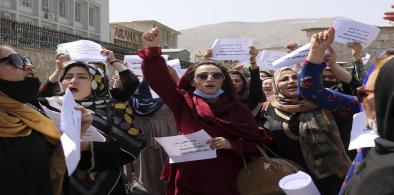
Taliban must end the senseless violence: A plea for peace and reconciliation in Afghanistan

I believe that as an Afghan and as a youth, after the full withdrawal of US troops from Afghanistan, no pretext and justification will exist for the Taliban to continue the war -  the jihad against a foreign power, writes Bator Arsalan for South Asia Monitor

India should stop being coy about China’s hegemonistic ambitions

The least India can do is to let the Tibetan community in India select a new Dalai Lama; if there are two Dalai Lamas (one selected in India and one in China), New Delhi should have nothing to do with the Beijing-backed Dalai Lama, writes  M.R. Narayan Swamy for South Asia Monitor

India's Myanmar policy must balance protection of strategic interests with democratic values

Amid pervasive expansion of Chinese influence in Myanmar, New Delhi doesn’t want to give further space to Beijing and feels the best option is to remain silent on the Myanmar military’s actions, writes Pema Tseten Lachungpa for South Asia Monitor
 

The unchecked malady of police brutality in India

Police brutality in India is a form of institutional violence as it is closely connected with law enforcement and torture is perceived as an expeditious method of policing, writes Rahul Machaiah for South Asia Monitor

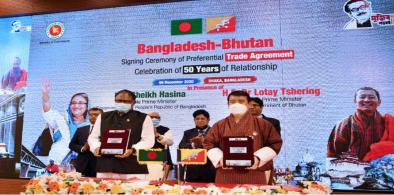
Bangladesh’s growth has attracted world attention: A future competitor to India in South Asia?

Politically, the Sheikh Hasina government has adroitly maneuvered a middle but autonomous road for Bangladesh, away from the influences of two regional powers, China and India, writes Aneek Chatterjee for South Asia Monitor

Hindu-Muslim brotherhood: Will RSS chief's sage counsel mark a new beginning for Hindutva groups?

The nation, and especially Hindus and Muslims, will be waiting with bated breath to see what impact the RSS supremo’s advice has on the ruling BJP, writes Amulya Ganguli for South Asia Monitor

Dilip Kumar: Last of the titans from Indian cinema's 'golden age'

Dilip Kumar suffered during the phases when neighbors Pakistan and India went to war, but his popularity and the run of his films remained unaffected, on both sides of the border, writes Mahendra Ved for South Asia Monitor

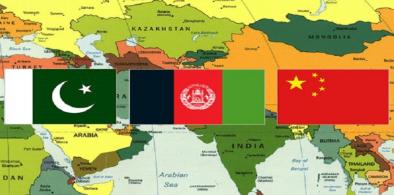
Is Pakistan likely to face more US sanctions after American troops leave Afghanistan?

Pakistan fails to realize that with US troops exiting Afghanistan, Washington will no longer overlook the generation of terrorism and recruitment of child soldiers by Pakistan, especially when it is wedded to Beijing against the US, writes Lt Gen P. C. Katoch (Retd) for South Asia Monitor 

Bhutan’s king leads from the front nation's battle against Covid-19

Although Bhutan will succeed in its vaccination drive, the scramble in the South Asian region for doses underscores the highly iniquitous access to vaccines to fight Covid-19, writes N. Chandra Mohan for South Asia Monitor
Dalai Lama turns 87: Should India continue to keep him at arm's length?

The Chinese Communists were never shy in shaking hands with insurgents and rebels from India. In contrast, the Dalai Lama has never wielded a weapon. In that sense, he is also a Mahatma Gandhi, writes M.R. Narayan Swamy for South Asia Monitor

Nepal in need of massive judicial reforms to ensure implementation of court orders

The Supreme Court of Nepal issued 246 verdicts in 2019-2020 to be implemented by the various ministries, The government, in most cases, didn’t comply with the court orders, writes Ravi Nayak for South Asia Monitor

How remote-area vaccination is boosting India's security

The government’s vaccination outreach to remote border areas, in Kashmir and the Northeast, and the local people's smiling embrace of these efforts was an indication of their comfort level and confidence in the Indian system, writes Nilova Roy Chaudhury for South Asia Monitor

Can the US underwrite regional stability against emerging Chinese threats?

In the long run, if tactically implemented, the B3W initiative can also help India and its allies balance China’s String of Pearls strategy in South Asia and beyond, writes Pradeep S. Mehta for South Asia Monitor

Uttar Pradesh will be a bellwether of Modi's continuing popularity

A defeat in Punjab or in Goa will not bother the BJP too much. But UP is different not only because its location in the heartland has always provided significant pointers about political trends, writes Amulya Ganguli for South Asia Monitor

Can Imran Khan's 'Pakistaniyat' help improve the country's self-image?

“Hollywood-Bollywood vulgarity” has been one of Imran Khan’s pet peeves for long and he has ordered the drafting of a new nationalist, culturally-centred film policy for Pakistan that is yet to be made public, writes Mahendra Ved for South Asia Monitor