The Afghan conflict has already turned shelterless a massive number of people, and it will not end until a morally inclined humanitarian intervention takes place, write Azeemah Saleem and MD. Imtiyaz for South Asia Monitor


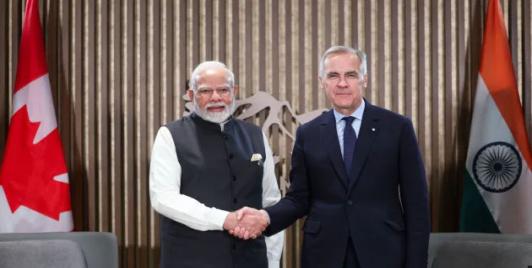
Canada hosts close to 1.9 million persons of Indian Origin (PIOs) and 3% of Canada’s population, one of the largest ethnic groups in Canada’s multiethnic and multicultural society. Although immigration policy of Canada has tightened in recent years, yet a lot of students who study in Canada prefer to stay back and work in Canada acquiring permanent residency and citizenship.
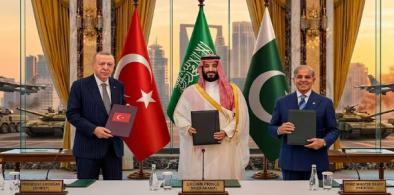
It would also explain why Pakistan is trying to preserve a distinction between supporting Saudi Arabia and fighting the Houthis. Pakistan has every reason to avoid another open-ended conflict in the Middle East. Its military is heavily committed to its own security challenges. Its economy cannot easily absorb the political and financial consequences
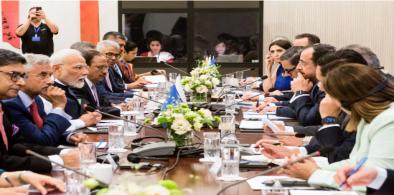
EU and India could establish a regular EU–India-Middle East Consultative Mechanism involving foreign-policy officials and experts. Its purpose would be to coordinate positions before major international gatherings and meetings.

For Sri Lankan politics, this is more than diplomatic sightseeing. It raises a fundamental question whether the JVP is developing a sophisticated strategy of balancing relations with India and China or is it gradually adapting itself to the organisational models of powerful one-party or dominant-party systems in China and India respectively?
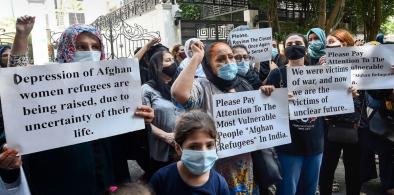
The Afghan conflict has already turned shelterless a massive number of people, and it will not end until a morally inclined humanitarian intervention takes place, write Azeemah Saleem and MD. Imtiyaz for South Asia Monitor

Implications for India are more worrisome since the Taliban now has overt support of China and Russia apart from its patron Pakistan, writes Brig Deepak Sethi (retd) for South Asia Monitor

Among many commonalities, South Asian nations have a large hi tech-savvy young population, and the asset management companies should tap this section to deepen mutual fund penetration significantly, writes Ram Krishna Sinha for South Asia Monitor
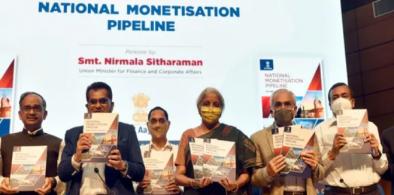
If asset monetization is undertaken with strict oversight, it can be the most effective remedy to dispel the pervading gloom of an ailing economy, writes N Chandra Mohan for South Asia Monitor
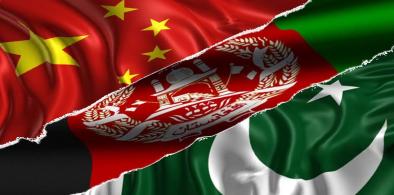
Beijing will quickly establish a ruthlessly transactional and pragmatic relationship to exploit Afghanistan’s rich mineral resources as well expand its much-cherished Belt and Road Initiative (BRI) from Pakistan, writes Mayank Chhaya for South Asia Monitor

Finally, the US has given the biggest boost to global terrorism - and will eventually have to face the consequences. A coupling between the ISIS and Taliban should not be considered an impossibility, writes Lt Gen P. C. Katoch (retd) for South Asia Monitor

Biden's speech had an eerie echo of former President George Bush's September 20, 2001, address to Congress when he set the course for what became the 20-year war, writes Arul Louis for South Asia Monitor
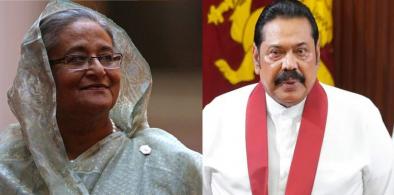
If a free trade agreement is signed, then only the sky would be the limit for Bangladesh-Sri Lanka business relations, writes MD Pathik Hasan for South Asia Monitor

The Asian Development Bank has stated that in South Asia the new wave of Covid-19 between March and June 2021 has somewhat dampened the economic outlook of the region, writes Partha Pratim Mitra, for South Asia Monitor

Al Qaeda is leading a scattered existence along the Afghan-Pakistan border and its leadership is undergoing a constant shift, writes Anuttama Banerji for South Asia Monitor
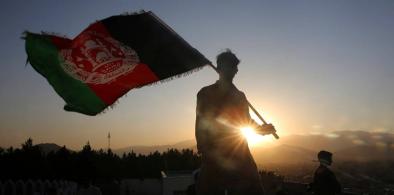
India won’t let the developments in Afghanistan affect its interests, more so because Pakistan and China are rubbing their hands in glee, waiting to move in to fill the vacuum in Afghanistan left by the United States, writes Mehraj udin Bhat for South Asia Monitor
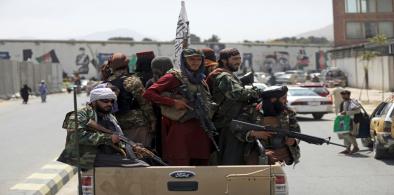
It is hardly surprising that in a mockery of the so-called US intelligence projection that Kabul could fall in 30 to 60 days, the capital caved in within 48 hours, writes Mayank Chhaya for South Asia Monitor
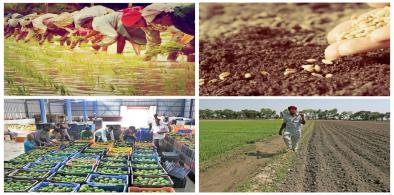
Indian industry must have a conducive environment to invest and employ more workers from farms, writes N Chandra Mohan for South Asia Monitor
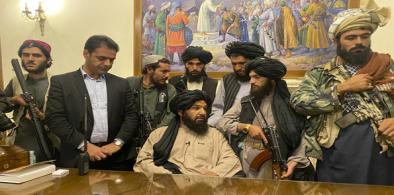
The Taliban are aware that if they shelter foreign militants with transnational agenda. It could turn neighboring powers like China, Russia, Iran, India, or Pakistan against them, writes Ainur Khan for South Asia Monitor

Today many Israeli universities have departments of Buddhist studies and South Asian philosophies as interest among Jewish scholars on Buddhist meditation continues to grow, writes Punsara Amarasinghe for South Asia Monitor