Colombo’s biggest source of China-dependence is to service its external debt; it already owes China over $5 billion in past loans, writes N. Chandra Mohan for South Asia Monitor


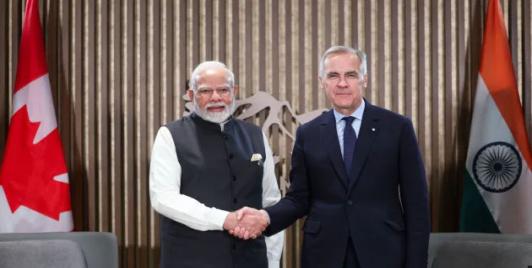
Canada hosts close to 1.9 million persons of Indian Origin (PIOs) and 3% of Canada’s population, one of the largest ethnic groups in Canada’s multiethnic and multicultural society. Although immigration policy of Canada has tightened in recent years, yet a lot of students who study in Canada prefer to stay back and work in Canada acquiring permanent residency and citizenship.
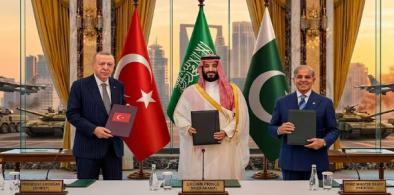
It would also explain why Pakistan is trying to preserve a distinction between supporting Saudi Arabia and fighting the Houthis. Pakistan has every reason to avoid another open-ended conflict in the Middle East. Its military is heavily committed to its own security challenges. Its economy cannot easily absorb the political and financial consequences
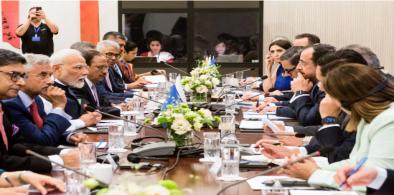
EU and India could establish a regular EU–India-Middle East Consultative Mechanism involving foreign-policy officials and experts. Its purpose would be to coordinate positions before major international gatherings and meetings.

For Sri Lankan politics, this is more than diplomatic sightseeing. It raises a fundamental question whether the JVP is developing a sophisticated strategy of balancing relations with India and China or is it gradually adapting itself to the organisational models of powerful one-party or dominant-party systems in China and India respectively?
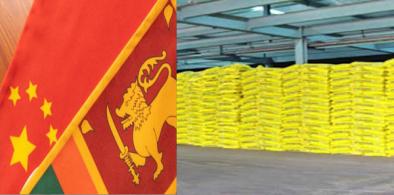
Colombo’s biggest source of China-dependence is to service its external debt; it already owes China over $5 billion in past loans, writes N. Chandra Mohan for South Asia Monitor
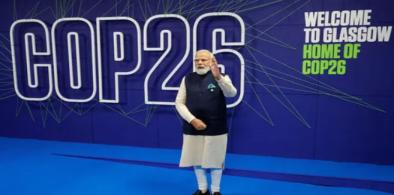
Becoming carbon-neutral by 2070 will not only help the world but will also make India a new industrial power, writes Anil K. Rajvanshi for South Aisa Monitor
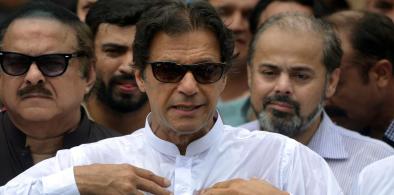
As Islamabad embraces hardline Islamists, life for minorities in Pakistan is becoming tough, writes Mahendra Ved for South Asia Monitor
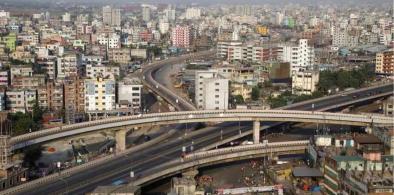
From extending aid to Sri Lanka to building mega projects, Bangladesh is transforming its image to emerge as a South Asian miracle, writes Pathik Hasan for South Asia Monitor

Kangana Ranaut is just one offshoot of an ecology where fact and truth have been systematically torn away from the national discourse to be replaced by ideologically tailored half-truths and lies, writes Mayank Chhaya for South Asia Monitor

A Pakistani film looks at the 1971 war anew and wants Islamabad and Dhaka to bond, writes Mahendra Ved for South Asia Monitor
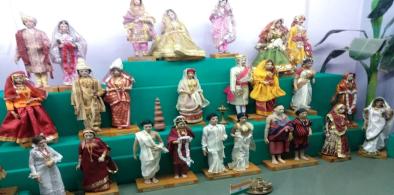
In India, festivals have an interesting blend of representation through dolls, especially during the agricultural season of autumn, writes Dr. Lopamudra Maitra Bajpai for South Asia Monitor
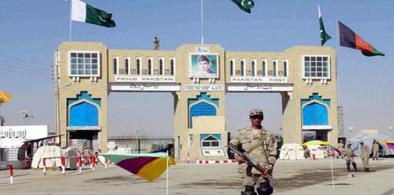
With Pakistan's built-in political dominance of Afghanistan, the economic control can only get stronger, writes Hamayun Khan for South Asia Monitor

Pakistan and India should work together to revive SAARC to maximize regional interests, writes Pathik Hasan for South Asia Monitor
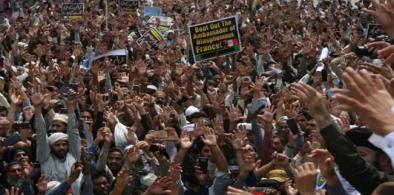
Having adopted hardcore Islam over the years, and using it to enact terrorism as a state policy, the Pakistan government can hardly afford all-out confrontation with the TLP, writes Lt Gen P. C. Katoch (retd.) for South Asia Monitor
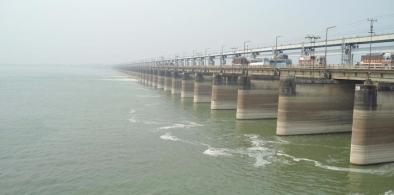
Conclusion of bilateral arrangements on sharing common water resources will banish a constant source of misunderstanding and mutual suspicion between India and Bangladesh, writes Amb Sarvajit Chakravarti (retd) for South Asia Monitor
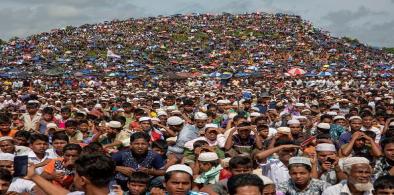
The Rohingya crisis is the result of a long-smoldering problem that may become the catalyst for new sources of conflict in the region, writes Kazi Mohammad Jamshed for South Asia Monitor
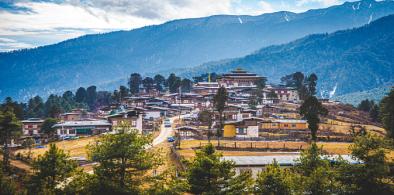
Prime Minister Dasho Lotay Tshering has said that if Bhutan’s infrastructure, economy and trade improves, the country will undoubtedly want to be part of BBIN-MVA, writes Rinchen Kinznag for South Asia Monitor
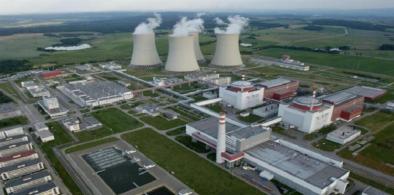
The Roppur nuclear power plant is expected to be a model of clean energy in Bangladesh and provide affordable, reliable and quality electricity in the long run, writes Pathik Hasan for South Asia Monitor
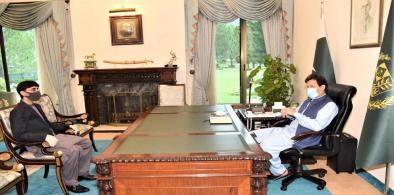
The coming weeks pose a serious challenge to the Pakistani government to deal with the TLP’s threats and increasing pressure, writes Shantanu Mukharji for South Asia Monitor