

Why the NATO summit in Ankara matters for South Asia
The NATO summit can indirectly transform India from a regional power into a West Asia stakeholder by integrating India into maritime security frameworks, supporting connectivity projects, strengthening intelligence ties, reinforcing India’s role as an alternative to China. The long-term outcome is that India could emerge as a pillar of stability linking Europe, the Gulf, and the Indo-Pacific
 Jul 02, 2026
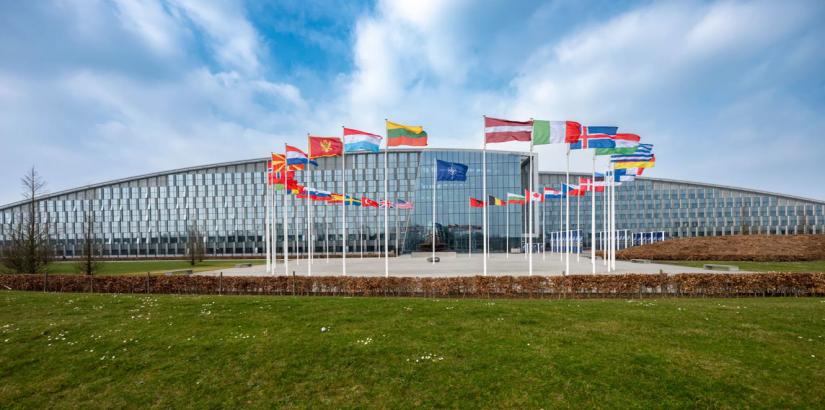
The upcoming NATO summit in Ankara, Turkey, on 7-8 July does matter for South Asia and although NATO is not directly active there, it does shape the wider strategic environment around India, Pakistan, Afghanistan, and the China-India rivalry.
NATO itself does not have a formal South Asia strategy, but recent discussions increasingly frame India as a balancing power against China in the Indo-Pacific and hence favours closer engagement with India.
Turkey’s President Recep Tayyip Erdogan sees the Ankara summit as a chance to boost Turkey's role as a regional power and as a link between the United States and Europe, as geopolitical rivalries and tensions mount.
NATO unity has been tested in recent months, particularly since the United States and Israel began attacking Iran on February 28, igniting the war. US President Donal Trump has repeatedly condemned European nations for not helping the US in the war against Iran and has threatened to withdraw from the alliance, though few believe he will actually follow through on that step.
NATO Secretary General Mark Rutte visited Washington recently to try to ease tensions over the Iran conflict and US threats to draw down troops in Europe.
The Turkey-Pakistan Factor
Turkey, because of its strained relationship with India and its strong strategic partnership with Pakistan, could potentially use the NATO Summit as a diplomatic platform to indirectly support Pakistan’s narrative on issues involving India.
Relations between Turkey and India have become difficult mainly because Turkey has repeatedly commented on the Kashmir issue, often in ways India sees as favouring Pakistan. India views Kashmir as an internal matter and strongly objects to outside involvement.
Turkey’s growing military and political cooperation with Pakistan adds to Indian concerns. Turkey often supports Pakistan diplomatically in international forums.
NATO summits are mainly about collective security of its member states, but its leaders also hold side meetings and informal discussions on issues of their concern.
Turkey might raise concerns about South Asian security in ways favourable to Pakistan, lobby other Western countries to be more sympathetic to Pakistan’s position, and shape broader conversations on regional stability, terrorism, or other issues in ways that could affect India.
The India–Turkey–Pakistan triangle is increasingly shaped by strategic competition, and shifting alliances rather than direct conflict. Turkey and Pakistan have built a close partnership based on defence ties, naval modernization, drones, training cooperation and political support as Turkey often backs Pakistan on Kashmir and India-Pakistan issues.
For Pakistan, Turkey is useful because it voices its concerns internationally beyond traditional allies like China. For Turkey, Pakistan provides strategic reach into South Asia and the Indian Ocean.
As a counterbalance , India is strengthening ties with Turkey’s rivals such as Greece, Cyprus and Armenia.
NATO is not directly involved in South Asia, but Turkey can use NATO spaces for side diplomacy with the United States and European powers influencing discussions on Indo-Pacific security linking South Asian instability to broader security concerns.
For example, if Turkey frames Kashmir as a regional flashpoint, it can shape conversations even without formal NATO action. Turkey pushing Pakistan’s line can create friction, but Western powers usually prioritize India’s economic weight, India’s role in balancing China, defence and technology cooperation with India.
Turkey as an influential NATO member and as a major Muslim country could use diplomatic conversations to shape perceptions and create noise, but not shift Western strategic alignment away from India.
AS NATO expands its “southern neighbourhood” outlook this strengthens India’s position against China and indirectly against Pakistan.
Pakistan has historically been important to Western security (Afghanistan, counterterrorism), but NATO’s current focus is Ukraine, Russia, and increasing military spending. The Ankara summit agenda is centered on alliance unity, defence spending, and Ukraine support.
Pakistan may become relatively less central in Western security calculations. This could push Islamabad further toward Beijing for defence especially in military technology and economic backing.
Although NATO withdrew from Afghanistan in 2021, instability there still affects regional security. Expansion of terrorist groups, refugee flows, narcotics trafficking militant spillover into Pakistan and Central Asia. If NATO broadens counterterrorism coordination, South Asia becomes relevant again.
NATO has gradually expanded partnerships in Asia-Pacific and Ankara will host Asia-Pacific officials too, signalling NATO’s broader geographic concern. China may perceive India as part of a larger Western containment arc which can intensify bilateral tensions .
The NATO summit’s discussions on Middle East instability and maritime security (including Hormuz) are important because South Asia is heavily dependent on those sea lanes. India imports most of its energy through these routes.
NATO’s push for higher defence spending (up to 5% targets among members) may normalize larger military budgets globally. India may justify larger defence allocations. Pakistan may respond despite economic constraints. Smaller states like Bangladesh and Sri Lanka may diversify defence partnerships.
The NATO summit reinforces a world moving toward bloc politics, which means increasingly aligned with the US and Europe while retaining strategic autonomy.
South Asia's Salience
China sees South Asia as a crucial flank in its rivalry with the West. So the summit won’t directly “decide” South Asia’s future, but it will accelerate the polarization of regional alignments.
Europe’s security choices are increasingly shaping Asia’s strategic balance. India’s military modernization could accelerate, widening the conventional gap with Pakistan.
The NATO summit can strengthen India’s role in the Middle East mainly by increasing India’s value as a security, logistics, and diplomatic partner in a region that is becoming more tightly linked to Euro-Atlantic security.
A major NATO concern is the security of critical maritime chokepoints like the Red Sea, the Strait of Hormuz, and the Bab el-Mandeb. These routes carry energy supplies to Europe and Asia. The Strait of Hormuz and Bab el-Mandeb are vital for India because around 60% of India’s oil imports pass through the Gulf and India has one of the world’s fastest-growing naval footprints in the Indian Ocean.
Europe wants diversified energy and trade routes that reduce dependence on unstable transit zones. Projects like the India-Middle East-Europe Economic Corridor (IMEC) that connect India, Gulf states, and Europe are seen as vital alternative routes.
NATO summit emphasis on infrastructure security can boost political support for IMEC, align European and Gulf investment with Indian connectivity goals, elevate India as a commercial gateway. This makes India central to future Eurasian trade architecture.
Space for Middle Powers
Middle East instability often spills into South Asia through extremist networks. The so-called “Islamic State “ remains a concern across Iraq, Syria, and Afghanistan.
India can benefit by strengthening its diplomatic position with Gulf states on anti-radicalization. This raises India’s profile as a serious security actor.
As NATO members increase military spending, they are diversifying production chains and hence Indian defense manufacturing initiatives like drones, missiles, maintenance hubs could integrate with Western and Gulf procurement systems.
China’s influence in the Middle East has grown via ports, energy deals, and mediation diplomacy. Examples include Gwadar Port and Port of Djibouti and the (unsuccessful) mediation between Saudi Arabia and Iran .
If NATO becomes more active in protecting southern maritime corridors, India becomes an attractive partner because it has strong Gulf relations, it is seen as less interventionist than Western powers, and it shares concerns over Chinese naval expansion.
A NATO summit focused on Middle East crises (Iran-Israel tensions, Red Sea disruptions, Gaza fallout) creates space for middle powers. India has ties with Israel, strong energy dependence on Saudi Arabia and United Arab Emirates, and working relations with Iran.
That gives India unusual diplomatic flexibility.
India's Strategic Importance
The NATO summit can indirectly transform India from a regional power into a West Asia stakeholder by integrating India into maritime security frameworks, supporting connectivity projects, strengthening intelligence ties, and reinforcing India’s role as an alternative to China. The long-term outcome is that India could emerge as a pillar of stability linking Europe, the Gulf, and the Indo-Pacific
India’s reluctance to enter formal military alliances is deeply tied to its historical commitment to the Non-Aligned Movement (NAM), which shaped its foreign policy after independence.
India could take Soviet weapons, accept Western aid, and still avoid formally aligning. Even after the Cold War ended, the NAM mindset evolved into what India now calls strategic autonomy.
This explains why India is in the Quadrilateral Security Dialogue (Quad), but it’s not a military alliance, buys weapons from both Russia and Western countries, avoids treaty obligations like collective defence and keeps independent positions on conflicts (for example, the Russo-Ukrainian War).
India prefers flexible partnerships over binding commitments. Instead of “non-alignment,” India now practices multi-alignment, closer to the US in the Indo-Pacific region, defence ties with France, energy and arms ties with Russia, engagement with BRICS and Shanghai Cooperation Organisation
India wants partnerships without surrendering policy freedom.
(The author is Brussels-based Non Resident Fellow of the New Delhi-based Society for Policy Studies who has been tracking and reporting on EU and European affairs and NATO for the past four decades. The views expressed are personal. He can be reached at nawab_khan@hotmail.com. X: @NawabKhan10)





Post a Comment