Ayatollah Sayyed Ali Hosseini Khamenei

A Line Crossed: The Killing of Ayatollah Khamenei Has Dangerous Consequences for Volatile Region

The killing of Ayatollah Ai Khamenei is not an isolated headline; it is a defining chapter in the evolving story of Middle Eastern and regional geopolitics. It forces a reckoning with questions of power, legality, and consequence. Whether this moment becomes the spark of broader conflict or a catalyst for renewed diplomatic urgency will depend on decisions made now, in Tehran, in Jerusalem, in Washington, and beyond. One era has undeniably ended. What begins next will shape the region for years to come.

Iran’s State Structure is Designed to Outlast its Leaders: Expectations of Sudden Collapse may be Misguided

Iran’s constitution explicitly anticipates such scenarios. Article 111 provides that if the supreme leader dies or becomes incapacitated, authority transfers immediately to an interim council consisting of the president, the head of the judiciary, and a cleric chosen through the Expediency Council. The aim is continuity, not transformation. While qualifications for the next leader are specified, the constitution leaves room for interpretation rather than imposing a rigid religious pathway.

New Civilisational Thesis of Western Renewal Risks Reviving Spectres of Colonialism and Racism

After Munich, Rubio travelled to Budapest and aligned himself warmly with Orbán’s government, praising Hungary’s trajectory. For European leaders committed to participatory democracy and the rule of law, the signal must have been disquieting. It suggested that Washington’s conception of Western solidarity may prioritise cultural homogeneity over liberal pluralism.

Trump’s Tariff Shock and India’s Export Reset: A Tech-Led Turn in the Making

The structural transformation of India’s export basket is no longer incremental—it is systemic. Technology-driven industries with higher value addition are steadily outpacing traditional sectors. If managed strategically, external tariff pressures could accelerate this transition. Rather than viewing tariff hikes solely as a threat, India can leverage them as a catalyst for deeper integration into global supply chains and stronger positioning in high-technology manufacturing. The reshaping of India’s export architecture is already underway. The tariff shock may simply fast-forward the process.

More on Spotlight

Islamic State's expanding footprints pose grave security threat to Pakistan and South Asia

While Pakistan continues to blame India for the bombings in Balochistan and Khyber Pakhtunkhwa,  it fails to introspect on its own internal crisis stemming from its policies against its citizens and the military/political support being given to certain radical outfits or groups.

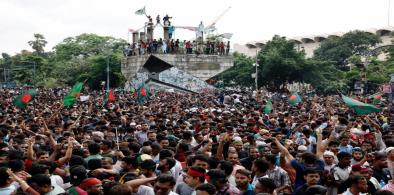
Why are the people of Bangladesh apprehensive about the upcoming elections?

Due to the lack of established regard for the democratic system, elections held after the 1990s have been marred by political turmoil and civic unrest. The absence of a solid democratic foundation has hindered the institutionalization of democracy in national life and politics.

Maldives election: India should not align its neighbourhood policy to individual leaders

The China-funded Sinamale Bridge connecting the capital Male and the airport island Hulhule, is a boon to the Maldivian people, who readily relate to the project, and hence to China as a development partner. But China is seen only as a developmental supplementary to long-term friendly neighbour India and not as an alternate in any way.  

Student suicides in India: Kota is a wake-up call

What we see in Kota today is deeply rooted in middle-class aspirations for social mobility, considering meritocracy a fair and promising system. But, the ‘merit ladder’ for upward mobility is not equally tangible and accessible to all. The material, social and psychological resources available for these students depend on their social location.

Continued ethnic strife in Manipur making region vulnerable to external exploitation

China has been supporting, training and arming northeast terrorists for the past several decades. The ongoing political experiment of ethnic cleansing and polarization in Manipur would naturally be exploited by China.

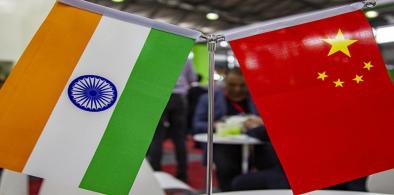
Shedding the misconceptions: Bangladesh's ties with China should not be a concern for India

The Sino–Bangladeshi partnership has not grown at the expense of the Indo–Bangladeshi partnership. Bangladesh does not constitute a part of the traditional Chinese sphere of influence. 

Empowering Bangladesh: The promise of solar-wind hybrid renewable energy systems

Bangladesh's energy woes demand innovative solutions, and the integration of solar and wind energies in a hybrid system represents a groundbreaking approach to meeting the nation's power needs. 

‘India’ or ‘Bharat’ debate reflects postcolonial insecurities, not in tune with modern nationhood

India holds together not by ignoring diversity but by granting constitutional and ideational recognition to different ethnic, religious and linguistic groups. The word ‘India’ evokes and symbolizes a “we feeling” in the people's collective consciousness, derived from long-held traditions and pluralist imaginations. 

Child marriages in South Asia: Gross violation of girl rights that needs urgent regional attention

The persistence of child marriage in South Asia indicates the widespread failure of governments to address one of the most critical human rights issues. Effective legal remedies and ensuring accountability for those complicit in such crimes can be the panacea for such social ills.

G-20: India can seize the moment to give a new direction to multilateralism

India's leadership has already committed itself to exploiting the linkages between economic growth, gender equality, peace, and security and the use of technological innovations for universal benefit. India has championed the cause of low-income nations in the past — and it could now do so again.

How RAW and SIS had worked together to prevent the Easter attacks in Sri Lanka

Contrary to the bizarre story spun by Maulana in the Channel 4 documentary, Indian intelligence agencies, mainly RAW, played a pivotal role in monitoring IS movements in Sri Lanka. 

‘India’ or’Bharat’: Constituent Assembly debates showed reasonableness amid opinion divergence

The incongruity of “India, that is Bharat”, as given by Dr. Bhimrao Ambedkar, who drafted the Constitution, was pointed out by some members of the Constituent Assembly just as an independent India was taking shape.

Growing Indo-Bangla defence ties will have a significant bearing on South Asian security and stability

India and Bangladesh have welcomed initiatives to strengthen their maritime security partnership. A MoU for the establishment of a coastal surveillance radar system in Bangladesh’s Chittagong and Mongla ports has been inked.

South Asian youth raise a collective voice for climate justice across borders

The event platformed youth environmental activists and entrepreneurs from Pakistan, India, Nepal, Bangladesh and Sri Lanka who have been working to educate, mobilise and organise people to combat climate change, obtain climate justice and move relevant policy regimes to these ends.

Will China have its way in Bhutan?

The question is whether Bhutan can ward off the Chinese pressure, given the dynamics of South Asia, chances of which don’t appear bright.