Sonam Wangchuk

Can Ladakhis' trust be restored by freeing Sonam Wangchuk?

Wangchuk was arrested - he has since been released -  obviously to allow allotment of land to corporates without engaging with the locals. Under the circumstances, how much trust of the Ladakhis the government can regain, remains questionable.

Delivering West Bengal From Its Vice-Laden Politics: Voters Must Draw Strength From Their Electoral Power

As owners of the republic—not merely beneficiaries of electoral inducements timed for political gain—electorates must act as empowered, assertive and demanding citizens, carefully examining party positions on substantive issues. They must insist on time-bound job creation strategies and measurable improvements in key sectors such as education and healthcare, rather than settling for vague manifesto assurances.    

India Needs to Reclaim its Lost Tolerance and Plurality

What has gradually been lost is not faith, but the culture of debate that once accompanied it. Public debate – śāstrārtha - was once central to intellectual life. Ideas were examined, challenged, and defended through reasoned argument. Today much of that space has been replaced by shouting matches, where volume often substitutes for thought - unfortunately even within our legislatures. Questioning, once considered an essential part of the search for truth, is now too easily mistaken for disrespect.

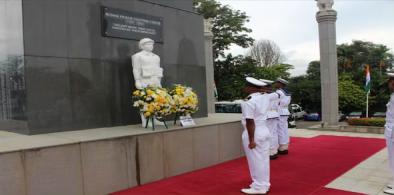
N.Q. Dias: Sri Lanka’s Clausewitz, a Man With a Strategic Vision for the Island

Dias promoted civil–military cooperation on an unprecedented scale, facilitating the large-scale settlement of Sinhalese populations in the dry zone as a bulwark against Tamil separatism. In some respects, this approach resembled the Jewish settlement policies in the British Mandate of Palestine, which may have influenced Dias’s thinking.

More on Perspective

Twin nations that chose different trajectories: A Pakistani perspective

The very idea of Pakistan was based on the Two-Nation Theory which emphasized Muslims’ different way of life from that of the Hindus in the subcontinent. However, the mere religious identity of a nation without reconciling Pakistan’s diverse ethnic, linguistic, and cultural groups was not enough to hold it together. 

To rebuild Bangladesh interim government needs to reconcile rival ideological camps

Bangladesh is home to people of different religions and cultures, both in the hills and plains. The extreme polarization of thought and ideology between opposing ideological groups is impacting Bangladesh's social fabric. 

Policy reversals and lessons for the Modi government

The BJP is not really taking on the immense political challenge of explaining and then persuading the people to go with the right-wing turns in policies it seeks to implement; it is sneaking it in, and in that it is being met with defeat after defeat.

How the world failed Afghanistan: Three years since the Taliban's return to power

When the world descended on Afghanistan in 2001, Afghans believed it was about them, about a better life for them. It never was. It never is, writes senior reporter Kathy Gannon, who has covered Afghanistan since the 1980s. Looking back at the second Taliban takeover in 2021 she looks at why the ironically named ‘Operation Enduring Freedom’ of 2001 failed and how the aspirations of Afghans have been ignored.

Is Sri Lanka’s state sector inefficient? Facts point to the contrary

Sri Lanka’s current HDI score stands at 0.78 and is the highest in South Asia.

India's healthcare institutions need more women at the helm

A message from the Kolkata case is to rebuild our healthcare workplaces with the intent of making them safe and gender inclusive.
 

India's discredited coaching centres: Can they redeem themselves in the eyes of students and aspirants?

The exams for IITs, IIMs, Civil Services, in particular, are strong pointers on how traditional pedagogy and mindset of our educational institutions towards learning is found severely inadequate and deficient, and call for a paradigm shift towards critical thinking and building wider perspectives.

Hasina destroyed Bangladesh’s economy; caretaker government needs to handle it well to restore people's confidence

Many of the oligarchic business syndicates that formed around the deposed Sheikh Hasina are now on the run. But their vast industrial establishments remain. It is essential to sustain these industries. Millions of people are working in these establishments that are playing a critical role in the production sector of the country. These industries cannot be shut down because of the crimes of their leaders. 

Threat of sexual violence will deter Indian women’s participation in workforce

After the Nirbhaya case in India, the laws were tightened against sexual violence. We also have stringent laws against child abuse. Yet the laws have not stopped reported sexual crimes from growing as the NCRB data shows.

Changes in visa rules will impact Indian student flow to Western countries

Indian students comprise a significant percentage of the global international student community in not just Canada, but the US, UK and Australia. Some of the changes introduced by Western governments will create challenges in the short run, but they may be good in the long term.

Indian Armed Forces' stellar role in Wayanad disaster relief: Serving the nation in crises

What became a reason for special attention was that the Madras Sappers were led by a woman officer, Major Sita Ashok Shelke. This single-woman officer in a 150-strong team worked hands-on with the locals during the construction,  planning the move of stores, approving the design and ensuring a safe, speedy launch. If the men kept awake for two nights, her responsibility required an even longer spell without sleep.

Violence against Hindus in Bangladesh is a boost to Islamophobia in India

Now, the two important power centres in Bangladesh are the interim government led by Prof Muhammad Yunus and the students who led the protests. Both are stressing the inclusive character of Bangladesh and taking a strong position on the protection of Hindus and other minorities.

Bangladesh in transition: Much to learn from Prof. Yunus and his philosophy

Yet, this will be a delicate task that may test India much more than Bangladesh. This is because the secular credo of Yunus and a pro-poor agenda that has defined his work and his life pose a unique political challenge to the agenda of right-wing politics that holds centre stage in India.

Is the Ganga water treaty between India and Bangladesh at risk?

Thus, the renewal of the Ganges water treaty is much more dependent on the bilateral relations between the two countries. Under the present conditions, there are politically driven ideological differences between both countries that may carry adverse consequences for the Ganga treaty. 

India’s sports bosses need to answer for its Olympic fiasco and poor showing

Shouldn’t we reflect as a nation of 1.4 billion people, with 117 participants at the Paris Olympics, winning only six medals (that included no gold) and ranked 71 among participating countries? Can we not learn from much smaller countries, some indeed tiny,  that won several gold and silver medals and ranked above India?