


Representational Photo

Cross-Border Marriages Blur the India-Pakistan Divide

Within the Muslim community, such marriages often occur among extended families due to cultural acceptance of cousin marriages. With maternal aunts, uncles, and cousins living across the border, arranging these alliances is relatively easier. Hindu cross-border marriages, however, are far less common due to the dwindling Hindu population in Pakistan, driven by its theocratic state policies.

A Rare Pakistani Military Man Who Talked And Fought For Peace

Once I asked him why Pakistan did not stop terrorism against India, the biggest roadblock in the peace process. He replied quite candidly that some in the Pakistani establishment believed that if the terrorism tap was closed, India would never talk about Kashmir. Then he said something which left me stunned, “You see, even if orders are given to close the tap, some amount of terrorism may continue..

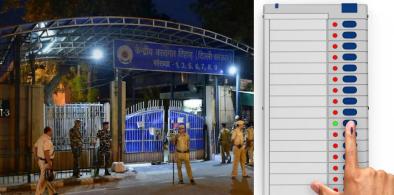
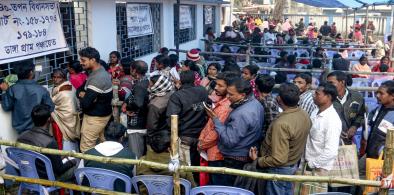
Bihar Elections: A Clean Sweep Amid Concerns Over Electoral Fairness in India

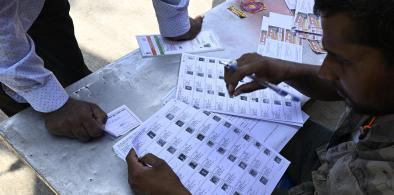
In Bihar, too, like has happened in earlier elections in Maharashtra and Haryana for example, the winning side will have to contend with the allegations that they romped home with an umpire whose role remains hotly contested, placing the fairness of the entire electoral process under a cloud. The allegations are more than a case of sour grapes and have now become a growing part of recent election campaigns and results, putting Indian democracy at risk 

CSR in South Asia: What It Means to the Corporate and Social World

An important pillar of CSR is the role of non-government organisations (NGOs) as partners in channeling funds to social sectors. While NGOs are committed to social development, their work is severely constrained without funding support. CSR funding strengthens the NGO ecosystem, while corporates gain a credible channel to fulfil their ethical and social commitments. Governments, in turn, benefit from effective partnerships with corporates and NGOs, enabling shared responsibility for social-sector goals.

More on Perspective

Feminism and the Global South: Beyond borrowed narratives of Western feminism

Western feminism often sees the family as an oppressive or repressive structure. But in South Asian or African societies, the family is the main place of social security. Therefore, feminism here does not want to break up the family, but to build a new family and create a partnership between men and women.

Is There A Hidden Hand of Anti-Semitism in Sri Lankan Politics?

However, in Sri Lanka, discussions about Gaza rarely consider this perspective. Instead, they consistently reflect an anti-Israeli sentiment. If we examine the situation closely, it becomes clear that the pro-Palestinian narrative, along with its discourse, works to weaken the relationship between Israel and Sri Lanka

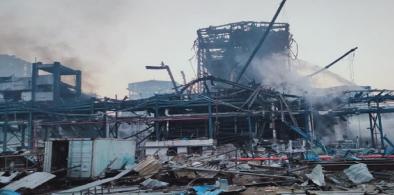
An Emerging Tool for Terror: The lurking danger in the explosive growth of DeFis

In its 2023 Mutual Evaluation Report on India, FATF recommended that India should broaden access to its National Risk Assessment and consider releasing a public version. Considering that the cross-border risks from DeFi are real and affect every citizen, an updated assessment of the DeFi sector would help flesh out a strategy in collaboration with the industry participants. It is time to prevent DeFi from becoming a weapon of mass destruction

Bengaluru Antenna: A New India-UAE Bilateral Initiative in Joint AI Innovation and Development Technology Agenda

The Bengaluru Antenna™, coined by me to define this strategic engagement, is both a metaphor and a practical roadmap. By leveraging Bengaluru’s deep-tech ecosystem and the UAE’s AI ambition, it transforms opportunity into action. The Bengaluru Tech Summit 2025 provides the perfect platform to bring this vision to life

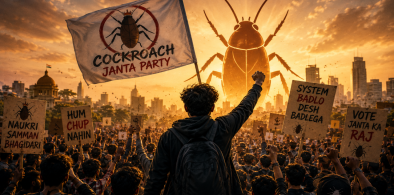
Lessons From Mass Uprisings: Governments Ignore Warning Signs At Their Own Peril

Mass uprisings have become a fine-tuned instrument for destabilizing governments – and are likely to occur more frequently. Some hail them as an expression of “people’s power” and a revolutionary force for change. But sustained instability is not healthy for any nation. The only real safeguard is good governance: policies that promote social equity, protect livelihoods, and are seen as fair and transparent. If governments ignore the warning signs, they take a calculated risk – one that could end in their overthrow. 

As Nepal limps back to normal after mayhem and regime change, questions aplenty but few answers

The burning of Kantipur TV points towards a troublesome point in Nepal’s history, where journalism has been vilified. Yes, some journalists do take shortcuts, and all legacy media is funded by businesses. But they’re also run by journalists who believe in truth-telling. Free and fair journalism is the foundation of democracy, and pulling down a media house like Kantipur TV signals the close of a period that trusted independent media.

Remembering 1965 War Heroes: Indian Army Regiment, Where Ayub Khan’s Father Served, Wreaked Havoc On Pakistan Army

By the end of the war, Pakistan had lost 3,800 personnel killed, over 400 tanks destroyed or captured, more than 40 aircraft shot down, and suffered a sharp drop in morale. The Indian Army captured the vital 2,637-meter (8,652-foot) high Haji Pir Pass, reached the outskirts of Lahore, captured Phillora, and created “Patton Nagar,” a graveyard of nearly 100 destroyed Pakistan's famed Patton tanks at Khem Karan.

India's Gandhian Resolution on Trumpian Tariffs

This is aiming for a high moral ground, but Gandhian satyagraha will demand much more from India. It will challenge India on aligning with Israel while it bleeds Gaza. And it will raise many other difficult questions that if followed through will help India stand erect and tall in a world that still bows to Gandhi.

Rethinking the EV Push: India's Transition to Electric Mobility Must Factor Socio-Economic Realities

The transition to EVs also introduces geopolitical challenges, particularly concerning critical minerals like lithium, cobalt, nickel, and rare earth elements (REEs). China plays a dominant role in the global supply chain for these REEs, not only as a leading extractor but also as the largest processor and refiner. This centralized control gives China significant strategic leverage over countries that depend on these resources, including India.

Message from Tianjin: Balance of Power Issues Can Upset SCO Applecart

Despite the public display of bonhomie at Tianjin, however, the SCO is ridden with major differences in harmonising national interests of member States, with some entering into active skirmishes, trade barriers or imbalances, equations with major powers and double standards on issues such as countering terrorism or protecting sovereignty and territorial integrity. 

Student Suicides In India A Cause For Concern

Most children are always afraid of failing exams. The pressures by parents to perform well in competitive exams create a sense of fear. Such accretion of fears  at a young vulnerable age make the mind highly strung emotionally, and any trigger can snap it. So, saying that pressures of education, ragging, break-ups etc. lead to suicide is wrong. These kids were already prone to suicide – the trigger could be anything.

Trump & Modi: Rekindling the Bromance!

Yet, amid this global chess game, the Trump-Modi tweets reminded us of one undeniable fact: politics is now as much about social media bromance as it is about border disputes and trade wars.

Maharashtra: An important stakeholder in India’s para diplomacy

Several countries have presence in Maharashtra. Some of the countries which have shown interest in recent years are Germany, Japan and South Korea whose leaders have taken great interest in establishing manufacturing centres in Maharashtra. The Pune industrial belt has drawn car manufacturers the world over, including Volkswagen, Mercedes-Benz, and General Motors. It is often referred to as the ‘Detroit of India’

Teachers as daily wagers: To Become Knowledge Economy, India Needs to First Fix its Education Foundations

The combined effects of teacher shortages, contractualisation, and parallel schooling are devastating for India’s long-term competitiveness. It leads to poor learning outcomes, misaligned workforce skills where employers consistently complaining of skill shortages, because curricula lag hopelessly behind. No wonder that of the college educated youth in the age group 24 to 29, the unemployment rate is more than 30 percent.

Trump Tariffs in South Asia: Bangladesh Has an Advantage

Several Indian export firms have begun approaching Bangladeshi manufacturers to produce apparel jointly, underscoring Dhaka’s emerging advantage after US tariff hikes on India and China. Chinese investors, too, are showing interest in building garment factories in Bangladesh, drawn by its new trade advantage. Bangladesh, by capitalizing on India and China’s relative “disadvantage now has the opportunity to expand its export footprint.