Bombing of Tehran

The Iran Conundrum, Trumpian Dilemma and the Shifting Sands of West Asia

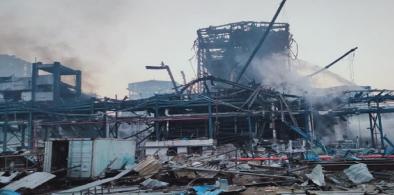
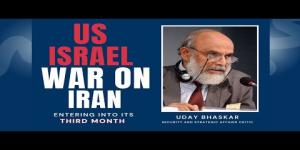
Ray Takeyh, senior fellow for Middle East studies at the CFR believes that the West could have got much better dividends without this war. He says that Araghchi had tabled proposals that called for the suspension of uranium enrichment for several years before allowing it to then resume at low levels. Linda Robinson, CFR’s senior fellow, also feels that there will be mass American casualties if special forces are deployed. Already Arab States are upset with these joint operations with Israel. The consensus among CFR experts is that Trump’s ambitious objectives cannot be achieved merely with joint assaults by air or sea. 

Custodial Killings with no Judicial Remedies: A Sad Tale Across Two Punjabs

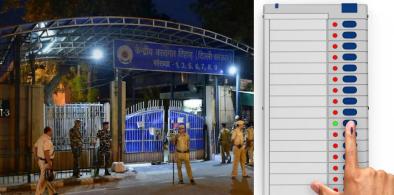
Was this the legacy that the great freedom fighters from Punjab – or extend that logic to rest of India and Pakistan where custodial deaths are common – would have wanted their land and its future generations to inherit? As if the breakdown of the country and its gory partition with a divided Punjab were not enough to torment them in their graves, wouldn’t this thought leave them completely shattered and desolate: this divided land is united in its conviction to perpetuate the very colonial mindset they fought. 

Bangladesh's Recent Election was Neither Free nor Fair

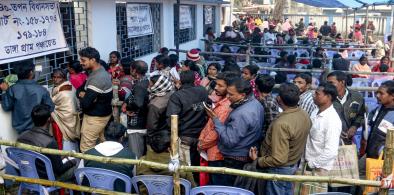
The Interim Government arranged extensive state protocol and privileges to the government-sponsored party, National Citizen Party (NCP), parties close to IG like Jamaat e Islami (JI) and their alliances, almost as if they were the government themselves. Similar privileges were given to the BNP and its allies. But no such facility was extended to the JP.

Competitive Populism vs Economic Development: When Forests are Monetised to Fund Revenue Expenditure

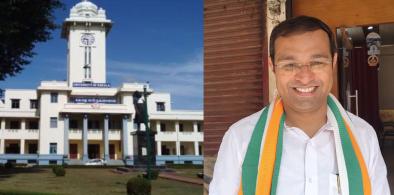
A democracy that is cutting down forests for votes risks mortgaging its ecological future for an electoral present. Welfare is essential; appeasement is corrosive. The difference lies in fiscal discipline, transparency and respect for citizens, who are not beneficiaries, but are owners of the republic. If we do not draw that line now, next year’s burden will demand another forest.

More on Perspective

Mumbai's infamous shantytown: Can Dharavi’s ‘Heart’ Survive Its Makeover?

The Dharavi Redevelopment Project has the potential to serve as a model for inclusive urban planning. However, this outcome depends on whether economic growth, social equity, and environmental sustainability are treated as equal priorities. Without adequate safeguards, the project risks becoming another instance where redevelopment favors corporate interests over human needs. 

Even As Ruling BJP Grows Politically Stronger, Question Marks On Indian Democracy

While in operational terms, India’s democracy was downgraded by several international bodies in recent years to ‘partly free’, its perceptible decline is perhaps most evident in the distrust generated by the bureaucratic fiat of a selective voter revision. As the exercise has struck off names without a clear audit or requisite time for discussion for explaining and correcting such deletions, the tag of the world’s largest democracy appears troubled by these developments. 

Why India Must Invest More In Childcare

Economic benefits also arise because of the jobs created in the childcare industry. Investing in childcare offers a clear pathway to unlock short and long-term economic gains, while enabling women and children to realise their full potential. If every young child in the pre-primary age group had access to childcare, millions of mothers could enter paid work between 2023 and 2030. In India alone, this could mean 6.2 million mothers joining the workforce.  

Chasing Oil While Losing The Future: America’s Strategic Error In Venezuela

For a president who prides himself on deal-making, the logic is straightforward. Clean-energy and circular-economy partnerships create domestic jobs, anchor supply chains at home, attract private capital rather than public subsidy, and reduce exposure to geopolitical shocks that oil markets have never been able to eliminate.

Why Sinhalese Buddhist Nationalists Adore Israel? An Alternative Reading

These myth-based narratives reveal a deeper psychological impulse: the desire to anchor Sinhalese Buddhist identity within a framework of global uniqueness and divine purpose. While Sri Lanka’s diplomatic relations with Israel have fluctuated since independence, Sinhalese Buddhist nationalist sentiment continues to exhibit a strong emotional affinity toward Israel.

A Distracted Generation And The Erosion Of State Capacity In India

India’s youth are growing up in an ecosystem defined by continuous stimulation and accelerated consumption of information. Attention is fragmented, patience for complexity is declining, and long-form engagement—essential for policy, administration, and strategic thinking—is increasingly marginal. This is not a cultural lament. It is a structural shift with direct consequences for how future administrators, policymakers, and institutional leaders are formed.

India’s outreach to West Asia and Africa: Strengthening Global South Leadership

By engaging Jordan, Ethiopia and Oman, India demonstrated its capacity to operate across geopolitical divides while remaining anchored in Global South solidarity. These visits were not isolated diplomatic events but part of a sustained effort to reshape international engagement through inclusivity, responsibility, and shared growth. As global uncertainties persist, India’s outreach to West Asia and Africa strengthens its claim to leadership rooted in partnership and a collective vision for a more equitable world order.

Growing Mistrust, Fragile Sunni-Shia Political Balance Deepen Gilgit-Baltistan Unrest

The security situation deteriorated further in 2025. A terrorist attack on a Gilgit-Baltistan Scouts checkpost resulted in two fatalities and one injury, heightening tensions. Protests later resumed in Sost, disrupting trade between Pakistan and China via the Khunjerab Pass. The year culminated in two high-profile attacks on October 5, when unidentified gunmen ambushed Maulana Qazi Nisar Ahmed, Ameer of the Ahl-e-Sunnat wal Jamaat in Gilgit-Baltistan and Kohistan, near the police headquarters in Gilgit, injuring him and several others. On the same day, Malik Inayat-ur-Rehman, the Chief Court Judge of Gilgit-Baltistan, narrowly escaped an assassination attempt near the City Hospital.

'Bande Mataram's' Impactful Role In The Indian Freedom Movement: A Historical Perspective

‘Bande Mataram’, ‘Allah-o-Akbar’ and ‘Hindu-Mussalman ki Jai’ were the three national slogans proposed by Mahatma Gandhi in consultation with Shaukat Ali in 1920 during the Non-Cooperation Movement, and, much later on August 29, 1947, two weeks after the country’s independence and partition, ‘Bande Mataram’ was sung at his prayer meeting in Kolkata in the presence of both Hindus and Muslims.

From Factories to Minds: Shaping Viksit Bharat Through Knowledge, Innovation - and NADP’s Vision

NADP carries the 200-year heritage in defence manufacturing of ordnance factories and its evolution into a premier Central Training Institute, recognized by DoPT and accredited as “Ati Uttam” by the Capacity Building Commission. NADP has trained over 20,000 officers from IOFS, IOFHS, IDAS, CLS, Armed Forces, and private defence industries. But we are not just rooted in India—we think global.

The Aravallis Survived Times, But Can The Hills Survive Paperwork?

What is being done to the Aravallis displays much more than deforestation that extends far beyond Rajasthan and northwestern India. If hills can be eroded through redefinition, forests can be fragmented through classification, water bodies can be diminished through measurement, then survival can be denied through legality. The states are acting like it is trusting paperwork more than the ecosystem and reality.

Hit By US Tariff Escalation, Indian Agriculture In Need Of Complete Overhaul

The impact of the US tariff escalation, particularly on agricultural goods, is expected to be significant as the US is one of the largest importers of Indian agricultural products in FY25 (US$ 5.62 billion), accounting for 10.98 per cent of total Indian exports. While seafood (primarily frozen shrimp) has been the top item, there are others as well, including spices and essential oils, basmati rice, processed fruits and vegetables, and baked foods. These are directly linked to the livelihood of Indian farmers.

Indian Air Force: Faced With Critical Shortages Amid Mounting Threat Levels

The WDMMA report notwithstanding, critical shortages of the IAF in terms of fighter jets and the Indian Army’s helicopter shortages can hardly be ignored. In terms of fighter jet squadrons, the IAF now just about equals that of the Pakistan Air Force (PAF). What this means in a multi-front war requires no elaboration...... (and) reports suggesting China supplying 40 J-35 stealth fighters to Pakistan starting 2026 should not be ignored. 

Divisive Geopolitics Stalling Global Climate Action, Clean Energy Transition

International trade wars, ushered in by Trump, have unfortunately started affecting the green energy transition. Since China has developed a virtual monopoly on a range of green technologies from solar panels to lithium batteries, western governments fear Chinese dominance over important economic sectors and are imposing trade restrictions, putting their own climate targets in doubt. In retaliation, China has used its stranglehold over rare earth minerals by imposing export controls, that are expected to hurt many critical sectors in the West, including green energy technologies.