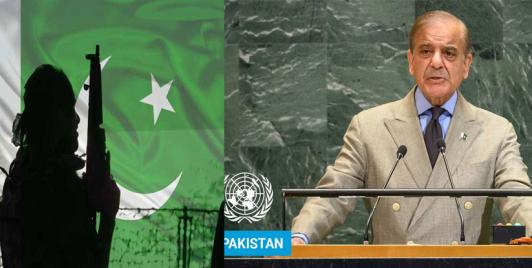
The growing camaraderie between Pakistan’s military and the ISK poses a threat to the entire South Asian region.
As Imran Khan enters his seventies behind bars, the stakes extend far beyond his individual fate. Should his detention continue—or worse, should harm befall him in custody—the consequences could be explosive. Public anger, already simmering, may erupt into widespread unrest, challenging the state’s ability to maintain control.
Bangladesh has survived partition, the liberation war, famine, floods, military coups, and democratic collapse. It has always returned. But returning is not the same as resolving. Fifty-six years after independence, the founding paradox remains: a nation whose birth is still debated cannot fully inhabit its future. The gun salutes will be loud and unambiguous. The questions they echo, however, about what Bangladesh is, who founded it, and whose vision should guide it, remain, as they have always been
For India, this raises complex challenges. Historically, India has positioned itself as a strong advocate of anti-colonialism and sovereignty. However, in the current context, its responses have often appeared measured and cautious, despite the direct implications for its interests—ranging from energy security and regional stability to strategic initiatives such as connectivity through Iran.
For India, the failure is particularly significant as its presidency was an opportunity to translate “strategic autonomy”, the current buzzword in foreign policy circles, into multilateral leadership. True, its response is shaped by structural constraints. The country imports more than 85% of its crude oil, much of it from West Asia and Russia. Some nine million of its citizens live in the Gulf. The United States is its largest trading partner. Iran anchors the Chabahar port project and India’s access to Afghanistan and Central Asia. Each relationship is too consequential to risk.
The growing camaraderie between Pakistan’s military and the ISK poses a threat to the entire South Asian region.
The encampments in Cox's Bazar have metamorphosed into hotbeds of militant activities, underpinned by the infusion of funds from the Middle East, Pakistan, and other nations, which are cynically utilized to perpetrate a nexus of militancy within these precincts.
The revival of trade relations with old friend Russia is the turning point in India’s oil dependency on the Arab world. This has strengthened India’s resilience to oil shock to a considerable extent.
All in all, the issues on the agenda are very different from the issues that the BJP thought would be on the agenda. The finals could go down to the wire and there will be many lessons learned once the votes are counted and the results are declared.
India, which found itself quite behind the curve like the US in gauging the rapidly changing political dynamics, first shut down its consulates and then its embassy just as the Afghan Republic collapsed on August 15, 2021. But once it realised it would be foolhardy to expect the revival of the Republic, it tacitly started mending fences with the Taliban, sending what it called a "technical team" to Kabul, resumed humanitarian aid, and discontinued diplomatic support to the embassy in New Delhi that was in the hands of representatives of the ousted Ghani government
Before visiting Sri Lanka, Raisi visited Pakistan as part of his South Asian tour, and it is a salient factor that both Pakistan and China are equally important to the BRI as the Chinese have invested millions of dollars in both countries.
This nerve centre of protests proved to be a fertile ground for new ideas and creative approaches to digital activism and served as a beacon of hope for many Sri Lankans seeking positive change.
The sense of being ‘South Asian’ has seeped into the consciousness of artists and designers trained in Lahore. They find common linkages long after they have left when they find themselves co-exhibiting in art fairs, galleries, and museums.
Most importantly, does the rise, arming, and free hand given to Arambai Tenggol signal the arrival of private political armies in India?
As it stands today, Maldives is going to be drawn deeper into China’s strategic sphere. Chinese presence in Maldives is set to increase.
Designating it as a ‘Hindu’ New Year appears to be part of an ongoing attempt to homogenise our diversity and multiple, multicultural identities.
It is critical to formulate a comprehensive strategy that involves both Bangladesh and India to counteract the potential threats posed by external actors in the CHT. This strategy should take into account the historical grievances and aspirations of the ethnic communities
After all, If India can do more than $100 billion worth of business with China, with which it is now involved in a far more complex border dispute and naval rivalry, then we can at least do business with our next-door neighbours and let consumers have a greater choice.
A report submitted by the State Intelligence Service ( SIS) of Sri Lanka to the country’s defence secretary indicates there are hundreds of Sri Lankan nationals serving on both Russian and Ukrainian fronts.
India watchers in Sri Lanka are not unduly worried about Modi’s statement and External Affairs Minister Subramaniam Jaishankar’s comments. They point out that Modi did not say that his government will seek to retrieve Katchatheevu from Sri Lanka.