India, Australia Def Ministers meeting in New Delhi

India and Australia Enhance Strategic Relationship, Prioritise Maritime Domain Awareness to Secure Indo-Pacific

A significant factor that emerged after India launched Operation Sindoor against Pakistan in May 2025 was the strain in the India-US relationship under the Trump administration, driven by aggressive tariff disputes and policy friction. This indirectly accelerated India’s push to diversify partnerships, prompting New Delhi to lean more pragmatically into closer economic and strategic ties with middle powers such as Australia.

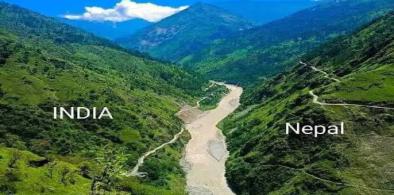
The Reopening of Nathu La and a Pragmatic India-China Compact: Opportunity for Both Countries to Move Beyond Symbolism

India and China need not share identical geopolitical visions to agree that a stable border, prosperous border communities and transparent rules are preferable to uncertainty. The most useful measure of Nathu La’s success may therefore be not how many tonnes cross the pass, but how routinely two neighbouring systems learn to work together.

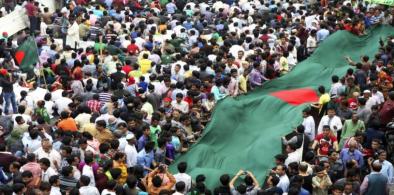
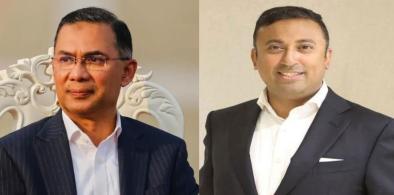
Hasina’s December Gamble: Will it Become a Moment of Confrontation or Reconciliation?

December could therefore become much more than Victory Month. It could become a test of whether Bangladesh's next chapter will be written through democratic accommodation or another round of political vengeance. The danger is that a leader returning to face her past could inadvertently reopen the country's deepest wounds. 

Russia’s Bid for a Larger Asian Role; Will Be Closely Watched by Beijing

Russia wants to use the Far East to diversify away from the West, but it risks becoming excessively dependent on China. That is why Southeast Asia, India, Japan and other Asian partners matter to Moscow as they provide Russia with a wider Asian field and fallback and reduces the risk that Russia’s entire eastern pivot becomes a one-way dependence on Beijing.
 

More on Geopolitics, Security and Strategic Affairs

An Alliance of IITs to tackle the global climate crisis?

A number of leading universities and institutes around the world have initiated net-zero hubs in their campuses but India is the first country to initiate a  collaborative national movement supported by government and industry.  Integrating 23 IITs in this movement will be a groundbreaking concept that can elevate India as the world leader in clean technologies and of skilled human capital.

Politics in the digital abyss: How 'liquid modernity' is shaping populist discourse, particularly in South Asia

Imran Khan’s political journey in Pakistan highlights the transformative power of cyberspace in a liquid modern world. Initially dismissed by critics, Khan leveraged social media to build a narrative of hope and change.  Khan’s PTI has consistently outperformed traditional parties in digital engagement, mobilizing urban youth and the diaspora.

Decolonising the mind: South Asia yet to come out of its British colonial-era laws

If one analyzes the contemporary South Asian legal landscape, one can still see the influence of colonial-era laws and these laws are largely being used to oppress the common people. In Bangladesh, India, and Pakistan one has seen some colonial laws and their oppressive acts being changed and, in some instances, more oppressive ones taking their place. 

Manmohan Singh had an innate vision of India’s greatness

It was an extraordinary speech delivered in the midst of a crisis that had brought India to the precipice of insolvency. Laying out an exhaustive prescription for how he would go about fixing a sick economy, Dr. Singh was sensitive enough to give it a highly optimistic and sanguine touch.

Women beyond their Dalit identity: A feminist moment beyond caste in India

The practices of wearing vermillion on her forehead, a ‘mangalsutra’ (auspicious thread worn by married women in their husband’s name) around her neck, a ‘laal bindi’ (red dot sign that a woman is married) and changing her name to include the name and/or the surname of her patriarch. The claims of patriarchal superiority thus come to embodied in her body, identity, entity, and space. 

Pakistan Supreme Court ruling on May 9 riots has implications for civil-military relations

The Supreme Court’s decision reaffirms the pivotal role of the military in Pakistan’s national security framework. While civilian authorities are crucial, the military is often seen as the protector of the nation, especially during times of instability. The Court’s ruling underscores the importance of the military’s involvement in ensuring swift justice for those involved in anti-state activities, particularly when national security is at stake.

Atal Bihari Vajpayee: A prime minister who saw moderation in politics as a foundational principle

Vajpayee was known to speak slowly, sometimes with long pauses, because he chose his words with utmost care. But in those pithy but strong words lay Vajpayee's innate convictions about his 'idea of India'

One Nation, One Election: Staggered electoral cycle important safeguard of India’s federal structure

The leitmotif of ‘One Nation’ is strongly aligned with the BJP’s policy and rhetoric; consider the 2017 introduction of the Goods and Services Tax (‘One Nation, One Tax’) and the abrogation of Article 370 in 2019 (‘One Nation, One Constitution’). The ONOE falls within this inherent paradigm: an overpowering centre under the guise of administrative cost-cutting and electoral efficiency.

Kolkata rape and murder case: Confronting our collective failures

The medic rape-murder case, which captured global attention in an era dominated by the attention economy, had the potential to ignite systemic reforms, given the brutality of the crime. The movement, like many before it, held the power to expose the moral failings of the ruling party in the state. Yet, as so often happens, it faltered within a couple of months—or perhaps was made to falter. Herein lies an uncomfortable reality: we, the aam aadmi (common man), must share the blame.

Why Pakistan needs to reform and regulate its madrassas

Many critics argue that madrassas are breeding grounds for extremism. While there are undoubtedly instances of some seminaries being linked to extremist ideologies, it is essential to recognize that the vast majority of mudarrassahs are not involved in such activities. However, the lack of regulation leaves these institutions vulnerable to misuse. 

Bangladesh's passport purge: Worrying signs of authoritarianism, undermining of democratic principles

The interim government's decision to cancel the passports of 22 military officials is a stark reminder of the dangers of unchecked executive power. It violates the Constitution of Bangladesh, contradicts international legal standards, and disregards judicial precedents. Moreover, it reflects a troubling disregard for due process and the rule of law.

Is Colombo seeking to terminate the Indo-Lanka Accord?

The question that arises now is what will happen to the future of the Indo-Sri Lanka Accord, signed on July 29, 1987 between Prime MInister Rajiv Gandhi and President J R Jayawardne, under JVP’s rule? Dismantling the Indo-Sri Lanka Accord has been a long-standing desire of ultra-Sinhala nationalists in the deep south of the country. 

Will Bangladesh transition from Bengali identity to Islamic nationalism?

Bangladesh is one of the larger and populous countries in South Asia, with its geostrategic location in the Bay of Bengal and an impressive economic growth from its booming textile industry.  So restoring political stability and defeating the rise of Islamist forces is of utmost importance not only for Bangladesh but the whole region.  

Destructive protests damaging to Pakistan’s economy, governance and social harmony

Perhaps the most significant damage inflicted by PTI's recent protests has been the toll on Pakistan's fragile economy. Pakistan's economy is already struggling with inflation, unemployment and a mounting fiscal deficit. PTI's protests, which have led to mass shutdowns in key cities like Islamabad, Rawalpindi, and Lahore, have worsened the economic crisis.

Five years of change in Jammu & Kashmir: Challenges of sustaining the peace and economic growth

The repeal of Article 370 not only changed the political map of Jammu and Kashmir, but also introduced a new wave of promising economic growth. While challenges remain, the steps taken by the Indian government to increase investment and improve infrastructure indicate great potential for J&K to become one of the hubs of economic development in India.