National Day celebrations in Dhaka

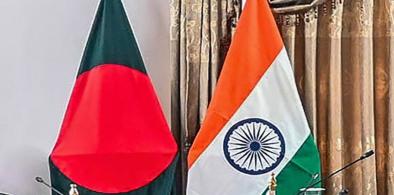
Fifty-Six Years on, Bangladesh a Nation Still Negotiating What it Means to be Itself

Bangladesh has survived partition, the liberation war, famine, floods, military coups, and democratic collapse. It has always returned. But returning is not the same as resolving. Fifty-six years after independence, the founding paradox remains: a nation whose birth is still debated cannot fully inhabit its future. The gun salutes will be loud and unambiguous. The questions they echo, however, about what Bangladesh is, who founded it, and whose vision should guide it, remain, as they have always been

Colonialism by Another Name: Reconfiguration of Global Power With Trumpian Characteristics

For India, this raises complex challenges. Historically, India has positioned itself as a strong advocate of anti-colonialism and sovereignty. However, in the current context, its responses have often appeared measured and cautious, despite the direct implications for its interests—ranging from energy security and regional stability to strategic initiatives such as connectivity through Iran.

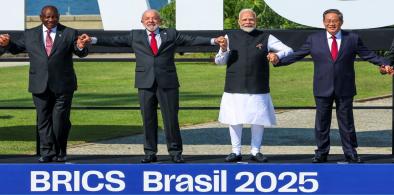
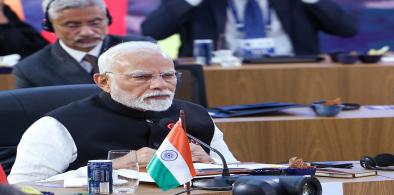
India, BRICS Fail the Iran Test: It Could Seek to Bridge Divides

For India, the failure is particularly significant as its presidency was an opportunity to translate “strategic autonomy”, the current buzzword in foreign policy circles, into multilateral leadership. True, its response is shaped by structural constraints. The country imports more than 85% of its crude oil, much of it from West Asia and Russia. Some nine million of its citizens live in the Gulf. The United States is its largest trading partner. Iran anchors the Chabahar port project and India’s access to Afghanistan and Central Asia. Each relationship is too consequential to risk.

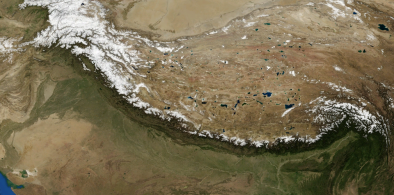
Bhutan Under China’s Doklam Shadow: Delhi Needs to Move Away From Protector-Protected Dynamic With Thimpu

A key consideration for Delhi is Bhutan’s occasional denial or downplay of any Chinese encroachment on its territory, even when satellite data suggests otherwise. This is coupled with a growing perception within Bhutan that India is preventing it from completing its border negotiations with China. Although Thimphu remains closely aligned with Delhi, there is growing interest in expanding its engagement with China.

More on Spotlight

Signs of a virulent civil war emerging in Manipur

The irony is that Manipur is where the Chinese and American interests coincide against India. But the need is to look at ourselves in the mirror. If we provide a readymade asymmetric battlefield to overt or covert inimical forces, why would they not exploit it? 

India’s national security challenges amid global disorder

The combative rise of China has challenged US hegemony in global relations. In such a world, the crafting of a foreign policy that ensures national security requires vigilance, patience, caution, economic and military clout, and more importantly, constant risk management that enables India to maintain its strategic autonomy.

Balochistan's enforced disappearances: When will Pakistan own up to its flawed policies?

Many fear that the Balochistan situation could lead to a 1971-like crisis that split the country due to centralised power, military operations against civilians, and foreign overreach. Why, then, have these lessons not been learned?

Why peace continues to elude Manipur

The ethnic cleansing under Biren Singh’s watch broke all records – Kuki-Zo women paraded naked and subjected to mass rape publicly, with some token FIRs. This is also viewed as the reason why Prime Minister Narendra Modi has avoided visiting violence-stricken Manipur in the past 16 months.

India's patriarchal nightmare: The Kolkata horror, and illusion of justice

The Kolkata case is a stark reminder of the persistent failures of India's criminal justice system in addressing sexual violence against women. To truly address the issue of rape in India, there must be a holistic approach that includes legal reforms

Can a collaborative strategy work for South Asia's gold medal quest at the 2028 Olympics?

South Asia’s quest for gold medals at the 2028 Olympics requires a strategic and collaborative effort. By learning from the successes of sports legends like Michael Phelps and Caeleb Dressel, and addressing key areas such as infrastructure, coaching, and talent development, South Asia can enhance its Olympic performance.

Bangladesh in the aftermath of a revolution: Need for political clarity to meet high expectations

The lesson from the Bangladesh protests reaffirm the fact that governments and their agencies should handle grievances of citizens promptly, with sincerity and fairness, or retributive justice will follow that is unhealthy for democracy. Currently, it is imperative for internal peace along with cultural safety to be restored in Bangladesh, or the nation will drift miles away from democracy.

Emerging practices in channelising green finance : Global learnings for South Asia

There is  a strong case to develop MVI for all countries of South Asia based on climate  and other vulnerability indicators so that  these countries could  access  and channelise green finance  to fulfil their SDG goals.

Democracy in transition: Bangladesh's political chessboard open to potential permutations and combinations

BNP’s push for early elections, Jamaat-e-Islami’s need for time to rebuild, the ambitions of smaller parties, and the rise of new political forces from the anti-discrimination movement all contribute to a highly volatile and unpredictable political environment. 

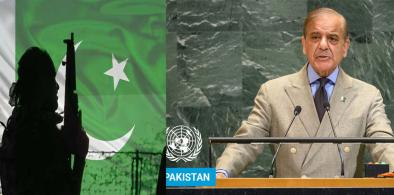
The arrest of former ISI chief echoes Pakistan’s continuing politico-military tussle

The reign of the "hybrid government" in Pakistan has ended with Gen Munir's military wresting its socio-economic and political control.  The arrest of the former ISI spymaster has been made into an example for those who dared act against the military. 

A tale of two Indias: The Ambani wedding highlighted the nation's yawning wealth disparity

The contrast between the Ambani wedding and the lives of millions of Indians struggling to meet basic needs is a stark indictment of this inequality. While the former was a celebration of excess, the latter is a grim reality marked by poverty, hunger, and lack of access to essential services.

Battle to dominate global communications: Pakistan should leverage US-China rivalry for national benefit

For South Asia, particularly Pakistan, this fragmentation poses challenges but also opportunities. Pakistan’s strategic investments in its digital infrastructure, supported by both Chinese and Western technologies, could position it as a bridge between these emerging digital spheres. By fostering regional connectivity and digital cooperation, Pakistan can mitigate the risks of fragmentation and ensure that its digital economy continues to thrive in a multipolar world.

Why climate change needs to figure more prominently in Indian political discourse

India needs to have a robust competitive framework where political parties ideate, brainstorm and debate on how to give more teeth to the Ministry of Environment Forest and Climate Change(MoEFCC), create bodies like the USA's EPA and ensure all environmental laws, disaster management work in tandem under the Gaia’s hypothesis highlighting the “One-Health Approach”.

The potential of regional social spending in India's soft power projection

Apart from being the largest country in the region in terms of geography and economy, New Delhi’s responsibilities as an important player in South Asia also rest on its efforts to improve the region's social and economic parameters. 

Challenges in building a new Bangladesh: Yunus has his work cut out

India offered unqualified support to Hasina over the last decade or so. For India, it will be a major challenge to see how it builds a relationship when a new democratic government emerges in Bangladesh. China had invested more in infrastructure in Bangladesh in the last decade or so; and the relationship was improving. But it did not interfere in domestic political issues.