Representational Photo

Crunch Point For World Cricket: Power Politics And Double Standards Unfairly Rob Bangladesh Of Participation

Ultimately, Bangladesh’s absence from the 10th edition of the T20 World Cup was the result of the BCCI’s ego and the ICC’s double standards where power politics and selective decision-making outweighed fairness and sporting integrity. Although many view the Pakistan Cricket Board’s support for Bangladesh positively, in reality it is also a strategic move to counter India for its own strategic benefit. If the match is boycotted, Bangladesh will suffer even greater financial and administrative losses. 


Jaish-e-Mohammed's Female Brigade: ISI-Backed New Jihadi Units Intensify Counterterrorism Challenges in South Asia

Unlike earlier jihadist cells dominated by Pakistani nationals, this unit deliberately recruits women from Indonesia, the Philippines, Uzbekistan, and other foreign countries. Reason behind recruiting non-Pakistani nationals serves a dual purpose: it complicates attribution and shields Pakistan’s security apparatus from direct accountability. Such operational sophistication reflects ISI’s continued role not merely as a passive enabler but as an active architect of jihadist adaptation.

Securing The Digital Frontier: A Unified Call For Cybersecurity In South Asia

South Asia has the potential to be a global digital leader. It has a young population and a booming tech industry. However, this potential will only be realized if the region is secure. We must treat cybersecurity as a pillar of national security, just like border defense. This requires better technology, smarter laws, and stronger regional ties. The digital threats of 2026 are fast and complex. To meet them, South Asia must be faster and more united. The time to build a collective digital shield is now, before the next major crisis occurs.

Aid, Ports, And The Limits of Incrementalism: What India’s Budget Says About Its Foreign Policy

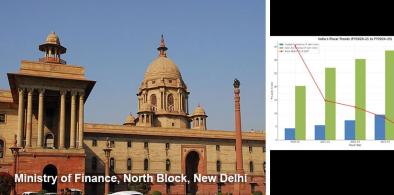
Yet the strategic costs are real. Reduced engagement in Bangladesh risks ceding influence at a moment when Dhaka is actively diversifying its partnerships. Hesitation over Chabahar weakens India’s leverage in Iran and Central Asia and underscores its vulnerability to US pressure even as it seeks a more multipolar foreign policy. The 2026–27 Budget does not signal a dramatic shift in Indian foreign policy. There is no abandonment of neighbours-first rhetoric or of connectivity-led diplomacy. What it reveals instead is a narrowing circle of feasible economic action.
 

More on Spotlight

The Reasi terror attack and the Pakistani deep state's failed stratagems

Despite Pakistan’s repeated deniability of its proxy wars it conducts against India, it is a known fact that the State’s idea of counter terrorism is to selectively crack down on some terror outfits while overlooking the actions of the ones it nurtures and aligns with on similar strategic objectives. In an effort to mollify its "iron brother" China, Pakistan has carried out heavy-handed operations against its citizens who are not supportive of China and its growing presence in Pakistani affairs.

Western support to Sikh separatists is damaging for bilateral ties

It would be helpful to understand the context and background behind support to the Khalistanis by five western governments that particularly stand out i.e. the US, Canada, the UK, Germany, and Australia.

Pakistan's Economic Advisory Council: Will conflict of interest of members stymie effective economic governance?

The inclusion of merchants with evident vested interests in the EAC exemplifies the ethical quandary at the heart of Pakistan's economic administration. Their close financial links to the industries they are supposed to supervise and advise on are a typical example of putting the fox in charge of the henhouse. 

Sheikh Hasina’s India visit: Paving the way for bilateral advancements and strategic partnerships

India may in principle approve the supply of electricity from Bhutan to Bangladesh using its power grid. Bangladesh will seek smooth supply of essentials like wheat, sugar and onions from India.

Amid worsening Myanmar situation, pressuring Bangladesh to accept more refugees will deepen Rohingya crisis

As the situation in Rakhine state remains severe, with recurrent clashes between the Arakan Army and the Tatmadaw providing no apparent resolution, sustaining the lives of over 1.3 million Rohingya is a massive challenge for Bangladesh. 

Bangladesh needs to move to a circular economy for sustainable development

By combining Bangladesh's strong readymade garment industry with the Netherlands’ circular economy knowledge, one can create a win-win situation.

Resurgence of terror in Jammu and Kashmir: India needs to face up to new realities

A temporary lull in militancy in Jammu and Kashmir a few months back was followed by spikes in killings with a sudden spurt last week as the ISI and the terror masterminds in Pakistan had been intending to thwart any attempts at peacemaking. They wanted to dispel any myth that the J&K situation had been resolved in favor of India. 

India needs more operational reforms in its defence strategy

The military is trained to give advice based on professional considerations. This is for the good of the nation and should be appreciated, even if not in consonance with the thinking of higher-ups. A ‘Yes Minister' type of general/admiral/air marshal, who may become a favourite of the government in power, will be a danger to the nation, as happened in 1962. 

China will continue to loom large in South Asia's growth calculus; remains largest trading partner of India

According to information available from the Embassy of India, Beijing more than 100 Chinese companies have established offices/operations in India. Many large Chinese state-owned companies in the field of machinery and infrastructure construction have won projects in India and have opened project offices in India. 

What the results of Elections India 2024 are telling us

The last ten years of BJP rule in the country have exacerbated social tensions. All sections of Indian society need reassurance not for the enjoyment of special privileges, except that which is provided in the Constitution, but in each citizen being assured of freedom from economic, social, or political discrimination on whatever ground. Otherwise, Indian society is faced with fractures which cannot bode well for the lasting unity that the country was born to. This is a challenge for the incoming government.

Modi's third term offers unique opportunity to revitalize India-Bangladesh ties

As India assumes a more assertive role in regional and global affairs, it may look to Bangladesh for geopolitical support on critical matters such as maritime security in the Bay of Bengal and countering external influences. By aligning their interests and working together on these fronts, India and Bangladesh can further strengthen their partnership and contribute to regional stability and prosperity.

Politics and governance in post-election India: Will a new coalition government deliver?

The panorama of the political landscape will change in as much that the BJP as a party may be more in focus than the persona of PM Modi. BJP, while keeping progressive policies and development on track, should use this opportunity to emerge from being a Modi-centric party.

Deepening Russia-China ties will impact South Asian geopolitics; India needs to remain vigilant

China, however, continues with its efforts to restrict India in the South Asian region. Pakistan is virtually China’s colony and in recent years China has redoubled its infamous endeavours to rope in Bangladesh in its area of influence. 

Hasina’s India visit to attend Modi’s inauguration underscores significance of Dhaka-Delhi ties

The partnership between India and Bangladesh may get a lot of attention since it demonstrates a dynamic and evolving collaboration that goes beyond basic infrastructural assistance. A healthy and stable relationship serves both countries' interests and promotes peace and prosperity both regionally and globally.

Will the general elections ease the bloodshed in Manipur?

It is therefore no surprise that in the recent general elections the people of Manipur voted for Congress for all three Lok Sabha seats. This was also because the Modi government kept painting a rosy picture of normalcy in Manipur and the prime minister, who is generally omnipresent across India, did not visit Manipur even once or even mention it.