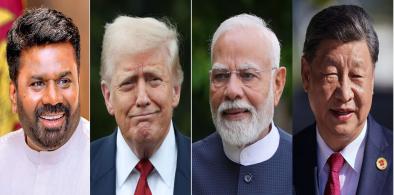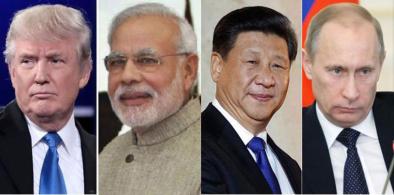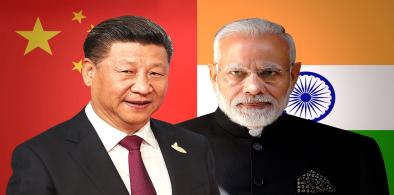
BRICS leaders

India, BRICS Fail the Iran Test: It Could Seek to Bridge Divides

For India, the failure is particularly significant as its presidency was an opportunity to translate “strategic autonomy”, the current buzzword in foreign policy circles, into multilateral leadership. True, its response is shaped by structural constraints. The country imports more than 85% of its crude oil, much of it from West Asia and Russia. Some nine million of its citizens live in the Gulf. The United States is its largest trading partner. Iran anchors the Chabahar port project and India’s access to Afghanistan and Central Asia. Each relationship is too consequential to risk.

Bhutan Under China’s Doklam Shadow: Delhi Needs to Move Away From Protector-Protected Dynamic With Thimpu

A key consideration for Delhi is Bhutan’s occasional denial or downplay of any Chinese encroachment on its territory, even when satellite data suggests otherwise. This is coupled with a growing perception within Bhutan that India is preventing it from completing its border negotiations with China. Although Thimphu remains closely aligned with Delhi, there is growing interest in expanding its engagement with China.

AI in Elder Care: Potential for Broader Social Transformation

For India, the opportunity is significant as its robust digital infrastructure and large demographic dividend can create a significant opportunity for adoption and deployment of Artificial Intelligence across sectors, particularly in the care economy. There is an ample room for the development of age-friendly products and services using AI innovation which are of scalable commercial value.

South Asia's EdTech Moment: Centre of Gravity of Global Education is Shifting

South Asia's higher education ecosystem — with over 1,500 universities and 60 million enrolled learners — is uniquely positioned to absorb and scale new models: work-integrated degrees, on-demand micro-credentials, lifelong learning. The Global South — Africa, Southeast Asia, Latin America, the Middle East — shares the same structural challenges. The solutions that work at scale in India, Bangladesh or Nepal will travel naturally to these geographies.

More on Spotlight

Nepal Supreme Court’s landmark ruling sets benchmark for LGBTQI+ rights

Nepal made history with its 2007 judgment, becoming the first South Asian nation to formally register same-sex marriage, with a trans woman and a gay man legally marrying in the Lamjung district. It also passed affirming laws regarding sexual orientation and gender identity, including the legal recognition of a third gender over ten years ago, placing Nepal ahead of many other countries.

Building climate resilience in Pakistan: The SAFER project’s role in addressing water and ecosystem vulnerabilities

The SAFER project achieves two goals, by prioritizing participation of women, children, youth, and resilience of vulnerable communities, and by achieving gender equality and social justice. This ambitious project by Pakistan sets a precedent for other developing nations to follow, showing the importance of community driven, ecosystem based approaches to climate adaptation.

Alternative Dispute Resolution should be encouraged to reduce burden on courts

ADR law aims to make justice more accessible and reduce the burden on courts, which currently have over 4.48 crore (nearly 45 million) cases pending from District Court to Supreme Court, 1.08 crore of which are civil disputes and 3.40 crore of which are criminal cases. According to the National Judicial Data Grid, these cases have been pending for anywhere from one year to more than 30 years. 

Hardened positions in both capitals has India-Canada ties on the edge

Beyond the immediate flare up, the fact that Trudeau is sticking to his guns so publicly without offering any actionable evidence could mean that internally he is certain of the damaging nature of what his law enforcement has gathered. If not, then he is playing a dangerous game prompted by domestic political compulsions.

Mob justice: A growing threat to Bangladesh’s stability

The current government came to power with promises of systemic reform and state reorganization. However, the alarming rise of mob justice across Bangladesh suggests a shift from reform to revenge. Since the police returned to duty on August 11, 21 people have been beaten to death in 38 days, with only eight arrests. This highlights the failure of law enforcement to curb mob violence

Diversity and democracy: Why India remains politically stable in a volatile South Asian neighbourhood

The rise of populism, religious polarisation, and centralization of power have raised concerns, especially concerning freedom of speech. While India's framework of democracy is more vibrant and institutionalized compared to its neighbors where fear of authoritarianism or military interventions is constant, it requires sustained efforts to put that democracy on a solid foundation.

A silent struggle of India’s ageing population: Can entrepreneurs see an opportunity in the elderly?

A growing concept in India, known as silver economics, aims to empower elderly individuals to become entrepreneurs, enabling them to take control of their own solutions and challenging the notion that entrepreneurship is reserved exclusively for the younger generation.

Jaishankar's visit to Colombo: Will it signal continuity or change in bilateral ties under Dissanayake government?

Analysts believe that Jaishanakar's visit will be a significant opportunity for India to reinforce its commitment to providing development support for its strategically situated Indian Ocean neighbor amid worries about a shift in its foreign policy under the new president.  

Pakistan seeking to reshape regional dynamics through stronger Central Asia, Azerbaijan ties

Pakistan’s pivot to geo-economics has gained significant momentum, particularly in the context of its deepening ties with Central Asian Republics and Azerbaijan, aligning with the country's goal of becoming a regional trade hub

Can Pakistan and Bangladesh overcome historical grievances to redefine relations?

For India, Pakistan and Bangladesh's defence cooperation is reason for concern. The long, porous border between India and Bangladesh, along with New Delhi's historical position as a vital supporter of Dhaka, make any reconciliation between Islamabad and Dhaka a sensitive matter. The weapons agreement, in particular, has fuelled suspicion in India about a potential shift in Bangladesh's outlook, particularly in light of the anti-India rhetoric that surrounded the protests that led to Hasina's removal.

Knowledge diplomacy: India’s missing soft power tool

India’s superpower ambitions require a comprehensive strategy to use the Indian education sector, both private and government, towards advancing India's strategic aims and objectives. A starting point to experiment such knowledge/education diplomacy lies in its neighbourhood.

National anthems and identity crises continue to haunt South Asia

However, religion, domestic compulsions and failure to improve political conditions, with or without national elections, have embroiled Afghanistan, Pakistan and Bangladesh, all compounded by economic woes, in issues that impinge on their national identity.

Sri Lanka's new president: Can he deliver on economic stability and regional security?

In a way, Sri Lanka's economic crisis has served as a blessing in disguise, bringing India and Sri Lanka closer as South Asian neighbors. However, India remains concerned about security in the Indian Ocean, where China has been actively expanding its influence. 

Isolating the Taliban is not helping Afghanistan's people: International diplomats must return to Kabul

For Afghans to find their own solutions they need an engaged international community inside Afghanistan.  The more isolated they become the more possible it is for the most regressive among the Taliban – which it must be said is not a monolith – to impose tighter and tighter controls, which is what is currently happening.

Cross-border militancy, Taliban intransigence intensifies Pakistan's security dilemma

Then there is the thorny issue of "Lar o Bar," a nationalist idea that has long existed on the fringes of Pashtun politics. The phrase, literally meaning "here and there," reflects the dream of uniting Pashtuns on both sides of the Durand Line, the border drawn between Pakistan and Afghanistan during British rule. While the notion might resonate with cultural pride, it’s a direct threat to Pakistan’s territorial integrity.