

Reevaluating Shakti: Transforming Divine Energy into Powerful Social Capital in South Asia
In modern South Asia, Shakti has been reborn in a different way through social reforms, feminist movement and gender equality policies. Rather than being rooted mainly in the kinship systems, feminine power now becomes more manifest in legal rights, schooling, political involvement and social movements. South Asian feminist movements have been inspired by world notions about gender justice and local cultural practices. In most situations, activists rebrand the concept of Shakti to mean the power of women, their independence and their struggle against patriarchy.
 Mar 17, 2026
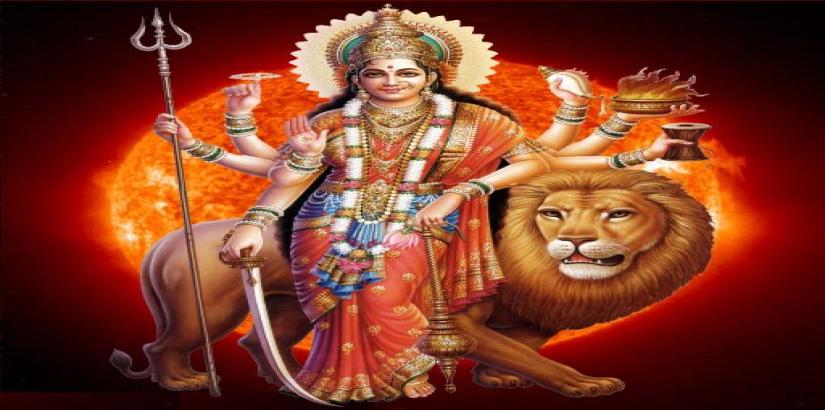
The academia of gender and religion has been too inclined to believe that South Asian feminine spiritual expression was mostly sidelined or entirely devotional. However, as a study of matrilineal inheritance, female saints and women-centred institutions show the opposite narrative. Today the theology of Shakti can be understood as a reform tool. In Sanatana Dharma, Shakti is the essential impulse as a creation, maintenance and change, which now manifests into tangible forms of education, health and the grassroot welfare. Archetypical powers of goddesses are turned into pragmatic social change in the modern world: Durga is the anti-evil, anti-corruption power; Lakshmi is the power of rural entrepreneurship, independence; Saraswati is the power of female literacy, vocational education; Kaali is the power of destroying ill practices to create radical change.
Historical Substratum Matrilineal Logic and Cultural Memory
The revival of women spiritual leadership owes its roots to profound historical roots of matrilineal relationships in the Indian subcontinent. The matriliny, which hunted lineage and property through women, was one of the long-term alternatives to the prevalent patriarchal systems. Matriliny in the Indian ocean trade networks was a reasonable adaptation; since men were trading, women took care of the property and community practices. As formal legal frameworks of matriliny were ruined in most areas throughout the 20th century, the matrilineal reasoning of female custodianship has endured, also highlighted in contemporary feminist movements.
Shakti as a Feminine Power
Traditionally the worship of female power frequently accompanied the multifaceted social realities. Although in most parts of South Asia, patriarchal systems prevailed, in some societies, they developed kinship systems where they accorded women significance as their lineage and source of social continuity. Such societies, called matrilineal ones, are explainable as some of the earliest socializations of the Shakti principle.
In the matrilineal system of Nairs, known as the Marumakkathayam, property and lineage was passed on through the female line. Siblings and their children resided in a common household known as the 'tarawad' where they all lived under the leadership of the oldest male relative, mostly the maternal uncle. In as much as administrative power was carried out by men, families were still characterized by women, and the lineage was inherited by the family of the mother.
Similarly, in the Khasi and Garo tribes, women are used to determine the lineage and identity of a clan. The youngest daughter tends to be the heir of the ancestral property and the children are the children of the clan of the mother and not of the father. These rituals highlight the key importance of women in perpetuating social continuity.
We see, The Minangkabau in West Sumatra, Indonesia which is the world’s largest matrilineal society, with approximately four million people. The Kumari (living goddess) of Nepal, a tradition exemplifies goddess veneration. The Mosuo (Yunnan and Sichuan, China) often called a "Kingdom of Women" and practice a very distinct form of matriliny.
In this light of the Shakti system, matriliny is a symbolic identification of women as the basis of descent, legacy, and social security. Women are a symbol of offspring of the family and the cultural belonging of the community. In this way, matrilineal establishments may be viewed as a socialistic representation of the larger cultural concept of feminine power as prerequisite to the continuation of life and society.
Transformation and Decline of Matriliny
Matrilineal systems started to weaken in South Asia in the course of colonial and modern periods. New property legislation and family units were introduced as a result of colonial law that supported the patriarchal inheritance and nuclear families. The gradual transformation of the old kind of the kinship pattern was also caused by economic changes, the land reforms, and the diffusion of modern education.
The fall of matriliny did not in any way eradicate the cultural importance of Shakti but it decreased the institutional processes by which the feminine power had been formerly manifested in the kinship systems.
Shakti Re-emerging in Modern Social Reform
In modern South Asia, Shakti has been reborn in a different way through social reforms, feminist movement and gender equality policies. Rather than being rooted mainly in the kinship systems, feminine power now becomes more manifest in legal rights, schooling, political involvement and social movements. South Asian feminist movements have been inspired by world notions about gender justice and local cultural practices. In most situations, activists rebrand the concept of Shakti to mean the power of women, their independence and their struggle against patriarchy. This symbolic worship of goddesses is therefore converted into a wider need to have social and political empowerment of women.
This process has also been facilitated by grassroots movements, self-help groups, and women organizations that have facilitated economic independence and leading the community by women. These efforts lead the concept of feminine power to go beyond its representation in a symbolic worship and act as a force of change in social realities.
Some of them can be understood with examples of Sri Sarada Math and the Ramakrishna Sarada Mission focus on the holistic empowerment of females by offering initiatives such as the Vivek Vikas Prakalpa, a skill training center offering spiritual education; and offering a substantial level of healthcare provision through the Matribhavan Hospital. Veerayatan under the leadership of Acharya Shri Chandanaji uses Jain ideals for rural development like the Netra Jyoti Seva Mandiram and the free education programs to disadvantaged classes of people. The contribution of high female literacy rates through the Marumakkathayam system in Kerala that promotes gender equality by giving daughters inherent rights.
Sri Lanka has a vibrant community of Dasa Sil Mata (ten-precept lay nuns) who function as spiritual analogues to monks in rural communities. These women run pre-schools and Dhamma schools while providing counseling for marginalized women and children.
Myanmar is home to The Thilashin, independent female-run nunnery schools. The Buddhist Tzu Chi Charity Foundation, established by Buddhist nun Master Cheng Yen in 1966, is a leading humanitarian organization. In Cambodia, the Association of Nuns and Laywomen trains women as community counselors. In Thailand, the late Mae Chee Sansanee Sthirasuta founded Sathira-Dhammasthan to support victims of domestic violence and single mothers through meditation and empowerment.
Shakti as Social Capital
Reevaluating Shakti as a symbol of theological and social strength reveals policy implications that may overlook the role of female religious authority in community welfare. Engaging with women-led agencies can enhance access to education and healthcare in underserved areas but requires careful attention to maintaining democratic values alongside moral authority.
The re-conceptualization of Shakti is the transformation of the divine energy into the powerful social capital. Shakti is no longer tied to the temple sanctuary but plays a working role as an agent of mobilization of rural areas to enable female leaders to avoid the old ways of patriarchy. This spiritual capital assists in the creation of schools and clinics making an ancient theological prototype an infrastructure of care of the modern type. This confirms that tough social reform is a native metaphysical awakening which franchises the disenfranchised by the force of the feminine divine.
(The author is a third year Political Science student, a dedicated researcher specializing in international relations and foreign diplomacy, with a core focus on minority rights for equitable global and national systems, endeavoring to bridge the gap between grassroots activism and public policy. Views expressed are personal. He can be reached at rishigurung1714@gmail.com
Instagram - https://www.instagram.com/gurung_rishi?igsh=MW03bm50aTR5MW5icQ==
LinkedIn - https://www.linkedin.com/in/rishi-gurung-34548b35b/ )






Post a Comment