

A Mediator That Bleeds: Pakistan's Peacemaking Role is Riven by Contradictions
Pakistan is invited to the world's negotiating table. But a mediator's power is not spoken; it is demonstrated. A nation for whose people fuel is unaffordable, whose businesses are collapsing and whose independence is limited by 75 IMF conditions is not resilient. Until cheap energy is a strategic priority, until industrial decline is halted, until economic independence is restored, Pakistan's peacemaking pretensions will be hollow.
 Apr 30, 2026
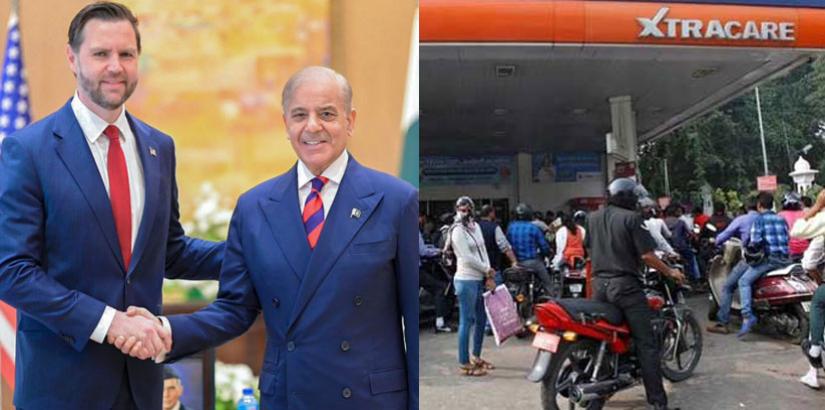
In the geopolitical game of diplomacy, it's all about reassurance. A mediator is not an arbitrator or a warrior; it is an honest broker on whom all sides are willing to bet on stability, impartiality and goodwill. This is a position Pakistan has sought for some time. Whether in brokering US-Iran negotiations or connecting China and the West, Islamabad seeks to play the role of indispensable incomer.
Yet it faces the strategic dilemma: a state which cannot even provide energy for its own citizens cannot be a reliable or secure source of security in the region. It is not about budget deficits and tax reform. It is about the state's capacity to influence, maintain its economy and people, and to resist pressures to bend to will. And, with the possible exception of its army, Pakistan is losing its national power.
By virtue of the strength of its military, Pakistan's external threats call to mind those we all study: military doctrines, terrorism, and conflict with peers. But the most pernicious are domestic. A nation that can't provide affordable energy to its citizens and industry is a nation in decline.
Strategic Vulnerabilities
On April 25, 2026, the price of petrol in Pakistan was Rs 393.35 per litre with an outrageous Rs 107.38 per litre petroleum levy. Power for industry is around Rs 33-35 per unit (12.5 US cents), while industrial power in competing economies of the region - India, Bangladesh and Vietnam - is priced at 6-9 cents per unit.
These are not economic data. These are strategic vulnerabilities.
A war analyst is less interested in price than in relative power. This table shows how Pakistan compares to its neighbours:
Pakistan Rs 393 Highest (lowest per capita income + high prices) People vulnerable; potential unrest
India ~Rs 123 Normal (high incomes cushion), but can compete economically
Sri Lanka ~Rs 135 Post 2022 crisis - recovery Weak but recovering
Bangladesh ~Rs 107 Pricing to stabilise Exports unaffected
Nepal ~Rs 137 Landlocked but controlled Dependent on India but stable
Myanmar ~Rs 148 Post-coup upheaval Incomparable (civil war)
Specifically, Pakistan has the lowest South Asian per capita GDP (US$ 1,400-1,600), but the highest energy price index. It costs a Pakistani worker a greater proportion of his/her income to fill a litre tank of petrol than in any other country.
This is not economics. This is human security - the basis for state security.
There are three basic requisites for international mediation:
Domestic Stability
A mediator cannot have internal eruptions, but with hundreds of textile factories already closed and industrialists openly claiming "rapid de-industrialization," Pakistani society is in turmoil. Rallies about power and fuel bills are a common occurrence. Pakistan, protesting at home, can't advise others on how to deal with theirs.
Economic Endurance
Mediation is not free. It needs embassies and consulates, intelligence networks and sometimes bribes. Power cuts have led to minimum capacity operation in Pakistan's industries, reducing exports and thus revenue. A desperate mediator is a desperate mediator - and a mercenary too.
Strategic Credibility
When Pakistan enters into negotiations, those negotiations are always accompanied by a question: if you can't get cheap electricity to run your factories, how are you going to get a peace deal for us? A reputation is based on credibility. And Pakistan's capabilities have been eroded.
And so the strategic aspect of economic sovereignty comes into play. Pakistan is currently under the $7 billion bailout package from the IMF, with 75 conditions, including 11 new ones attached in April 2016 alone.
The conditions affecting the energy sector include:
· Quarterly electricity tariff adjustments
· Phase-out of untargeted subsidies
· Bi-annual gas prices
In terms of strategy, these are very restrictive covenants. Pakistan cannot reduce petrol or electricity prices without the consent of the IMF. It cannot subsidise its industries to compete with India and Bangladesh. In short, it cannot manage its energy security like a country.
A broker who has lost power over its own economic affairs is not an independent broker. It is an intermediary - passing on the demands of its creditors rather than acting in its own strategic interest. Military students know that economic strength is the basis for military strength. No country's defence has stood the test of time without a strong industrial sector.
Industry in Pakistan is in crisis. The All Pakistan Textile Mills Association (APTMA) has put the list at 100-150 textile mill closures. The Federation of Pakistan Chambers of Commerce and Industry (FPCCI) has demanded an industrial emergency.
Industrialists demand:
· 9 cents per unit electricity (currently ~12.5 cents)
· Lifting of Rs131 billion cross-subsidy
· Policy rate to be lowered from 10.5% to 6%
Failure to comply with these demands will lead to swift de-industrialization, export decline and worsening of the electricity crisis, APTMA threatens. Strategically, the industrial infrastructure that underpins the defence industry, earns foreign exchange and pays taxes, is being aggressively dismantled.
Not all news is bad. There are two positive recent developments:
1. Strategic Petroleum Reserves (SPR)
The government has established a high-level committee to develop Strategic Petroleum Reserves (SPR) with a report to be submitted by May 8, 2026. A 15-30 day SPR would ensure prices do not shoot up with each global crisis - making us less dependent on global shocks.
2. Subsidies through BISP
The government has provided a plan to the IMF and World Bank to directly target electricity and gas subsidies to Benazir Income Support Programme (BISP) beneficiaries by January 2027. This will create a more efficient targeted subsidy and prevent energy subsidies from going to those who do not need them.
These two moves are strategically wise. But they are not sufficient and not quick enough.
Stop Playing the Blame Game
Pakistan should declare access to affordable energy as a strategic priority, equal to territorial integrity. This will move the problem from the Ministry of Finance to the National Security Council, bringing the military and strategic perspective to energy policy.
The May 8, 2026, target needs to be achieved, with a six-month implementation plan. Pakistan cannot aspire to be a regional player if it is dependent on international oil prices.
At present, Pakistan negotiates with the IMF as a beggar. It should seek a strategic relationship, contending that industrial failure results in regional turmoil, which is not the IMF's goal. Pakistan's economic policies should enable industrial survival.
Pakistan's diplomatic reach - especially with Gulf states, China and Iran - must be used to garner energy discounts, deferred payment or barter deals. A broker must reap the benefits of its role.
Pakistan cannot solve this alone. It should engage in energy deals with China (already part of CPEC), Saudi Arabia (oil refineries) and even India (some limited power grid control). Danger is contagious; the cure can be too.
Governments should cease playing the blame game or acting as if the crisis is short-lived. Honest disclosure of IMF limits, global factors and recovery schedules fosters strategic resilience, the people's tolerance for pain in the promise of better times.
Pakistan is invited to the world's negotiating table. But a mediator's power is not spoken; it is demonstrated. A nation for whose people fuel is unaffordable, whose businesses are collapsing and whose independence is limited by 75 IMF conditions is not resilient. Until cheap energy is a strategic priority, until industrial decline is halted, until economic independence is restored, Pakistan's peacemaking pretensions will ring hollow.
One cannot be a peacemaker when one is an economic warmonger at home. That is not a strategy. That is a contradiction. And contradictions, in strategy, do not work.
(The author is a student of Defence and Strategic Studies at Quaid-i-Azam University, Islamabad, with a keen interest in South Asian security and diplomacy. Views expressed are personal. He can be contacted at mohammadurva554@gmail.com )





Post a Comment