

Davos: Noise, Narratives, And The Reality Beneath
If Davos had a clear centre of gravity this year, it was technology—not geopolitics. The tech industry arrived in force, underscored by high-profile appearances from Elon Musk and Nvidia CEO Jensen Huang. The message was unmistakable: this is where attention, ambition, and capital are converging. With extraordinary sums being poured into artificial intelligence, unease among lenders and investors is understandable. Yet many executives were keen to reassure markets that fears of an AI bubble were overstated.
 Jan 25, 2026
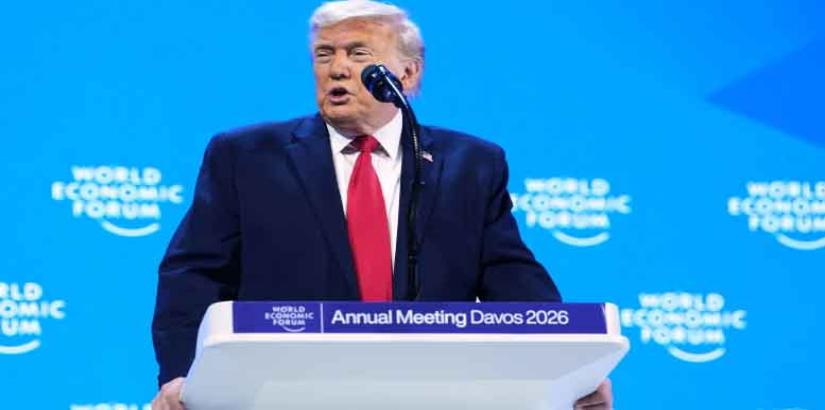
As world leaders and business executives departed Davos after the annual World Economic Forum, the prevailing perception was that the meeting had been dominated by U.S. President Donald Trump. That impression, however, holds only if media coverage is taken as the sole measure of dominance. As is often the case, media attention gravitated toward spectacle rather than substance.
In truth, there was little in Trump’s address that was either new or disruptive enough to meaningfully alter global trajectories. The one moment that caused raised eyebrows was his apparent disowning of European military personnel who had fought alongside U.S. forces in Iraq and Afghanistan. It was an unbecoming remark from the U.S. president, unless, of course, that president is Donald J. Trump. Here, the lapse reflects political grandstanding more than deliberate policy intent.
Europe’s response was predictable. Leaders publicly “stood up” to Trump, signalling resolve and unity. But did Europe truly have a choice? Such posturing was expected by Trump and by Europe’s own domestic audiences, allowing space for negotiations to continue behind the scenes. Trade-offs, including discussions around Greenland framed under “recognised” Arctic security requirements, were already implicit. None of this represented a genuine rupture; it was familiar choreography.
Having dispensed with the theatrics, it is worth turning to what Davos is ostensibly meant for: identifying underlying signals, forging deals, and gauging the direction of global capital.
Macroeconomics And Markets
The tariff narrative is beginning to sound stale. Beyond public posturing and ritual expressions of concern, the business community appears largely unconcerned—except to generate enough noise to mask the quiet mapping of alternative trade routes already underway. As one delegate put it rather succinctly: trade is like water; it flows through the path of least resistance.
This sentiment was echoed by Canadian Finance Minister François-Philippe Champagne during a discussion on tariffs. “When you talk to CEOs today, what do they want?” he asked. “Stability, predictability, and the rule of law. I would say it’s in short supply.” Trade, unsurprisingly, will gravitate toward regions where these fundamentals remain available in reasonable measure.
There was also sustained discussion around U.S. domestic policy choices and their global spillover effects. Financial institutions expressed cautious optimism about growth in the near term, even as they grappled with uncertainty stemming from shifting U.S. policies, geopolitics, artificial intelligence, and financial technology. JPMorgan CEO Jamie Dimon warned that proposals to cap credit-card interest rates could prove economically disastrous, while other bankers acknowledged active efforts, largely out of public view, to influence affordability debates. As always, capital will find a way to move.
Cryptocurrencies and blockchain technologies featured prominently, though with a noticeably more subdued tone than in earlier years. Conversations reflected a mix of curiosity, limited experimentation, and lingering apprehension. Some banks admitted to small-scale trials; others remained firmly on the sidelines. Meanwhile, concerns regarding the independence of the U.S. Federal Reserve, broader macroeconomic fragilities, and potential asset bubbles, particularly in AI-related equities, continued to weigh on investor sentiment.
The Real Show: Technology
If Davos had a clear centre of gravity this year, it was technology—not geopolitics. The tech industry arrived in force, underscored by high-profile appearances from Elon Musk and Nvidia CEO Jensen Huang. The message was unmistakable: this is where attention, ambition, and capital are converging. With extraordinary sums being poured into artificial intelligence, unease among lenders and investors is understandable. Yet many executives were keen to reassure markets that fears of an AI bubble were overstated. While AI will undoubtedly displace certain categories of jobs, they argued, it will also create new ones. For the common citizen, however, this promise feels abstract at best—and far more unsettling than Trump’s familiar unpredictability.
In a notable departure from Trump’s scepticism on renewable energy, even Musk acknowledged that the world could theoretically generate enough solar power to meet its electricity needs, including the rapidly growing demand from energy-hungry data centres powering Big Tech. Whether the infrastructure, political will, and timeframes align is another matter entirely.
The Decade Ahead
One message from Davos was unmistakable: global defence spending will rise. The forum reinforced the growing consensus that the coming decade will be shaped by three dominant forces—technology (AI), energy (oil), and defence. Conflicts, it seems, are no longer treated as aberrations but as enduring features of the global order, sustaining defence industries and reshaping alliances.
Oil will continue to flow. Tariffs will persist. Profits will rise. And reefs will quietly vanish beneath the surface. None of this required Davos to tell us what we already know.
The Future of Davos
The irony, of course, is that none of this is an outcome of the Davos forum itself. Which brings us to a broader question. In today’s hyper-connected world, do forums such as Davos still serve a meaningful purpose? Increasingly, they appear to generate more noise than substance. Panels, soundbites, and wall-to-wall media coverage create the illusion of momentum, yet rarely deliver outcomes proportional to their visibility. Conversations are repetitive, consensus often performative, and genuine course correction scarce.
While networking retains undeniable value, the official conference has become an echo chamber for established narratives rather than a catalyst for meaningful change. The real business of Davos frequently occurs elsewhere, at fringe events, private dinners, drinks, and off-the-record meetings. Corridor conversations in hotels often yield more insight and value than rigidly scripted speeches delivered on stage.
The conference itself has evolved into an unwieldy affair, attempting to cover an ever-expanding range of topics while attracting an ever-growing crowd. It has also become significantly more expensive. Corporate attendance routinely runs into five figures for tickets, travel, and accommodation, excluding annual membership fees reportedly starting above £50,000. Yet despite the cost and the sometimes rambling nature of official discussions, business leaders, politicians, and those keen to mingle with them - journalists included - continue to attend.
Is this a waste of effort and money? Possibly. But attendance is sustained by a powerful motivator; fear of missing out.
Which leaves the final question unresolved. In a world where deals are struck continuously, innovation happens everywhere, and information travels instantly, does today’s global economy truly need a World Economic Forum in Davos to function?
(The author is an Indian Army veteran and a contemporary affairs commentator. The views are personal. He can be reached at kl.viswanathan@gmail.com )




Post a Comment