

Mohenjo-daro offers South Asia an opportunity to look backwards without dividing the past into national possessions, and to recognise that the region’s cultural memory is older and more interconnected than its modern inheritors.
But tearing down a clubhouse will not lower a family's grocery bill or write a line of exportable code. India's chance to close the gap with the economies that outran it will not wait for a hearing date in September, and neither should the country's attention.
Taslima Nasrin’s homecoming deserves to be welcomed. A writer should be able to return to a city she considers home without fearing violence. The harder test will come when the symbolism fades. Will the government protect her if her criticism becomes inconvenient to the people now celebrating her return?
Today, the Chabad Houses in Colombo and on Sri Lanka's southern coast have attracted considerable attention amid a rise in anti-Semitic incidents and rhetoric. It is noteworthy that Colombo once had an active synagogue, which served as a regular place of worship for British Jewish servicemen World War II
Buddhist tourism as an important tool of India’s soft power. The shared Buddhist heritage can help develop cultural ties with Japan, Sri Lanka, Thailand, Myanmar, Vietnam, Mongolia, South Korea, Bhutan, Cambodia, Laos, Singapore, and several other Buddhist-majority nations through cooperation in archaeology, monk-to-monk dialogues, youth programs, academic exchanges, and cultural festivals
Mohenjo-daro offers South Asia an opportunity to look backwards without dividing the past into national possessions, and to recognise that the region’s cultural memory is older and more interconnected than its modern inheritors.
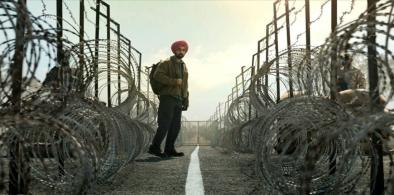
Jam Boy represents a much-needed question for the South Asia diaspora, about why it takes a third aggressor for us to see the common struggles that we share, and why it is only in these situations that we remember that our ideas of home are the same.
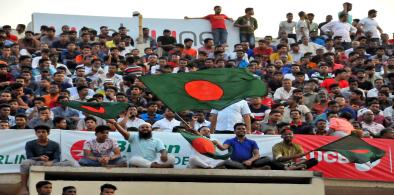
Beyond the ambassadors of Brazil, Argentina, and Norway, the ambassadors of France, the United States, the United Kingdom, Morocco, and Egypt have also been drawing on their countries' football heritage to deepen cultural engagement with the football-crazy people of Bangladesh.
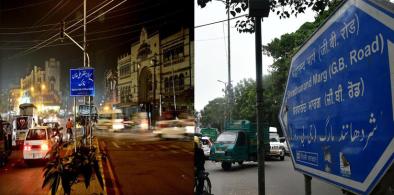
Ironically, while India continues to rename roads and institutions associated with its medieval and colonial past, Pakistan’s Punjab province has begun moving in the opposite direction.
Unfortunately, a growing number of parents appear apprehensive about their children becoming proficient in their mother tongue, believing that greater exposure to local languages may somehow hinder their command of English or other global languages. This perception is both unfortunate and unfounded. A strong foundation in one's mother tongue strengthens cognitive development, improves learning outcomes, and facilitates the acquisition of additional languages.
Across South Asia, the difference between prejudice and collapse is not the existence of hate. Every society has it in varying shades. The difference is whether the majoritarian state internalizes hate against the ‘other’, whether FIRs get diluted, trials get delayed, mobs get garlanded and impunity driven violence against minorities becomes low-cost. When that happens, the poison is not outside the system. It becomes the system.
And perhaps this is precisely what many readers, particularly South Asian readers navigating fractured contemporary lives, have been missing without fully realising it: fiction willing to slow down long enough to notice the fragile, passing intimacies through which people continue surviving one another.
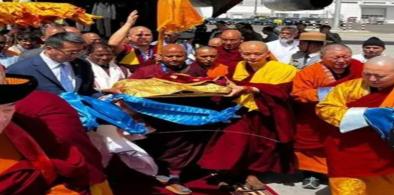
Thurman said that Tibet was not an individual nation-state question but something that goes far beyond that. “It is not about a people yearning for freedom from an invading state. It is about a very valuable society struggling to keep its centuries-old tradition of intellectual evolution alive.” He said that while he was hopeful that the problem would be resolved soon, “and during His Holiness’ lifetime,” it was hard to put a timeframe to it.
The perceived push from a political leadership that has roots in Gujarat, the split in the locally rooted Shiv Sena that was engineered, the resentment it brewed among ordinary citizens and the history of Maharashtra -- which was born on May 1, 1960 after a bitter struggle that split the erstwhile Bombay State into two distinct linguistic states of Maharashtra and Gujarat -- are all complex and contributory factors to the evolving political unrest in middle-class Mumbai.
I claim Tagore and Iqbal. I claim the music of Lata Mangeshkar and Mehdi Hassan.I claim the shared cultural inheritance of South Asia in all its richness and contradictions. History divided states. It could not divide memory. The food we eat, the stories we tell, the languages we speak, and the melodies that move us still carry echoes of a shared past.
It does not ask anyone to abandon their religion. A Christian, Muslim, Hindu, Buddhist, Sikh, Jew, or secular humanist can walk the path of Dharma without contradiction. Dharma is not a replacement for religion. It is a shared ethical foundation beneath all religions — the ground on which they all, at their best, already stand.
Inspired by the Jaipur Lit Fest, Pakistan’s first literary festival took place in the country’s largest city Karachi in 2010. Subsequently replicated in Lahore and Islamabad, such festivals now take place around the country, from the agricultural and industrial hub of Faisalabad, formerly Lyallpur, to the port city of Gwadar on the Balochistan coast.
While the overall picture is depressing, Ramaswami also describes hopeful strands within the social fabric of workers’ lives such as the mutual support and 'bhaichara' (fellowship) between men across ethnic, religious and caste boundaries that become more fluid within the city. The inter-religious and inter-caste ties forged between workers can be seen as small glimmers of hope in the context of the rising tide of Hindutva politics over the past decades.
Today, as we bid farewell to the Dhaka-born singer once fondly called the “Dhake ki malmal,” one is reminded that the softest fabrics often endure the longest. Her voice was just that. Fine, delicate, yet enduring beyond time. And now, as that voice falls silent, it leaves behind not an emptiness, but an echo. An echo that will continue to drift through radio waves, old recordings and the private corners of memory.
Two girls stood silently holding a placard that read: ‘Forcing your daughter to get married is forcing her to get raped.’ The message speaks to a reality across the South Asian region where the priority for most families is to get their daughters married. On a sheet where attendees were penning messages to their mothers -- words they could not say aloud -- an anonymous note read: “Would you rather see me married or alive?”