



Delhi Gymkhana

Erasing Colonial Symbols Won't Feed India's Families: A Call for Economic Pragmatism

But tearing down a clubhouse will not lower a family's grocery bill or write a line of exportable code. India's chance to close the gap with the economies that outran it will not wait for a hearing date in September, and neither should the country's attention.

Taslima Nasrin’s Return and the Politics of Selective Protection

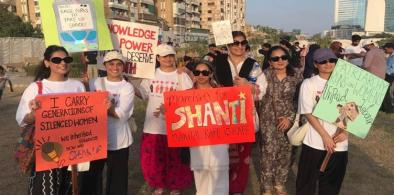
Taslima Nasrin’s homecoming deserves to be welcomed. A writer should be able to return to a city she considers home without fearing violence. The harder test will come when the symbolism fades. Will the government protect her if her criticism becomes inconvenient to the people now celebrating her return?

Jewish Footprints and Connections that Shaped Sri Lanka’s History

Today, the Chabad Houses in Colombo and on Sri Lanka's southern coast have attracted considerable attention amid a rise in anti-Semitic incidents and rhetoric. It is noteworthy that Colombo once had an active synagogue, which served as a regular place of worship for British Jewish servicemen World War II

Repositioning India as the Capital of Buddhist Tourism: A Blueprint for a Global Destination

Buddhist tourism as an important tool of India’s soft power. The shared Buddhist heritage can help develop cultural ties with Japan, Sri Lanka, Thailand, Myanmar, Vietnam, Mongolia, South Korea, Bhutan, Cambodia, Laos, Singapore, and several other Buddhist-majority nations through cooperation in archaeology, monk-to-monk dialogues, youth programs, academic exchanges, and cultural festivals

More on Soft Power, Culture and Society

Homage to an Iconic Ray Film Whose Popularity Spans Generations and Cultures

The result was a phenomenal script with a stellar cast and a music which not only took the storyline ahead but also paused to reflect upon each moment. Satyajit’s rendition of the story has several of his beliefs reflected, including his anti-war stance, his love for performative arts, including various forms of classical dance, his love for history and regional history, amidst others, his stance against caste and class discrimination and oppression of the poor and the tyranny and subjugation of the ruling class

How a Russian-Jewish Bride Internalised Santiniketan: Arc of a Family History Book-Ended by the Russian Revolution and Indian Independence Across Three Generations and Three Continents

It is a neat division and the first part of 70 pages is the Kotia-Ketaki memoir.  In the second section, Chandana picks up the narrative  and weaves the micro family history of the Jonas family with the macro events of the late 19th century and her grandmother's  journey that brought her to Santiniketan  in the 20th century.
 

A Scientist’s Rebuttal to the "Hellhole" Rhetoric: Why the West Misjudges Global Happiness

The rhetoric targeting these nations ignores the fact that they steer the very firms—Google, Microsoft, Adobe—that sustain Western dominance. This wasn't "loophole" migration. It was strategic resource acquisition. During the Y2K crisis, the U.S. was desperate for Indian talent to prevent a digital infrastructure collapse. 

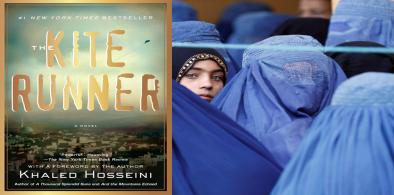
A Thousand Splendid Wounds: Afghanistan through Hosseini’s prophecy

India's engagement with the Taliban is strategic as much as it is humanitarian, a counterweight to Pakistani influence, a gateway to Central Asian connectivity. And the Taliban's continued erasure of women and minorities sits as a profound moral contradiction at the heart of any diplomatic embrace.

The ‘Pinny’ and the Past: A Bengali Summer Dress That Carries History in Its Threads

Today, the tape-jama survives on the margins of a rapidly changing marketplace. It is still found in local bazaars, though no longer a default festive purchase for children. Yet its significance lies beyond its material presence. The garment endures as a symbol of memory—of simpler times, of long summer afternoons, and of a cultural ethos shaped by resourcefulness and tradition. Its soft cotton folds carry stories of Bengal’s textile heritage, its artisanal practices, and its ability to absorb and reinterpret external influences. In doing so, the pinny becomes more than a childhood dress—it is a living archive of history and identity.

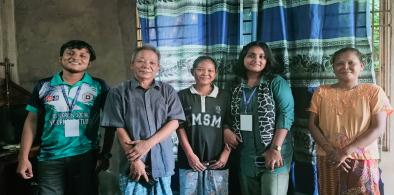
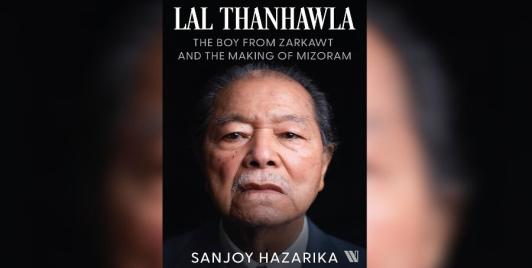
When a Language Dies: The Struggle for Cultural Survival of Bangladesh’s Lushai Community

According to the latest (2024) survey by the International Mother Language Institute, 45 languages have been identified as existing now in Bangladesh out of which there are 11 indigenous languages including Lushai (Mizo)—that have become critically endangered. Based on UNESCO data, a handful of languages which have made it to the endangered list in Bangladesh are in such a forlorn state that only 5-12 older folks from respective communities can still converse in them.

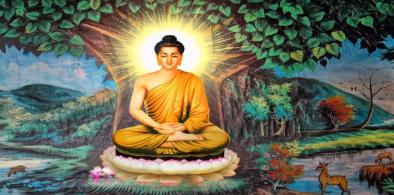
The Buddha Aimed for a Harmonious Society: India's Constitutional Values Were Inspired by His Teachings

Through his principles of love and compassion (karuna), Buddha aimed for a harmonious society free from caste, racism, and injustice. The Sangha he established is not just a community of monks but spiritual fraternity, which emphasizes collective unity, social cohesion and shared ethical living. 

Marvels of a Self-Healing Body: Restoring the Equilibrium


Biological sciences tell us that body heals itself to return to homeostatic (state of balance) condition. It says that all the systems in the body are in equilibrium and whenever they go out of balance the healing process starts to bring. it back. This has been the basis of how Chinese and Ayurvedic system of medicines work

Asha Bhosle: A Shared Legacy Across Borders

Asha leaves behind a legacy that is as much ours as it is India’s. The phrase “Nightingale of Asia” was coined for Lata, In Pakistan, we always had a prefix for Asha: “Hamari Nightingale.” Our nightingale. In her passing, Pakistan has lost a friend, a teacher, and a voice that made the world feel a little less divided.

End of an Era in Playback Singing in Indian Cinema

The global music industry, where millions of songs are sung, and billions are spent and earned, is a larger story. But the duo’s role as singers remains iconic in India, and perhaps South Asia, where numerous others have come, stayed to make music,  and gone.

How Korean Noodle Brands Captured the Indian Market

The Korean noodle story is not really about noodles. It is about what happens when cultural influence travels faster than commercial infrastructure and faster than regulatory awareness. India's Gen Z - and possibly that of other South Asian countries - did not wait for brands to tell them what to eat. They watched K-dramas, did spice challenges, and built market demand that brands, regulators, and consumer education campaigns have simply not kept up with.

Sufi, Spirit and Resistance: A Layered Work Grounded in South Asian Storytelling Traditions

The Sufi Storyteller speaks to a wider South Asian moment, where Sufi traditions are increasingly invoked as counterpoints to narrowing religious and cultural orthodoxies. By foregrounding storytelling as both a spiritual and political act, Mansab gestures toward the enduring power of narrative to sustain pluralism, recover marginalized voices, and imagine more expansive forms of belonging.

From Death to Immortality: The Mahabharata is Worth Reading - And Questioning

A young woman reading Draupadi's story today and feeling angry about it is not being irreverent. She is doing exactly what you are supposed to do with a text this old and this serious, which is to feel it in your own body and think hard about what it means for where you actually are. We do not honour the Mahabharata by protecting it from that. We honour it by continuing to argue with it

AI and Children: Proper Teaching of AI in Schools a Must to Fire Creativity

Recent evidence also suggests that AI chatbots are being used by teens to plan violence and other harmful activities. Like all technologies, AI is a double-edged sword. It can either be used for very creative work or destructive activities. Thus, there is a tremendous responsibility for teachers to teach the children and youngsters about the positive aspects of AI.

Unity Without Uniformity: Why Diversity Is the Foundation of Peace

If diversity and unity are to guide the future, education must change.Most schools and universities today serve industrial monoculture and economic growth. They train the intellect — the “left brain” — to produce administrators and managers. Rational analysis is important, but it is only half of human potential. We also have a “right brain”: intuitive, holistic, relational. An education that neglects creativity, empathy and ecological awareness produces imbalance. It strengthens uniformity and weakens diversity.