

Climate Refugees Are Rising: Is South Asia Prepared for a Looming Climate Disaster?
South Asia is therefore not facing one climate migration crisis. It is facing many at once. Coastal displacement in Bangladesh and the Maldives is different from mountain displacement in Nepal and Bhutan. Flood displacement in Pakistan is different from drought-linked distress in Afghanistan. India contains almost every version of the crisis within one country. Sri Lanka shows how island and hill communities can be hit together. Yet the policy response remains fragmented.
 Apr 30, 2026
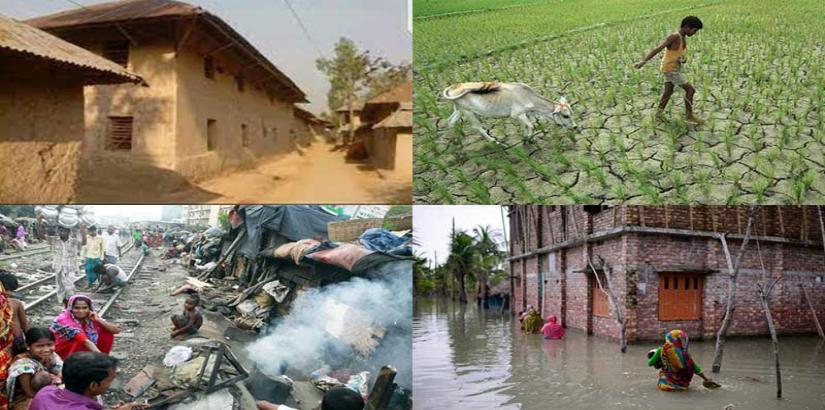
Climate migration is now one of the clearest human faces of the climate crisis. Around the world, people are being forced to leave their homes not because of war alone, but because rivers are overflowing, coasts are disappearing, crops are failing, and heat is becoming unbearable. The Internal Displacement Monitoring Centre reported that 83.4 million people were living in internal displacement at the end of 2024, more than double the figure recorded in 2018. The World Bank has also warned that climate change could force 216 million people to move within their own countries by 2050 if strong action is not taken. These numbers show that climate displacement is not an environmental issue only. It is a development, security, human rights, and governance issue.
The term “climate refugee” is widely used, but international law still does not fully recognize people displaced by climate impacts as refugees. This leaves millions in a legal grey zone. Many do not cross borders. They move from villages to towns, from coastal areas to cities, or from farms to informal settlements. They often lose land, identity, livelihood, education, health care, and social protection at the same time. The Internal Displacement Monitoring Centre reported that environmental disasters are now one of the leading causes of internal migration worldwide. Even developed countries are not immune. In the United States, for example, millions were displaced due to hurricanes and wildfires in recent years. However, the burden is overwhelmingly concentrated in the Global South, where resilience capacity is far lower.
Within this global crisis, South Asia stands out as one of the most vulnerable regions. The region is home to nearly a quarter of the world’s population, yet it faces some of the highest exposure to climate risks. By 2030, nearly 90 percent of South Asia’s population is expected to face extreme heat, and about one in four people will be at risk of severe flooding. These environmental pressures are already translating into large-scale displacement. In 2024, disaster-related displacements in South Asia nearly tripled to 9.2 million, marking one of the highest figures in over a decade.
Countries in Climate Crisis
Bangladesh stands at the center of this crisis. Rising sea levels, river erosion, cyclones, salinity, floods, and heat are already pushing people from coastal and riverine districts toward cities. The World Bank has warned that Bangladesh could see more than 13 million internal climate migrants by 2050. It also estimates that average tropical cyclones already cost the country about $1 billion every year, while one-third of agricultural GDP could be lost by 2050 due to climate variability and extreme events. Dhaka, Chattogram, Khulna, Barishal, and other urban centers are already absorbing people who arrive after losing farmland, homes, or freshwater access. But these cities are not prepared to receive climate migrants with dignity. Many end up in informal settlements, exposed to poor sanitation, insecure jobs, and new forms of vulnerability.
India faces the same crisis at a much larger scale. Between 2008 and 2024, floods and storms displaced more than 45 million and 15 million people respectively in India, according to IDMC-linked data. In 2024 alone, India recorded 5.4 million disaster displacements, its highest annual figure in more than a decade. The Sundarbans, Assam, Bihar, Odisha, Kerala, Uttarakhand, Himachal Pradesh, and parts of Maharashtra all show different faces of climate migration. Some people flee cyclones and floods. Others leave because drought has damaged farming. In Himalayan states, landslides, flash floods, and glacial lake outburst floods are becoming more dangerous as warming changes mountain systems. This is not just rural distress. It is also reshaping India’s cities, where climate migrants often join the lowest-paid and least-protected labor markets.
Pakistan offers one of the most painful recent examples. The 2022 floods affected 33 million people, killed more than 1,700, and displaced around 8 million. Damage and economic losses crossed $30 billion. Yet the crisis did not end when the floodwater receded. Families lost homes, schools, livestock, documents, health facilities, and income. In 2025, Pakistan again faced deadly monsoon floods, including flash floods in northern areas that killed dozens and exposed weaknesses in early warning, evacuation, and local disaster response. Pakistan’s case shows that climate displacement is not a one-time emergency. It is a cycle of shock, loss, debt, and fragile recovery.
Nepal’s climate displacement is shaped by the mountains. Heavy rainfall, landslides, glacial melt, and glacial lake outburst floods are threatening communities, infrastructure, and cross-border trade routes. In 2024, floods and landslides in Nepal caused heavy casualties, including more than 200 deaths nationally after extreme rainfall around Kathmandu Valley. In 2025, reports showed new glacial lake outburst events in remote Himalayan areas, damaging bridges, homes, irrigation systems, and hydropower infrastructure. For mountain communities, displacement often begins before disaster strikes. When water sources dry up, farming becomes uncertain, and young people leave villages in search of work.
Afghanistan is another country where climate stress overlaps with conflict, poverty, and weak institutions. Drought, floods, heavy rain, and harsh winters are repeatedly pushing people into crisis. In early 2025, an IOM assessment found that Afghanistan faced multiple environmental hazards, including drought, heavy rain, flood, and heavy snow. Another humanitarian update noted that flash floods hit all 34 provinces in 2024 and affected more than 170,000 people. Climate displacement in Afghanistan is especially dangerous because many affected people already face food insecurity, limited services, and restricted livelihood options.
Sri Lanka, too, is increasingly exposed. The recent devastation caused by Cyclone Ditwah showed how quickly climate-related disasters can overwhelm a country. Floods and mudslides killed more than 130 people, left many missing, and displaced nearly 78,000 people into temporary shelters. Sri Lanka’s risks are not limited to storms. Droughts, landslides, crop losses, and coastal erosion all threaten livelihoods. In a country still managing economic fragility, climate displacement can deepen poverty and strain public services.
The Maldives represents the most existential case in South Asia. About 80 percent of its islands sit less than one meter above sea level, and sea-level rise of 0.5 to 0.9 meters by 2100 could cause severe flooding and damage to infrastructure and ecosystems. For Maldivians, climate migration is not only about moving from one district to another. It raises the question of national survival, sovereignty, culture, and citizenship. If islands become uninhabitable, where will people go, and under what legal status?
Bhutan is often seen as environmentally careful, but it is not immune. Its mountain geography makes it vulnerable to glacial lake outburst floods, landslides, and changing water flows. Hydropower, agriculture, and rural livelihoods are deeply tied to climate stability. A major flood or glacial event could displace communities and damage roads, bridges, and energy infrastructure. Bhutan’s experience reminds us that even countries with strong environmental commitments remain exposed to global warming caused largely by others.
South Asia is therefore not facing one climate migration crisis. It is facing many at once. Coastal displacement in Bangladesh and the Maldives is different from mountain displacement in Nepal and Bhutan. Flood displacement in Pakistan is different from drought-linked distress in Afghanistan. India contains almost every version of the crisis within one country. Sri Lanka shows how island and hill communities can be hit together. Yet the policy response remains fragmented.
Climate Displacement is Not Temporary
South Asian governments must stop treating climate displacement as a temporary relief issue. It should be built into national planning, urban policy, housing, labor rights, social protection, education, and public health. Climate migrants need safe housing, legal documents, school access, health care, skill training, and decent work. Cities must be prepared before people arrive, not after slums expand. Early warning systems, climate-resilient infrastructure, crop insurance, planned relocation, and local adaptation funds must reach the most vulnerable communities.
Regional cooperation is also essential. Rivers, monsoons, glaciers, cyclones, and migration routes do not respect borders. SAARC may be politically weak, but South Asia still needs a regional climate mobility framework. Countries should share disaster data, early warnings, evacuation practices, river-basin information, and financing models. They should also push together for fair international climate finance, especially grants rather than debt. The countries least responsible for global emissions should not be forced to borrow heavily to survive their consequences.
The rise of climate refugees is already visible in the flooded homes of Pakistan, the sinking lands of Bangladesh, the melting glaciers of Nepal, the storm-hit villages of Sri Lanka, the exposed islands of the Maldives, and the crowded cities of India. South Asia still has time to prepare, but not much. The real question is no longer whether people will move. They already are. The question is whether states will allow climate migration to become a humanitarian disaster, or manage it as a matter of justice, planning, and human dignity.
(The author is a research scholar in the Department of International Relations, Jahangirnagar University, Dhaka, Bangladesh. Views expressed are personal. He can be reached at md.saiful.stu2018@juniv.edu/ LinkedIn )





Post a Comment