


The country’s foreign exchange reserves are declining and just enough to cover imports for two months. Last week, authorities announced a ban on over two dozen luxury and other items to save foreign exchange reserves.
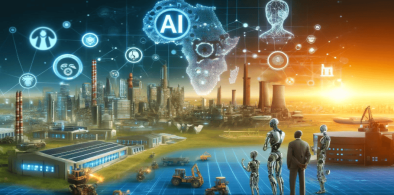
The era of secure, routine, desk-bound clerical jobs is drawing to a close. It is urgent for the younger generation to break free from the illusion of traditional white-collar stability and pivot toward high-value skills, tech-driven entrepreneurship, modern agriculture, or practical, specialized trades. Failing to adapt to this cognitive shift means risking economic obsolescence under the relentless advance of technology
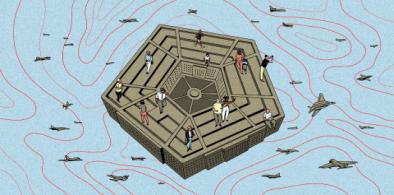
In the effort to combat this multi-dimensional challenge, democratic states are faced with deep policy constraints, many of which can be paralyzing. The fundamental paradox is how to maintain the open, democratic character of the digital commons while at the same time countering more advanced opponents who are not held back by democratic principles. Disseminating disinformation is a tactic governments use to influence public opinion that has the potential to conflict with the strong constitutional freedoms of expression that exist in liberal democracies.
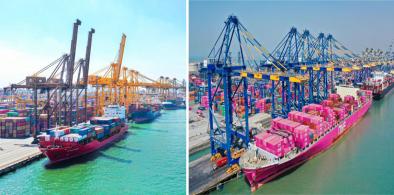
The integration of AI and Generative AI is not a distant aspiration — it is an active investment already reshaping how ports operate, how cargo moves, and how supply chains absorb shocks. For India and its neighbours, the imperative is clear: build the data foundations, governance frameworks, and human capabilities that allow intelligent mobility to reach not just the terminal gate, but every link in the maritime supply chain.
Companies like Google, Meta, and X constantly shape public opinion and thoughts, and store public data for commercial usage. Amazon, Microsoft, and Google host the cloud infrastructure on which states and businesses depend. These are not ordinary companies anymore; they have access to critical intelligence and data. And now AI companies like Palantir use this data for surveillance, intelligence, monitoring, and on battlefields.
The country’s foreign exchange reserves are declining and just enough to cover imports for two months. Last week, authorities announced a ban on over two dozen luxury and other items to save foreign exchange reserves.
At a time when foreign exchange reserves are draining due to rising import bills, the country is due to pay major loans in 2023 and 2024. Going forward, if the recovery of the tourism industry gets impacted by the ongoing crisis, it will further limit the Maldives' government’s ability to fulfill its external debt obligations.
With the economic crisis and the shortage of forex, the Indian credit line of USD 500 million for fuel imports has provided a lifeline to the island nation, which is currently experiencing its worst economic crisis since gaining independence in 1948. With long lines for fuel, cooking gas, essentials in short supply and long hours of power cuts, the public has been suffering for months.
“As the economy recovers [from the Covid-19 pandemic], our assistance will increase access to economic opportunities by promoting employment in critical sectors such as tourism and renewable energy. It will also enhance social service delivery in the islands,” Faris H Hadad-Zervos, the World Bank Country Director for Maldives, Nepal, and Sri Lanka was quoted as saying by The Times of Addu.
On Friday, when asked about the possibility of importing cheap fuel and wheat from Russia, Pakistan's Foreign Office didn’t rule out the possibility. Khan has constantly accused the Sharif government of not pursuing talks with Russia for fuel.
Sri Lanka will require fertilizers worth over $500 million this year and the government has sought fertilizers both from India and China. New Delhi had earlier assured of all possible help. While New Delhi has extended assistance worth over $3 billion this year, China has yet to extend any significant help despite Colombo’s repeated request.
Prior to the war, Russia was the top source market for its tourism. But the number of tourists has been declining as the war progressed, Solih said. The government’s expenditure, subsidies, and import bills are also rising.
Tourism accounts for 70 percent of the government’s total revenue. The government’s spending target on subsidies has already crossed the limit set by the budget 2022, making it extremely hard to reduce any taxes, which could result in potential revenue loss.
Indian authorities have explained that the wheat export ban has been undertaken to ensure domestic food availability and minimize food price-related inflation while supporting the legitimate requirements of India's neighbours and other nations in need.
Modi also invited Uniqlo's enhanced participation in India's journey to becoming a manufacturing hub for textiles, particularly through the use of technologies in textile manufacturing. Yanai said Uniqlo is exploring investments in the production and retail industry in India.
“Post pandemic, India has emerged much stronger in international trade and international exchanges. I believe that the target of a $5 trillion economy by 2030 is not only achievable but we can get there before that,” Puri said.
The import ban, though a necessary measure, will also impact the government’s revenue as luxury items are usually taxed heavily. The move was expected, especially when the government has failed to raise funds for its foreign exchange reserves. The talks with the IMF and other bilateral lenders in Gulf have yet to produce results.
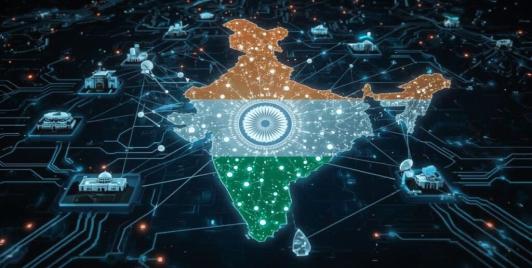
Teledensity and internet users are fast expanding, Modi said, adding that mobile manufacturing units in India have expanded from just 2 to over 200 and the country is now the world's biggest mobile manufacturing hub.
“Although these facts are unpleasant and terrifying, this is the true situation,” he said, mincing no words while describing the state of the economy, which has all but collapsed
For months, the government has been in talks with the IMF not only for the revival of the $6 billion bailout package but also for extending the program's scope to $8 billion and period. After coming to power in April and promising to prioritize the economy, the new government led by Shehbaz Sharif now appears reluctant on tough measures, possibly due to the prevailing uncertain political environment