

Sovereign AI

Sovereign AI: Why It Must Become a Strategic National Priority for India

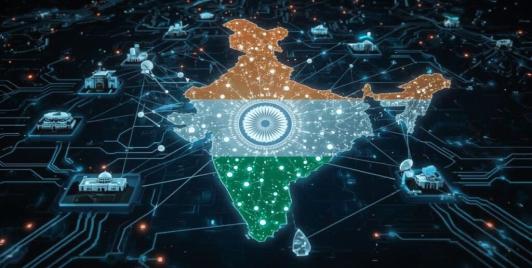
For a Viksit Bharat, data, computation and intelligence will become strategic resources. Protecting them is not protectionism; it is prudent nation-building. India should remain globally connected, internationally collaborative and technologically ambitious but sovereign enough to protect its citizens, institutions and national interests.

AI: The Race Without a Finish Line

The real significance of AI, therefore, may not be about who is the first to cross some hypothetical finish line called AGI. It may be about who is able to diffuse AI most rapidly through the real economy, into factories, services, logistics, research and everyday business

AI Evolution and Consequences: Is Mankind Playing With Fire?

But a plausible scenario about fear of AI could result when a rogue human coder may put in a malicious code (out of mischief ) in this far-from-equilibrium AI system and start a chain of events which may destroy the system. 

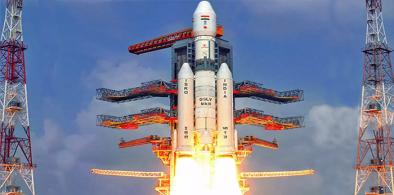
ISRO! Don’t Privatise Yesterday’s Rockets: Build Tomorrow’s With Industry

The purpose of privatisation, therefore, should not be to find a private buyer for every government-developed rocket. It should be to create an industry capable of designing, manufacturing, operating and eventually improving India's future launch vehicles. 

More on AI, Tech and Innovation

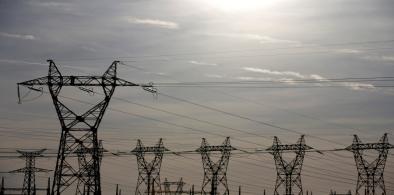
Nepal seeks $400 million in loan from India for 400 kV transmission line; sees potential in sub-regional energy trade

The World Bank has estimated Nepal’s hydropower potential around 20,000 MW. So aligning its energy policy closely with the BBIN (Bangladesh, Bhutan, India, Nepal) sub-regional vision will provide it with the much-needed potential for the export of this surplus energy to larger power consumers like India and Bangladesh

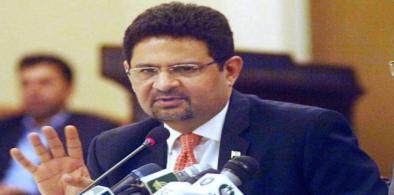
IMF to extend its bailout program to $8 billion for Pakistan; more reforms urged

Of the $6 billion original bailout program, Pakistan managed to get only $3 billion as the previous government failed to fulfill its commitments for reforms. Furthermore, these reforms were further weakened when the outgoing government of former prime minister Imran Khan drastically reduced the prices of electricity and fuel

‘Can’t afford subsidies’: Pakistan to cut back fuel subsidies after talks with IMF

Pakistan is looking for the release of the $1 billion from the IMF package, Ismail said earlier, while blaming the country’s former prime minister Imran Khan for stalling the IMF program. During his last days in power, Khan had announced huge subsidies on fuel and electricity, a move that scuttled almost a year of reform work of his own government to get the IMF program back on track

Bangladesh to focus on food industry to diversify export base

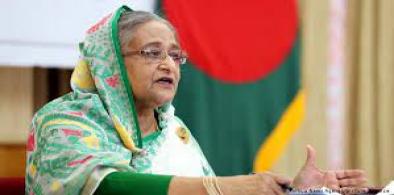
Hasina said the country has made huge success in agricultural production and that should be leveraged in the export sector

Bangladesh wants to invest in Bengal; top biz captains repose faith in eastern state's economy

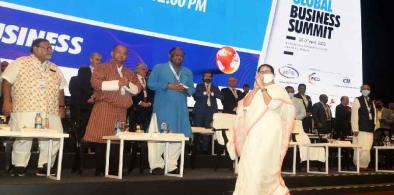
West Bengal was the first state to organise a physical business summit since COVID pandemic struck, Chief Minister Banerjee stated

Imran Khan’s last-ditch relief package complicates new Pakistani government’s IMF efforts

For Prime Minister Sharif, who is running a coalition government with partners united by the sole desire of keeping Imran Khan out, implementing necessary, but unpopular, reforms will not be an easy job. More so, when the country will go into elections in little more than a year's time, making political parties even more averse to painful measures

India to provide another $500 million to Sri Lanka for fuel; China to send humanitarian assistance

The country will need bridge financing of around $3 billion till the IMF finalizes its aid package. Talks are already underway with India and China for raising the money. Significantly, Bangladesh is expected to postpone the repayment of around the $450 million currency swap facility that it had extended to Sri Lanka

India will remain the fastest-growing major economy; Bangladesh to be the fastest-growing economy after India in South Asia

IMF’s projection for India is slightly higher than the World Bank’s 8 per cent earlier this month. The series of World Bank reports also had India as the fastest-growing major economy, with China following it at 5 per cent

Sobering lessons for the region from Sri Lanka and Pakistan

Unlike India or also Bangladesh, Pakistan has suffered economic mismanagement; excessive dependence on foreign aid, whether from the IMF or China is also a factor

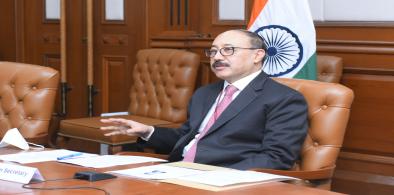
Neighborhood to provide ‘greatest economic opportunities' to our industry, says Indian Foreign Secretary Shringla

“Bangladesh and Nepal are now among the top ten export destinations for India with our total exports to these two countries amounting to over $16 billion,” Shringla said, terming them as “two success stories.”

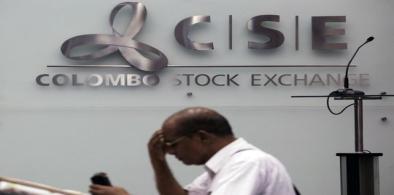
Colombo Stock Exchange closed for five days after Sri Lanka defaults on loans

Since 2020, after the pandemic began, Sri Lanka’s central bank has printed over two trillion rupees, in a move to keep interest rates low. This, however, resulted in a balance of payment crisis and also drove up inflation and stock prices (asset price inflation).

After MCC, US to provide $659 million to Nepal under USAID amid growing rivalry with China

While the US’ renewed interest in Nepal, a traditional battlefield of influence between India and China, is evident from the MCC agreement and increased bilateral engagements and assistance offers, Nepal may struggle to satisfy the security concerns of a newly assertive China

Amid depleting forex, Nepal urges non-resident Nepalese to open dollar accounts

From the $800 million in surplus in February last year, the balance of payment recorded a deficit of $2.03 billion in the first seven months of this fiscal [Between July to February].

South Asia to see slower growth: Fallout of Ukraine war, pandemic

Another challenge the region faces is the disproportionate economic impact the pandemic has had on women. The report includes in-depth analysis of gender disparities in the region and their link with deeply rooted social norms

Sri Lanka: World Bank approves $10 mn emergency grant for essential drugs; $500 mn more in line

On Sunday the Sri Lanka Medical Association (SLMA) said that all hospitals in the country no longer had access to imported medical tools and vital drugs. In a letter sent to President Gotabaya Rajapaksa, the association said, “We are made to make very difficult choices. We have to decide who gets treatment and who will not.”