As the border remains tense in eastern Ladakh, the Indian Army has stocked up on special clothing, diet and shelter for the long haul to battle the harsh winter at heights exceeding 12,000 feet and temperature as extreme as minus 50 degrees Celsius



Remittances have become an unusually large source of external finance for South Asia. But a development model in which workers migrate because domestic employment is inadequate, and then send income home to support domestic consumption, cannot indefinitely substitute for creating productive employment at home.
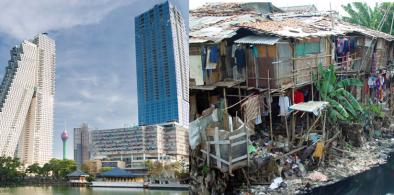
In 2025, Sri Lanka was ranked as the second most expensive housing market in the world based on rentals compared to average income. It is possible that market distortions caused by black economy and corruption have contributed to this.
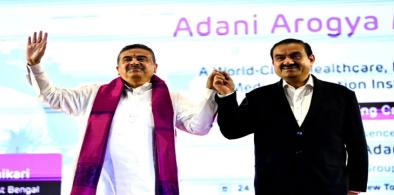
The larger opportunity before West Bengal is therefore not another round of infrastructure creation in isolation. It is the creation of an ecosystem in which infrastructure, private capital, local enterprise and skilled labour reinforce one another.
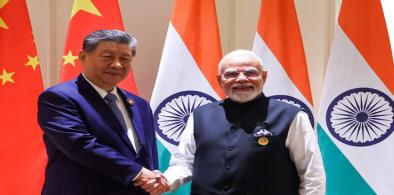
Why not begin by reopening serious discussions with Chinese conglomerate BYD about an Indian factory? BYD is now one of the world’s dominant EV manufacturers. Its Indian ambitions were caught in the post-Galwan investment freeze. Invite it back to the table—but on Indian terms
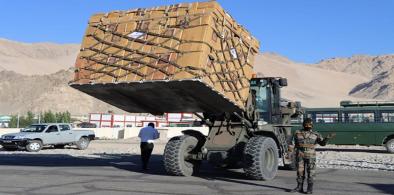
As the border remains tense in eastern Ladakh, the Indian Army has stocked up on special clothing, diet and shelter for the long haul to battle the harsh winter at heights exceeding 12,000 feet and temperature as extreme as minus 50 degrees Celsius
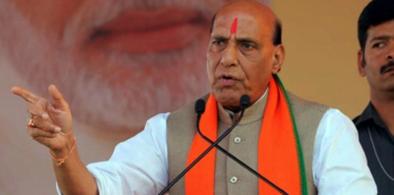
China is in illegal occupation of 38,000 square km of Indian land and it considers another 90,000 square km as its own, Indian Defence Minister Rajnath Singh said in Parliament on Tuesday, adding that the Line of Actual Control (LAC) is not clearly delineated
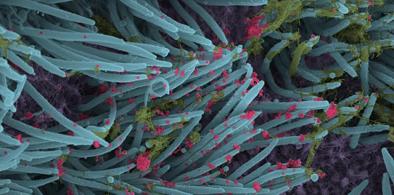
Under the garb of Xi Jinping's Belt and Road Initiative (BRI), China's Wuhan Institute of Virology and Pakistan Army's Defense Science & Technology Organization are conducting experiments on deadly pathogens to expand potential bio-warfare capabilities
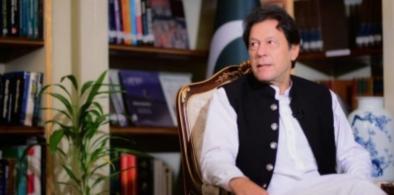
Pakistani Prime Minister Imran Khan said that the Rashakai special economic zone (SEZ) to be developed under the China-Pakistan Economic Corridor (CPEC) in Khyber Pakhtunkhwa (KP) will change the destiny of the region by bringing in employment opportunities

The tense relations between India and China has affected the investment of Chinese companies as the foreign direct investment (FDI) of Chinese companies in India has declined significantly in the last three years, Minister of State for Finance Anurag Thakur said in a reply to a question in the Lok Sabha
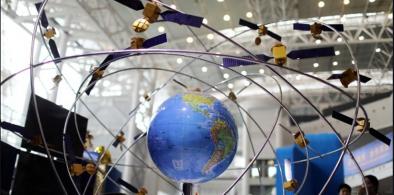
Nepal's policymakers are undergoing 13 days' offline and online training for the BeiDou Navigation Satellite System (BDS) in Beijing after China "specially invited" them to attend it, sources said
Pakistan and China are expected to ink an agreement today (Monday) on the development of the Rashakai Special Economic Zone under the China-Pakistan Economic Corridor (CPEC)
Japan has announced a $221 million China exit subsidy for Japanese companies to shift their base to India and other regions

Colombo Port City, where investors will get land from the government of Sri Lanka are not part of United States sanctions targeted at the ultimate parent company of the project firm, and its foreign investments are not affected, an official said
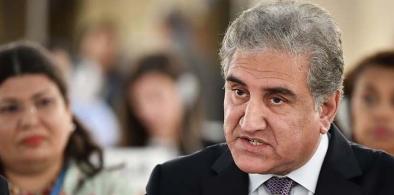
Pakistan on Saturday voiced support for China on the resumption of Code of Conduct (CoC) negotiations in the South China Sea
To prevent the situation at the Line of Actual Control (LAC) in eastern Ladakh from further escalating, the armies of India and China held an interaction on Saturday where they discussed withdrawing forces from the points where there are in eyeball-to-eyeball situations
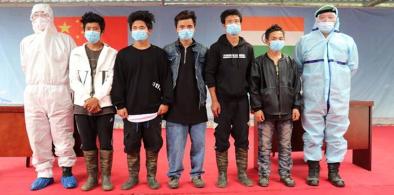
Five youths from Arunachal Pradesh, in remote northeastern India, who went missing on September 2 and were later found to be in Chinese territory, were handed over to India by the People's Liberation Army on Saturday amid the ongoing stand-off between the two sides at the Line of Actual Control in Eastern Ladakh area
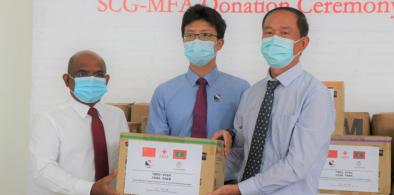
Shanghai Construction Group (SCG) of China on Thursday donated essential personal protective equipment and other medical supplies, to support the COVID-19 response of Maldives amid the global pandemic
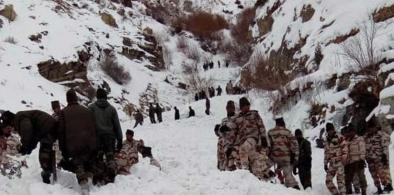
China has set up a military base near Finger 5, in the north bank of Pangong Lake, completely cutting off the Indian Army
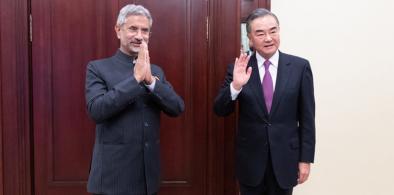
The joint statement and five-point consensus reached by both Chinese and Indian foreign ministers in Moscow marked a substantial step in cooling down the current border situation, exceeding the expectations of most international observers, Chinese mouthpiece Global Times reported