A spontaneous protest erupted in front of the Chinese Embassy in Nepal's capital Kathmandu on Wednesday afternoon over encroachment of the Himalayan nation's territory by China in northwestern part of Humla district



Remittances have become an unusually large source of external finance for South Asia. But a development model in which workers migrate because domestic employment is inadequate, and then send income home to support domestic consumption, cannot indefinitely substitute for creating productive employment at home.
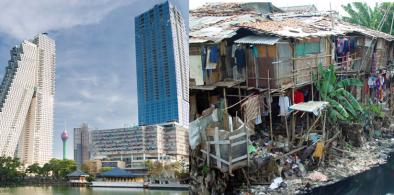
In 2025, Sri Lanka was ranked as the second most expensive housing market in the world based on rentals compared to average income. It is possible that market distortions caused by black economy and corruption have contributed to this.
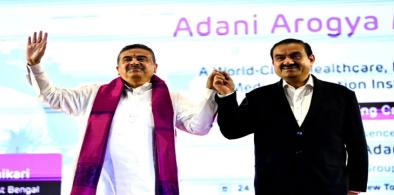
The larger opportunity before West Bengal is therefore not another round of infrastructure creation in isolation. It is the creation of an ecosystem in which infrastructure, private capital, local enterprise and skilled labour reinforce one another.
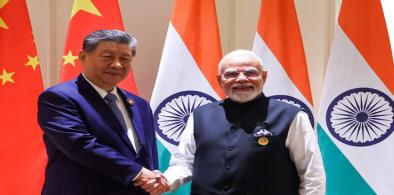
Why not begin by reopening serious discussions with Chinese conglomerate BYD about an Indian factory? BYD is now one of the world’s dominant EV manufacturers. Its Indian ambitions were caught in the post-Galwan investment freeze. Invite it back to the table—but on Indian terms
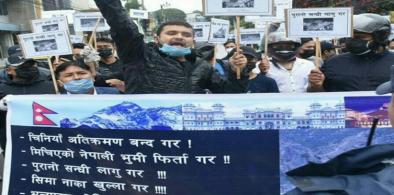
A spontaneous protest erupted in front of the Chinese Embassy in Nepal's capital Kathmandu on Wednesday afternoon over encroachment of the Himalayan nation's territory by China in northwestern part of Humla district

Nepal and China are engaged in a boundary row in Humla after the Chinese side allegedly built 11 buildings in a remote part of the district that Nepal claims as its own territory

The National Command and Operation Centre (NCOC) on Tuesday announced that phase III clinical trials for the Covid-19 vaccine will be launched in Pakistan
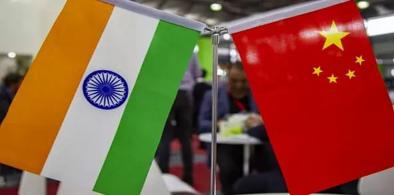
India and China agreed to implement the consensus reached by their leaders over the border issue during the 14-hour-long diplomatic-military talks in Moldo to resolve border disputes, the Indian Army stated on Tuesday

Pakistan Prime Minister Imran Khan has said that the people in his country were keenly looking forward to welcoming Chinese President Xi Jinping, the media reported

China wants to build thousands of houses in Afghanistan, with an initial plan for an immediate construction of 1,400 residential units in Kabul

India and China held 14-hour long diplomatic-military talks in Moldo to resolve border disputes in Eastern Ladakh
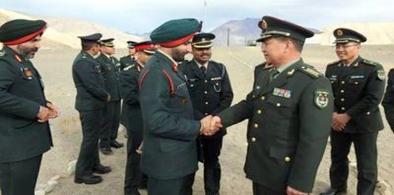
Top Indian and Chinese military commanders will meet on Monday at Moldo to discuss the border dispute, especially in the Pangong Lake area, in eastern Ladakh, sources said. This would be the sixth meeting between two military commanders in the last four months

China has donated foodstuff including wheat and rice to the flood-affected people in Afghanistan, Afghan officials said
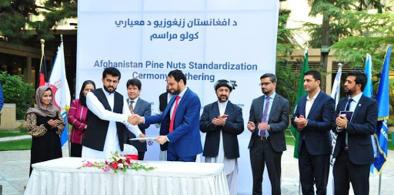
Afghanistan has signed a contract worth a whopping $2.2 billion with China to maintain original status of pine nuts and develops its markets globally
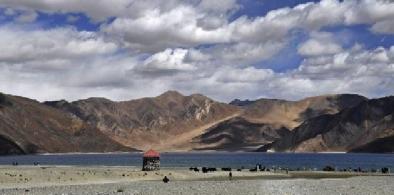
Despite the Indian and Chinese foreign ministers agreeing to reduce tensions along the disputed border, both the countries troops are in rifle range at four locations at Pangong Lake in Eastern Ladakh, a senior official in the security establishment said
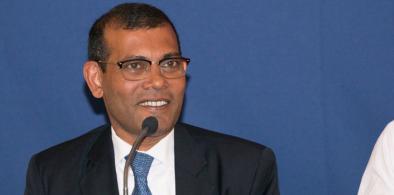
Chinese Ambassador to Maldives Zhang Lizhong dismissed the allegations that Maldives was facing a Chinese debt trap as "a fiction"
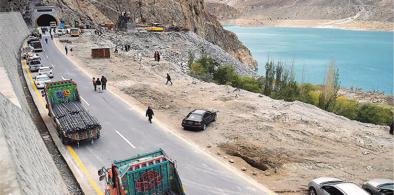
Pakistan Ambassador to China Moin-ul-Haque held a meeting with China’s Minister for Transport, Li Xiaopeng here on Thursday
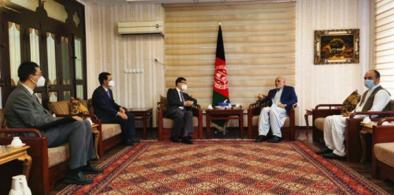
The China-Pakistan Economic Corridor (CPEC) is expected to be a game-changer in South Asia. As part of China’s ambitious Belt and Road Initiative (BRI), CPEC is a $62 billion infrastructure development project, in which Afghanistan would likely be part of it. This project is aimed to connect China’s Xinjiang region to Pakistan’s Gawadar Port
Amid border tension at eastern Ladakh, Chinese construction activities were observed near the border at Uttarakhand. "Hut-like structures on the Chinese side, very close to Tinkar-Lipu pass of Nepal, were observed," sources said on Wednesday