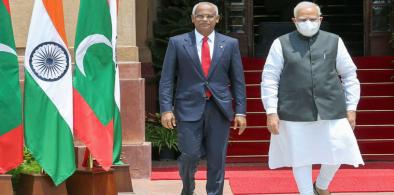
India's Prime Minister Narendra Modi meets Bangladesh's interim government head Muhammad Yunus

Bangladesh–India Relations at a Crossroads: Needed Recalibration, Not Rupture

The current strains in Bangladesh–India relations should therefore be seen not as an inevitable deterioration, but as a test of diplomatic maturity. Bangladesh and India share more than geography and history; they share a responsibility to ensure that temporary political frictions do not harden into structural mistrust. In a time of regional uncertainty, neither country benefits from a relationship defined by grievance or miscommunication. 

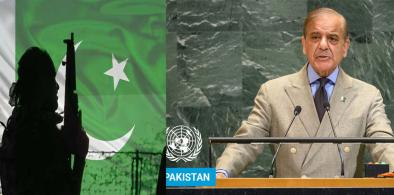
A Dangerous Power Grab in Pakistan; Unpredictable Consequences For Region

The 27th Amendment, celebrated by its proponents as a security reform, is in reality a political coup executed through constitutional means. It marks not only Munir’s personal triumph but the institutional victory of the military over all other state authorities. As history warns, empowering any unelected institution above the republic’s elected will invites instability—not strength. Pakistan may soon discover that consolidating military power does not secure the nation’s future, but instead places it at greater risk

How Foreign Digital Influencers Are Tarnishing India’s Global Image

India must now transition from conventional soft-power thinking to visibility governance—the systematic management of how the country appears, circulates, and is emotionally interpreted across global platforms. Failure to do so will leave India’s global image increasingly shaped by commercial incentives outside Indian control.  

Afghanistan Should Not Get Caught In The India-Pakistan Strategic Rivalry

The strengthening of Taliban-India ties runs counter to Pakistan’s interests. The more border clashes intensify between the Taliban and Pakistan, the more secure the Kashmir region and the Line of Control (LoC) become for India. Under such conditions, Pakistan will remain preoccupied with its northwestern border, giving India a unique opportunity to consolidate its control over Kashmir and potentially weaken, drive out, or eliminate Kashmiri militant groups 

More on Spotlight

Flawed US AfPak policy a boost for Taliban, a boon to China

America’s expectations that Afghanistan would not become a haven for terrorists (which it already was) and that the US will remain sheltered from terrorism emanating from that soil, are both misplaced, writes Lt Gen P. C. Katoch (retd) for South Asia Monitor

After PTA, Bangladesh and Bhutan can cooperate to solve regional issues, tackle Covid

Once the PTA comes into force, more people in Bangladesh will get access to good apples and oranges from Bhutan, while the fashion-conscious Bhutanese can choose from more varieties of quality apparel from Bangladesh, writes Md Pathik Hasan for South Asia Monitor 

A new street battle by Afghan women that Taliban may not be prepared to fight

The sense of losing everything - after a quarter-century of modernization and social progress - seems to have broken the Afghan women's fear of confronting the Taliban, writes Shraddha Nand Bhatnagar for South Asia Monitor 

South Asia's cricket rivalry: Is the Indian pace battery a notch-up on Pakistan's feared pace attack of the last century?

The difficulty level the current Indian pacers had to overcome to achieve consistency and success in top-flight international cricket is substantially higher than what their counterparts from Pakistan had to surmount decades back, writes Sirshendu Panth for South Asia Monitor

Augury of a 'failed' Afghanistan: Global sympathy should be with the Afghan people

So, what the future looks like for Afghanistan? In one word: hopeless, writes Anondeeta Chakraborty for South Asia Monitor

India must shed its diffidence on a full-fledged FTA with UK

If India seeks greater market access, it must also allow the UK to sell more of its goods and services, writes N. Chandra Mohan for South Asia Monitor

With Europe caught in divisive politics, Afghan refugee women face a bleak future

The existing Afghan population in Europe is already facing a compassion deficit in Europe due to the rise in anti-immigrant parties threatening to fracture the bloc further,  write Dr. Manasi Sinha, Pratyush Bibhakar and Vishal Rajput for South Asia Monitor

Nutrition literacy, greater market infrastructure investments must for ensuring healthy, sustainable diets in South Asia

To design sustainable food systems for healthy diets within the South Asian region, one needs to take local realities and contexts into account and develop a strong collaboration among all stakeholders at the grassroots, national, regional and global level, write George Cheriyan and Simi T.B. for South Asian Monitor

Deja Vu in Kabul: 25 years on Taliban-India dynamics see a familiar re-enactment

Knowledgeable observers, including diplomats who have served there, feet that no Afghan government could ignore India in the long run, because Islamabad could never give what Kabul received from India, something built on the foundation of strong historical, cultural, and people-to-people bonds, writes Tarun Basu for South Asia Monitor 

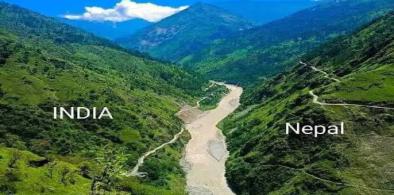
Bangladesh and Nepal should tap both bilateral and multilateral routes to maximize gains from ties

India, Nepal and Bangladesh should have a holistic diplomatic approach to bolster their connectivity project, writes MD. Pathik Hasan for South Asia Monitor

Power of advocacy: How women’s groups, leaders led international efforts to pressurize Taliban to let people leave Afghanistan

Given the Taliban's growing need to be recognized, and to receive international aid, this time around the US and the international community, backed by the World Bamk, International Monetary Fund (IMF) and the United Nations are in a much better position to together pin down the Taliban on its assurances and also hold it accountable, writes Nisha Sahai Achuthan for South Asia Monitor

End of the road for economic liberalism in Sri Lanka?

Neither SLPP nor SJB has a major reform agenda to breakout from Sri Lanka’s endemic economic problems, which are deeply rooted in the country’s inability to earn enough foreign inflow to sustain itself and to bring in sound fiscal policies, writes Indika Hettiarachchi for South Asia Monitor

Lessons from Afghanistan disaster: US not to 'remake other countries'

The question will be what kind of “consequences” the US can impose on those it considers veering off from the democratic path Biden and his supporters set, writes Arul Louis for South Asia Monitor 

India should team up with friendly countries to stay relevant in Afghanistan

India’s approach towards Afghanistan should be dictated by its economic and strategic interests and it needs to judge the Taliban by its actions while being flexible enough to leave room for numerous divergences, writes Tridivesh Singh Maini for South Asia Monitor

Of Afghan Snow, Kabul street dancers and fabled Kabuliwalas once upon a time!

For India and Indians, one of the most enduring Afghan connections that developed, rather accidentally, was in the form of “Afghan Snow”, the first beauty crème, writes Mahendra Ved for South Asia Monitor