

Representational Photo

Bangladesh Drifting Into A Nexus Of Military Dependency And Proxy Competition? Ominous Consequences For India, South Asia

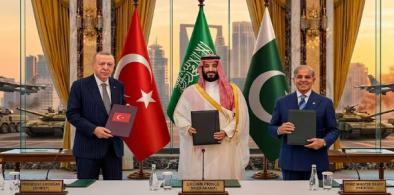
Taken together, these developments should ring alarm bells. The convergence of foreign military-industrial interests, Islamist political forces, and great-power rivalry risks turning Bangladesh into an epicenter of proxy competition and ideological confrontation. For a nation that has paid dearly for its independence and pluralistic identity, the cost of such entanglements may prove far higher than the short-term gains promised by arms deals and infrastructure projects.

Between Treaty And Truth: Sri Lanka's Conflict-Related Sexual Violence And Limits Of International Law

Sri Lanka's case highlights the central weakness of the ICC’s complementarity principle. The Rome Statute grants jurisdiction only where states are unwilling or unable genuinely to carry out the investigation or prosecution. Sri Lanka maintains functioning judicial institutions, conducts some prosecutions, and has established reparations frameworks, thereby technically satisfying the ability threshold while systematically failing to deliver accountability for conflict-related crimes.

Davos: Noise, Narratives, And The Reality Beneath

If Davos had a clear centre of gravity this year, it was technology—not geopolitics. The tech industry arrived in force, underscored by high-profile appearances from Elon Musk and Nvidia CEO Jensen Huang. The message was unmistakable: this is where attention, ambition, and capital are converging. With extraordinary sums being poured into artificial intelligence, unease among lenders and investors is understandable. Yet many executives were keen to reassure markets that fears of an AI bubble were overstated.

Abandoned U.S. Weapons Empowering Terrorists, Undermining Pakistan’s And Regional Security

Strategically, these developments underscore the importance of regional counterterrorism cooperation and rigorous monitoring of cross-border arms flows. The proliferation of foreign-supplied weapons into Pakistan not only strengthens terrorist organizations but also threatens regional stability. Each attack executed with U.S.-origin rifles or advanced tactical gear reinforces the need for Pakistan’s zero-tolerance policy against militancy while exposing the organized external support networks that continue to embolden groups like the TTP.

More on Spotlight

Can Afghanistan transcend its dubious legacy of terrorism?

Madrassas in Pakistan and Afghanistan, often funded by Gulf states, have spread extremist ideologies. Saudi-financed madrasas in Pakistan taught Wahhabism, fostering a transnational network of militants using Afghanistan as a base. The U.S. and Saudi Arabia provided substantial aid and funding to these madrassas and the Mujahideen, promoting jihad against the Soviets. 

Pakistan’s economic recovery contingent on political stability

Pakistan's continuous political turbulence, characterised by infighting and power rivalries, poses a serious threat to the country's economic development.

Bangladesh's recent violence was an expression of simmering political and social discontent

The violent conflicts have caused infrastructure damage, supply chain disruptions, and industry closures that have cost Bangladesh billions of dollars in lost revenue and negatively impacted essential industries like clothing, steel, ceramics, and pharmaceuticals. Its ramifications went beyond short-term financial losses. 

Baloch national gathering: Call for a new era of struggle against Pakistani State brutalities

The whole Baloch nation has faced the worst form of oppression by the Pakistani State: they have been abducted, received mutilated bodies of their loved ones, confronted illegal raids, illegal detention, and bogus cases. They have not been allowed peaceful protests; they have been totally censored by mainstream media. 

Strategic dialogue, Track 1.5 diplomacy necessary to maintain regional stability in South Asia

It is crucial for India and Pakistan to establish new confidence-building measures (CBMs) to mitigate the potential destabilizing effects of advanced technologies. Key elements of effective CBMs include robust communication channels, bilateral discussions on emerging technologies and their implications for regional peace, and strict adherence to missile test notification protocols.

Rekindling the spirit of communal amity in Sri Lanka: A Prime Minister's quest

In this newly revived spirit of amity, PM Gunawardena travelled from Jaffna to Kilinochchi by road. There were no protests and he was received at both venues with warmth and cordiality.

After back to back India visits, Hasina’s China visit demonstrates Bangladesh’s delicate balancing act

Hasina sees no contradiction in maintaining equity in ties with China and India as she is able to adeptly navigate the conflicting interests of China and India. Analysts feel that Dhaka will continue to have a balanced approach to ties with Beijing and New Delhi since Bangladesh depends on both for stability and growth. 

Modi's Russia visit was to reaffirm strategic ties in uncertain times

The Moscow meeting was to understand each other's priorities and concerns according to the evolving geopolitics and reassure each other of their commitment to deepening their relationship in the coming years. 

International education as soft power: Need for integration into nation’s foreign and security policies

A credible, viable, and sustainable foreign and security policy needs to see relationship building, collaboration, and cooperation as part of its education policy and driven by an aspiration for global good and human welfare. 

The imperative of regional cooperation in South Asia

Today, the lack of regional cooperation in South Asia impedes development and has long-term negative economic, social and security ramifications. Over-reliance on foreign powers for partnerships and financial support can have adverse economic effects as seen in Sri Lanka and Pakistan.

Hasina's India visit is beneficial for regional stability and prosperity, China factor notwithstanding

India was keen to welcome PM Hasina before her China trip to ensure bilateral consensus on sensitive issues. Over the last several years, strategic ties have grown, with cooperation in science and technology, defence and security, energy, trade, commerce, and maritime issues. The goal of the visit was to strengthen these bonds.

A world in transition: Will this lead to a new world order or disorder?

China, Russia and the US, however, give little value to international laws. They accept them only if they suit their own interests. They reject them if they conflict with their interests.

Sri Lanka's debt deal with China: Implications for the economy and India-Sri Lanka relations

India and China have long been strategic rivals in South Asia. China's significant economic footprint in Sri Lanka, through investments in infrastructure projects like the Hambantota Port and the Colombo Port City, has raised concerns in New Delhi about Beijing’s growing influence. The debt deal, involving China, adds another layer to this complex relationship.

The Arakan Army: A growing security threat to Bangladesh and region

The AA’s control over large swathes of territory in Rakhine State, including strategic border areas, increases the risk of arms smuggling, human trafficking, and other illicit activities. Bangladesh's geography puts it at the heart of three major Asian drug trade routes - the Golden Wedge, the Golden Triangle and the Golden Crescent. This makes the country a lucrative transit for the region's drugs, especially from Myanmar and India, undermining Bangladesh’s internal security.

Intelligence sharing between India, Sri Lanka imperative to curb mounting IS threat to South Asia

The arrest of four Sri Lanka nationals last month in Ahmedabad, India by Gujarat's Anti-Terrorism Squad caught the attention of Sri Lankan authorities. During interrogation, the four admitted to being closely involved with the banned NTJ and confessed they joined IS through Pakistani handler Abu Bakr Al Baghdadi.