

Representational Photo

Who Will Govern AI? Its Consequences Will Shape Global Order

Humans have always pretended we can resist new inventions, from the printing press to electricity to computers, only to discover that the world shifts regardless. AI is different only in degree, not in pattern. It moves faster than our debates, scales faster than our regulations, and integrates faster than our instincts. The question is no longer whether AI will matter. It is whether we will matter in deciding how it is used.

Modi’s Israel Visit and India’s Expanding Role in West Asia

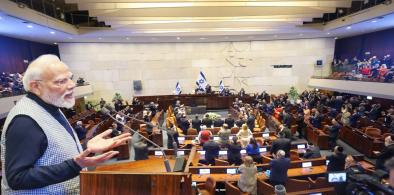
The broader geopolitical implications of Modi’s visit are equally significant. India’s expanding footprint in West Asia reflects its transition from a traditionally non-aligned actor to a proactive participant in regional affairs. Unlike major powers that often approach the region through rigid alliances, India seeks flexible partnerships rooted in strategic autonomy. Its engagement spans Israel, the Gulf monarchies, and Iran, allowing it to maintain a diversified diplomatic portfolio. 

Pakistan’s Afghan Blowback: Strategic Depth Turns Strategic Liability

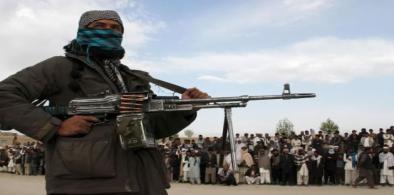
The larger lesson is sobering. Pakistan’s experience illustrates the perils of instrumentalising militant proxies for short-term strategic gain. Strategic depth, once viewed as a force multiplier, has become a source of strategic vulnerability. As Islamabad turns to air power to manage a problem decades in the making, the deeper fracture lies not just along the Durand Line—but within the logic of proxy warfare itself.

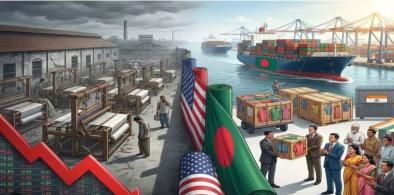
India’s Global Power Trajectory: Strategic Implications for Bangladesh and Region

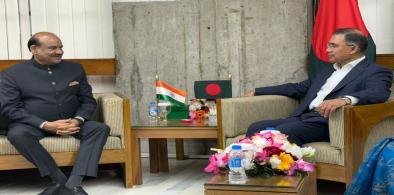
However, a balanced assessment suggests that India’s superpower trajectory could also generate opportunities for Bangladesh. Enhanced regional connectivity, expanded market access, greater investment flows, and improved regional stability could benefit Dhaka—provided cooperation and mutual respect remain central to bilateral engagement. Ultimately, the impact on Bangladesh will depend not only on India’s power trajectory but also on how both countries manage diplomacy, trust-building, and regional cooperation in an evolving geopolitical landscape.

More on Spotlight

Middle East On The Brink: What India Must Do to Shield Its Economy

The Middle East’s volatility is not an outlier—it’s a feature of the emerging global order. India’s challenge is to anticipate these tectonic shifts and act with strategic foresight, not just tactical response. Energy security, export competitiveness, and supply chain resilience must now be treated as interlinked pillars of national power. Failing to adapt could make India a casualty of distant wars.

Op Sindoor: Were India's Strategic Objectives Fulfilled?

The absence of any form of engagement with Pakistan other than military has narrowed India’s options substantially. As a sovereign state, Pakistan cannot be seen to nor will it bow to coercive tactics. The current Indian establishment’s perennially punitive approach to Pakistan and efforts to humiliate it as an object of domestic ridicule has not yielded any dividends.

50 years of G7: Multilateralism in need of renewal

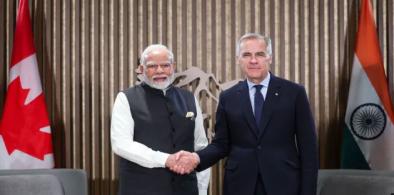
For India, this summit offers a dual opportunity. First, to shape a more inclusive multilateralism; one that amplifies the Global South’s priorities on energy, security, and digital equity. Second, to rebuild strained ties with Canada, a relationship marred by recent tensions but too strategically important to neglect. 

A Month After Op Sindoor: More Questions Than Answers

So if another terror attack happens, will India launch another deep-strike operation with all the attendant risks of escalation? And how long can the tit-for-tat actions continue with the loss of soldiers and civilian lives and homes and attendant costs of military armoury and infrastructure destruction at a time when economic growth and dwindling jobs need all the attention?

Drones Over the Subcontinent: India’s New Strategic Edge

The broader picture is clear: drones have dramatically shifted the cost calculus of modern warfare. As analysts have noted, $10,000 drones are now routinely met with $2 million missiles. Only a country capable of producing its own unmanned systems, and adjusting its tactics in real time, can maintain strategic credibility under such conditions. 

Is Bangladesh slipping toward a praetorian state?

Bangladesh’s 2024 crisis has significantly strained civil-military relations. The military’s instrumental role in ousting Hasina and installing the interim government has amplified concerns of a deepening praetorian drift. As Yunus’s control weakens amid economic turmoil, law-and-order issues, and geopolitical friction, the military appears increasingly assertive—opposing civilian initiatives and resisting reforms.

Pakistan’s Dwindling Foothold In Afghanistan Market: Need To Restore Trust Between Islamabad And Kabul

The recent clash between Pakistan and India after the Pahalgam attack on April 22 has created concerns in Kabul over  Afghanistan’s trade flow. Abdul Latif Nazari, a Taliban deputy minister of economy, emphasized, “Tensions in India-Pakistan relations negatively impact Afghanistan’s economic situation". 

Eco-Theater in South Asia: The Real Cost of Greenwashing

The climate crisis isn’t waiting. In South Asia, it’s already arrived — in the form of droughts, deadly heat waves, and flash floods. These are not future risks. They’re happening now. And for communities facing those impacts, a corporation’s sustainability page doesn’t count for much. This region deserves better than slogans. It deserves action that doesn’t just sound good but does good — for the air, for the water, and for the people whose lives are tied to both.

Cyber Violence Is Silencing Women in Bangladesh

One high-profile case involving a Bangladeshi actress made this painfully clear. When private videos of her were leaked by a former fiance, the fallout was swift—but not for the man who betrayed her. The scrutiny, the mockery, the moral judgment—it all landed squarely on her shoulders. The technology was modern; the public reaction was anything but.

Bangladesh Not Sliding Into Radicalism: Indian Media Peddling False Narratives, Will Harm Ties

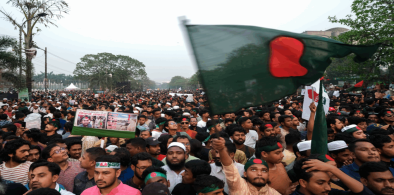
Indian media’s portrayal of Bangladesh as sliding into extremism also threatens to derail valuable regional cooperation initiatives. South Asia is one of the least integrated regions in the world, despite shared histories and cultural ties. Any attempt to isolate Bangladesh or provoke fear-mongering narratives does not serve the interests of the region’s people. India and Bangladesh have enjoyed largely cordial relations in recent years; however such baseless media narratives risk fraying this relationship

A Looming Water Crisis for Bangladesh: Will Dhaka-Delhi Renegotiate Ganga Water Treaty?

Amid reported Indian reluctance, Dhaka has turned to Beijing for a 50-year master plan on river management. This has raised alarms in Delhi, especially as the proposed infrastructure is near the strategically sensitive Siliguri Corridor, a 22-kilometer-wide stretch connecting India to its northeastern states. Dhaka's pivot towards Beijing may ultimately disrupt the regional balance of power.

Unlimited lessons from a limited war: Questions that need to be asked

Trump equated India and Pakistan when he spoke on the ceasefire, erasing the genuinely-earned and the increasingly well-accepted de-hyphenation of two neighbours that were born at the same time but have walked very different paths – India as a secular nation that is an economic powerhouse while Pakistan as a failing democracy that faces economic uncertainty. This re-hyphenation is a sorry picture because it dwarfs India and keeps the nation confined and limited

War is not a solution: India and Pakistan's priorities lie in dealing with human suffering, building on core strengths

So, instead of becoming two adversaries and wasting money and men on terrorism and war, both nations should focus on education, health, employment and on building nation specific infrastructure projects. Today, the breed of strong global leaders with ethics and morality is fast disappearing. War between nations is exploited to boost weapon trade.

How Modi’s India is Rewriting the Rules of Warfare and Reshaping Regional Dynamics

The consequences are dangerous. Both sides now feel compelled to respond forcefully, fearing that restraint might be perceived as weakness. Pakistan, already grappling with economic and political instability, faces increased pressure to retaliate. For India, any future terror attack is likely to provoke immediate military response. The threshold for conflict has lowered significantly—creating a volatile environment where a single militant operation could ignite full-scale war.

The India-Pakistan Conflict and Its Impact on Sri Lanka

Sri Lanka often finds itself navigating a diplomatic tightrope. While it shares strong cultural, economic, and historical ties with India, it also engages with Pakistan through trade, defense training, and political goodwill. The India-Pakistan rivalry sometimes limits Sri Lanka’s foreign policy options and restricts deeper ties with one country for fear of antagonizing the other.