

Pakistan: A Cricket Defeat is Merely a Symptom of a Deeper Malaise
More than 60 percent of Pakistan’s 241.5 million population (2023) is below the age 30, with a median age of about 20. It is one of the youngest nations in the world living in a country that has remained adrift since its creation. Cricket was once a source of national confidence for young Pakistanis, but in recent years even that has vanished. The T20 defeat is just another instance of the crisis of confidence gripping the country that is also debilitating its cricket team.
 Feb 16, 2026
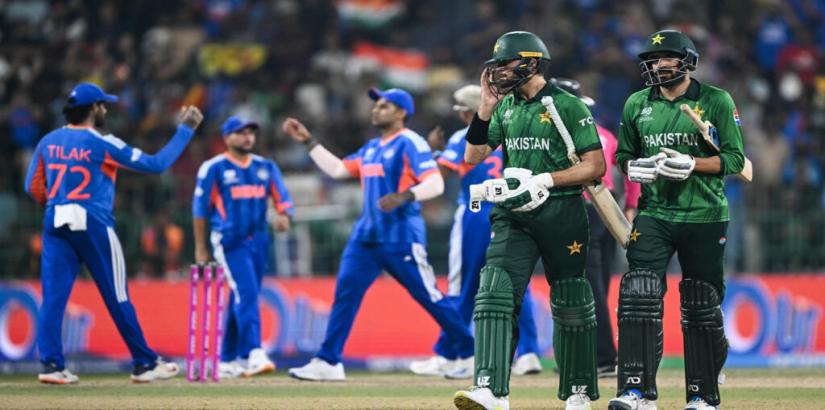
In a striking juxtaposition, in the week that the news came of Imran Khan, Pakistan’s most celebrated cricket icon and its incarcerated former prime minister, practically going blind in his right eye, the country’s cricket team trucked under to India in the T20 World Cup match in Colombo.
The sorry twin spectacles of Pakistani cricket team’s 61-run defeat and Khan’s tragic loss of eyesight in prison are in a way manifestations of a society long trapped in deeper and nearly incapacitating crises across a spectrum of life. From the existential dangers posed to the state by the violent Baloch subnationalism to its unending economic pauperization, and from its leaders indulging in acts of embarrassing ingratiation to the United States to its military’s absurd stranglehold over its civil society, there is such an extraordinary convergence of destructive forces.
Look of Defeat
On the face of it, all these may seem like unconnected crises, but they do all flow from a single fountainhead of a society that has never really fully coalesced as a nation-state.
Beyond the risible asides such as whether the Indian and Pakistan cricket players should shake hands or look at one another with surly suspicion, what stood out in the Colombo T20 World Cup match was that Pakistani cricketers seemed to have a pall of defeat hanging on them permanently. It was almost as if the team members carried their own little versions of their native country in peril.
On the other hand, the optics of a cricketing hero, once a hedonist and head of a nuclear-armed country eroding away in a prison cell since August 5, 2023, is also an indicator of a society where the ruling elite is at odds with its people. That the 73-year-old Khan had reportedly been complaining about his diminishing eyesight for the past three months or so has enraged his supporters in his Pakistan Tehreek-e-Insaf (PTI) party as well those Pakistanis who recognize that their country is in far more serious crisis than a T20 defeat here or a former prime minister going partially blind there.
Crisis of Confidence
That the largest province of the country, namely Balochistan, which represents 44 percent of the country’s territory with a population of 14.8 million, 5.9 millions of whom are ethnic Baloch people, is pushing for secession underscores the kind of deeper malaise coursing through the country. The Baloch insurgency is now in its 20th year and is showing no sign of abating. If anything, it has become worse.
On the economic front, although since mid-2023, there has been some improvement in the country’s economic indicators, much of that can be attributed to the fact that bilateral and multilateral creditors, who together hold around 85 percent of Pakistan’s external debt, have committed to rolling over principal repayments that come due. There has been some increase in its foreign exchange reserves to $12 billion or so from a paltry $4 billion in June, 2023, enough then only for two weeks’ worth of imports. However, the overall economic situation remains distressed with high unemployment exacerbated by poor governance.
In the midst of all this Pakistan’s Prime Minister Shehbaz Sharif has made a habit of unctuous flattery of his benefactors such as the United States, Saudi Arabia and Turkey as a policy preference. This is even as his military chief, Field Marshal Asim Munir, struts about both domestically and internationally projecting an air of untrammeled ownership of Pakistan.
More than 60 percent of Pakistan’s 241.5 million population (2023) is below the age 30, with a median age of about 20. It is one of the youngest nations in the world living in a country that has remained adrift since its creation. Cricket was once a source of national confidence for young Pakistanis, but in recent years even that has vanished. The T20 defeat is just another instance of the crisis of confidence gripping the country that is also debilitating its cricket team.
(The writer is a Chicago-based journalist, author and commentator. Views are personal. He can be reached at mcsix@outlook.com)







Post a Comment