
In order to effectively “Act East” we must first try to “Learn East” once again to rediscover the opportunities for prosperity that lie therein, writes By Amb Sarva Chakravarti (retd) for South Asia Monitor

It is time for India, along with like-minded nations across Asia, Africa, and Latin America, to articulate a shared agenda of non-alignment 2.0, not as a posture of neutrality but as a strategy of autonomy. The original Non-Aligned Movement (NAM) emerged from the Cold War’s bipolar tension; its modern counterpart must respond to multipolar volatility.
The world over, as is evident from the Atlas of endangered languages, there is a thrust of the dominant languages taking a precedence and most of the endangered languages are likely to disappear by 2100. Soon, possibly in the near future, the grand and great grand-children of the present generation may not be able to tell the story of their own mother tongue. Some of these languages will be lost forever and will only be limited to the pages of gazetteers and history books.
Only by asserting ownership over data and algorithms can the South escape serving as the North’s digital underclass. The path forward demands digital decolonization—a reimagining of technology not as an instrument of extraction, but as a platform for justice, inclusion, and shared prosperity. The struggle for sovereignty has moved from the soil to the server.
India provides valuable lessons. Despite its complex religious, linguistic, and ethnic diversity, India has preserved unity through a robust constitutional framework, civic nationalism, and legal consistency. Even contentious debates from population balance to cultural identity are ultimately rooted in democratic institutions. Western democracies can learn from this: pluralism prospers only when supported by strong governance and well-defined civic responsibilities.
In order to effectively “Act East” we must first try to “Learn East” once again to rediscover the opportunities for prosperity that lie therein, writes By Amb Sarva Chakravarti (retd) for South Asia Monitor

The LGBT issue is far from gaining social acceptability in a diverse and conservative society that India and much of South Asia is. But things are changing, writes Mahendra Ved for South Asia Monitor

Today’s dispute (between India and Pakistan) is now less about Kashmir and Kashmiris and more about a river system with its headwaters in Kashmir writes Anuttama Banerji for South Asia Monitor

The present peace accord is fragile as there are several forces which are against the peace, and they may try to disrupt the agreement, writes Jai Kumar Verma for South Asia Monitor

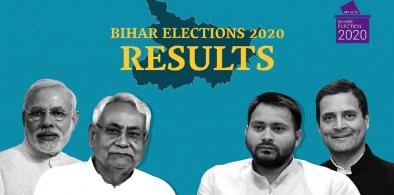
For, what happened in the capital during the two days of the Trump visit, especially on the last day, was no less damaging to the Prime Minister’s reputation than the electoral setback, writes Amulya Ganguli for South Asia Monitor

The women of Shaheen Bagh at Delhi and their sisters at innumerable other locations all over India have changed the narrative of dissent... causing utter confusion of thought as well as action at the level of the Indian government, writes Dr Udai Vir Singh for South Asia Monitor
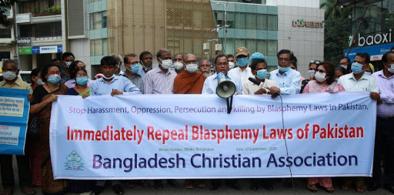
There is no incident in Bangladesh that can prove that any Bangladeshi has been persecuted by the government for his or her religious beliefs, writes Swadesh Roy for South Asia Monitor
The second largest and the fourth largest emitter of the green house gases are standing in the cusp of the most critical decade of the 21st century when they meet on 24-25 Februrary 2020 when the world is on the cusp of environmental havoc due to climate change, writes Rajendra Shende for South Asia Monitor
When Nawaz Sharif was Prime Minister, Aziz had hailed and justified the terror attack on the Army Public School in Peshawar, where scores of students and teachers were killed, writes Mahendra Ved for South Asia Monitor
Ending the long war in Afghanistan and getting the boys back would help President Trump’s bid for a second presidential term but he may be creating a bigger Frankenstein in the combined Af-Pak region that would come to haunt America in the future, writes Lt Gen PC Katoch (retd.) for South Asia Monitor
For years Delhi government schools were known for their indifferent pedagogy, rundown buildings, large dropout percentages and were synonymous with all that was wrong with the country's public-sector education system, writes Tarun Basu for South Asia Monitor
Just before the American president sets course for India, a senior US official noted that the US wants an India that is strong with a capable military that supports peace, stability, and a rules-based order in the Indo-Pacific region, writes Cmde C Uday Bhaskar (retd) for South Asia Monitor
Having understood the American game plan, India acted swiftly to minimise the danger by ensuring that Pakistan did not get off the 'grey list' till its compliance is fully confirmed, writes Brig Anil Gupta (retd) for South Asia Monitor
The visit will be high on optics and low on substance as both Trump and Indian Prime Minister Narendra Modi seek relief from domestic pressures and revalidation before their citizens, writes Arul Louis for South Asia Monitor
The issue of polio eradication has taken a perilous form in Pakistan due to the deadly mixture of militancy and developmental issues, writes Sanchita Bhattacharya for South Asia Monitor