
Black clouds floating over Kathmandu valley, at Swayambhu temple. Photo by Pragyan Srivastava.

Air Pollution Knows No Borders: Smog Over Kathmandu Is A Regional Failure

As the World Bank notes, isolated national actions are insufficient when pollution itself ignores borders. India, Nepal, Bangladesh, and Pakistan share the same airshed. Without cooperation, each country keeps breathing its neighbour’s mistakes. “As the government representing the largest population affected by air pollution, India should lead this effort. Instead, the region has drifted away from cooperation, and the cost has been catastrophic,” Dr Subedee said.

When Cricket Stops Being ‘Just Cricket’: South Asian Sporting Diplomacy in Retreat

This is certainly not a call to romanticise sport or overstate its diplomatic capacity. Neither did cricket ever resolve South Asia’s conflicts. But it softened their edges. It reminded the public that despite borders and disputes there existed a cultural language. The erosion of that language should now concern the whole of South Asia. Because when even the simplest forms of cultural exchange become difficult, rebuilding trust happens to be infinitely harder.      

Bangladesh’s February Referendum and the Future of Secularism

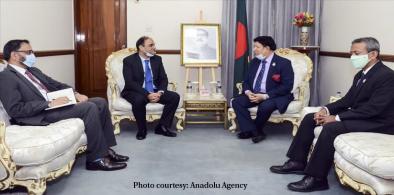
Bangladesh, though Muslim‑majority, has historically significant Hindu, Buddhist, Christian, and Indigenous minorities. Removing secularism would create a profound democratic dilemma as it is the safeguard against majoritarian dominance and structural exclusion. The South Asian experience shows the risks of privileging religion in constitutions.

With India-EU Trade Deal, It's Time To Recast India's Foreign Policy

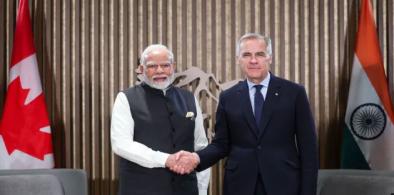
What India next needs to consider is opening a dialogue with Beijing, while remaining mindful of its security concerns. Years of hostility and China’s anti-India posturing, coupled with its hegemonic aspirations, have understandably created an atmosphere of deep distrust. However, the atmospherics are now right for a rethink as to whether current distancing serves mutual interest. The middle path approach justifies seeking out areas of collaboration, especially through enhanced trade and thereby dilute the overdependence on the US market, both for China and for India.

More on Spotlight

The course of three South Asian democracies - Nepal, Bhutan and Maldives

After a decade, these three countries - Nepal, a Hindu majority country, Bhutan, a Buddhist country and Maldives, an Islamic country - make a compelling study in the journey of democracy, writes Rishija Singh for South Asia Monitor

India's nuclear policy has destablised South Asia: A Pakistani view

Despite dramatization of Pakistan’s nuclear capabilities, it is quite clear that South Asia has remained safe from any major conflict due to Pakistan’s nuclear weapons, writes Rabia Javed for South Asia Monitor

The dichotomy in Bangladesh: Democracy or development

By narrowing the space for dissent and dichotomizing values, the ruling Awami League has effectively defanged the opposition, media as well as ordinary people writes Rishija Singh for South Asia Monitor

India's hyper-nationalist narratives helped Pakistan Army stay relevant

The warmongering narrative, primarily driven by the ruling party and the media at large, may fetch some electoral gains to the BJP  but it has proved to be welcome fodder for the Army in Pakistan as it tries to reinvent itself to remain relevant, writes Mayank Mishra for South Asia Monitor

India and Pakistan: Will there be a spring in ties?

As those who follow the India-Pakistan dynamic would know, there are two aspects to this relationship, often diametrically at odds with each other. A neutral observer would not know where the truth lies - perhaps, in between

India-ASEAN partnership: New Delhi must provide a balance to Beijing

Some foreign policy analysts from Southeast Asia have questioned the lack of performance by India, hinting at a subtle resistance to the concept of “Indo-Pacific” as a replacement to the old “Asia-Pacific,” writes Tunchinmang Langel for South Asia Monitor

Afghan refugees in India: The nowhere people

Given their situation, the only reason most Afghan refugees are staying on in India is to get a chance to go to any European country, writes Khatima Emami for South Asia Monitor

History tells us Pakistan Army will play spoiler

In a tumultuous fortnight, during which many an illusion was shattered at the turn of the year, some home truths emerged in the chronically accident-prone ties between India and Pakistan