


Bombing of Tehran

The Iran Conundrum, Trumpian Dilemma and the Shifting Sands of West Asia

Ray Takeyh, senior fellow for Middle East studies at the CFR believes that the West could have got much better dividends without this war. He says that Araghchi had tabled proposals that called for the suspension of uranium enrichment for several years before allowing it to then resume at low levels. Linda Robinson, CFR’s senior fellow, also feels that there will be mass American casualties if special forces are deployed. Already Arab States are upset with these joint operations with Israel. The consensus among CFR experts is that Trump’s ambitious objectives cannot be achieved merely with joint assaults by air or sea. 

Custodial Killings with no Judicial Remedies: A Sad Tale Across Two Punjabs

Was this the legacy that the great freedom fighters from Punjab – or extend that logic to rest of India and Pakistan where custodial deaths are common – would have wanted their land and its future generations to inherit? As if the breakdown of the country and its gory partition with a divided Punjab were not enough to torment them in their graves, wouldn’t this thought leave them completely shattered and desolate: this divided land is united in its conviction to perpetuate the very colonial mindset they fought. 

Bangladesh's Recent Election was Neither Free nor Fair

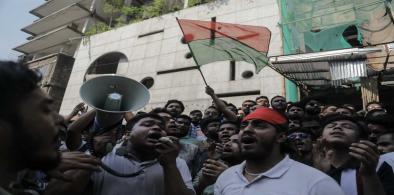
The Interim Government arranged extensive state protocol and privileges to the government-sponsored party, National Citizen Party (NCP), parties close to IG like Jamaat e Islami (JI) and their alliances, almost as if they were the government themselves. Similar privileges were given to the BNP and its allies. But no such facility was extended to the JP.

Competitive Populism vs Economic Development: When Forests are Monetised to Fund Revenue Expenditure

A democracy that is cutting down forests for votes risks mortgaging its ecological future for an electoral present. Welfare is essential; appeasement is corrosive. The difference lies in fiscal discipline, transparency and respect for citizens, who are not beneficiaries, but are owners of the republic. If we do not draw that line now, next year’s burden will demand another forest.

More on Perspective

To restore faith in Indian democracy, EVMs need to go

There is no denying that the changing numbers have dented the image of the Election Commission of India, and the credibility of the election process itself under the EVM system is increasingly coming under strain. This is a blow to democratic systems, processes and traditions in India. 

Populism is a race to the fiscal bottom: What the Maharashtra verdict means for the state's economy

The LB scheme has been a successful formula which was used in Jharkhand as well and is part of at least a dozen other states which offer cash or kind benefits targeting women, It pays electoral dividends by increasing female voter participation. But what it does to the fiscal situation, and consequent drag on growth, inflation and interest rates as well as future tax burdens is not well examined. 

Why de-dollarisation of international trade is unlikely to happen anytime soon

India perceives Russia and China’s push for de-dollarisation to a large extent as ideological and remains hesitant in rallying behind BRICS’ de-dollarisation efforts. With the recent expansion of BRICS, varying national interests of member states will further complicate coordination efforts on de-dollarisation. 

Elon Musk and big tech imperialism: Indian policymakers be forewarned

If the East India Company used complex mechanisms and took 100 years to seize control and loot a subcontinent, the tech imperialists of today have the power to replay that story with nothing more than code, clicks, and clips that can divide people, break institutions and incite violence.

Unsustainable human practices can tilt earth's ecological balance

Seeing humans as the earth’s primary inhabitant has led to policies and practices that prioritize short-term economic gains over long-term ecological sustainability. Recognizing our role within a broader ecological system is key to developing strategies that respect the Earth's carrying capacity. Johan Rockström’s concept of 'planetary boundaries' outlines nine thresholds, like climate change and biodiversity loss, that shouldn't be crossed to maintain a 'safe space for humanity’.

India needs to talk bluntly to the US over sheltering of Khalistani extremists

India sent full details of Nijjar’s terrorist activities to Canada in 2014 but Canada simply sat on it. Canada also didn’t hand over Bangladeshi Noor Chowdhury who admitted being one of the killers of Sheikh Mujibur Rehman, Bangladesh's founder president, in 1975. Stewart Bell wrote in his book ‘Cold Terror’’ that Canada became an operational base of international terrorism long ago and by 1998 every terrorist group in the world was operating in Canada.

Will Israel strike Iran's nuclear targets following its 100-fighter strike?

If Israel fails to attack Iran’s nuclear facilities now, it will be doing an ‘INDIA’, which too failed to allow Israel to strike Kahuta in Pakistan. Pakistan today is a formidable nuclear power. Had India allowed staging facility to Israeli fighters at Jamnagar, Kahuta might have met the same fate as Osirak in Iraq.

Pandering to separatists, Trudeau damages India-Canada relations

Trudeau, whose closeness to Canadian Khalistanis is amply borne out by photographs on the internet and his public outreach, has obviously not given any thought about risks to Canada’s future from the activities of the Khalistanis. 

The hand of God in the temple of justice: CJI's statement a disservice to sanctity of judiciary

The conduct of the CJI has thus invited some questions from even his admirers, and given rise to a new conversation on the motives for this distinctly religious bent being brought out openly in public debate, given that the CJI recently visited the Ram temple at Ayodhya. This is not good news for the legal system and the two sides in the Ayodhya judgement 

Climate meet COP 29: More despair than hope

Even as all countries are concerned about climate issues  and almost all of them are participating in the  global climate meets, some of the participating countries  are indulging in bloody conflicts and wars such as the ongoing Russia Ukraine war and the Israel-Hamas war.  All such wars and terrorist  activities involve use of missiles, dropping of bombs, shootings, drone attacks and so on  which cause emission of huge quantities of toxic gases and severe atmospheric pollution. It appears that climate meets have not discussed these conflict issues at all.

Mediation approach to inheritance dispute resolutions: 'Short term gain vs. long term relations'

Since India enacted the Mediation Act of 2023, one can not only reduce the burden on courts but also maintain family relationships through dialogue and discussion among family members with the assistance of a qualified mediator.

'Love Jihad' propaganda has had deep penetration into the Indian psyche

The Bareilly judgment shows how this propaganda is influencing Indian society, including judges who are supposed to base their verdict on concrete evidence.

Meeting the economic challenge: A litmus test for the interim administration of Bangladesh

Time is of the essence for the interim administration to take the bull by the horns and rein in the inflation by adopting innovative methods. Since the interim administration is composed mostly of professionals from reputable NGOs, many people are beginning to believe that the newly appointed advisers lack experience in statecraft, strategic thinking, and crisis management.

Shockwaves from a Mumbai gangland killing: More than what meets the eye

In some cases, politicians themselves are closely associated with land deals and builders, as Baba Siddique allegedly was, or politicians are builders themselves, like the BJP’s guardian minister for suburban Mumbai, Mangal Prabhat Lodha. 

Is Bangladesh becoming a pawn in a larger geopolitical game?

Those who are welcoming external forces by promoting Yunus should re-examine history. Yunus is being seen by many as a Morsi figure for Bangladesh. When Mohamed Morsi came to power in Egypt following the Arab Spring with Western support, it led to deterioration of law and order, spike in the prices of essential goods, and extreme public suffering. Even after two months of Yunus' interim government, there has been no significant improvement in law and order, market stability or public well-being.