Doctors from India, Australia, America, New Zealand, Norway, Nepal and Sri Lanka discussed rural healthcare challenges at the three-day World Rural Health Summit in Bengaluru


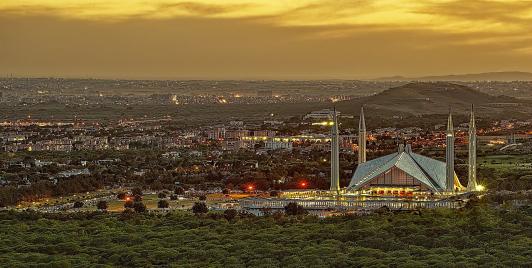
This raises the issue not whether Islamabad has surpassed its outmoded and fragmented administrative structure but whether governance would keep pace with its growth. Islamabad has to evolve from being administered as a capital city into being governed as a metropolis.
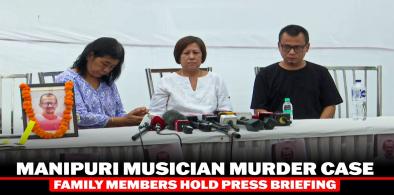
The inhabitants of Manipur have had long-standing experiences of living insecurely in their own homeland, even as migrants from the Northeast have encountered prejudice in metropolitan India....India has produced a paradox where communities that belong formally to India can also face exclusion from the social mainstream.
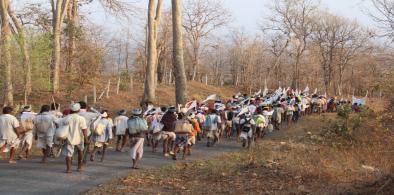
Before asking how quickly a project can be implemented, policymakers should ask whether it can be redesigned to reduce displacement. Before acquiring new land, can existing degraded land be used? Can infrastructure be built around communities rather than communities being moved around infrastructure?

Identity and financial crimes that occur across India's borders never begin with anything overtly fraudulent. They generally begin with a small breach in routine authentication processes. Biometrics, forensic document examination, and audit trails can each

Doctors from India, Australia, America, New Zealand, Norway, Nepal and Sri Lanka discussed rural healthcare challenges at the three-day World Rural Health Summit in Bengaluru

This is not the new world order that was envisaged when the WTO was formed, or indeed when the series of multilateral institutions took shape in the aftermath of the chaos of the World Wars, or indeed the world in which countries like India agreed to go with frameworks like the new intellectual property rights regime

At the 6th BIMSTEC Summit, Dr. Muhammad Yunus assumes leadership, signaling a transformative era for regional cooperation. His four-point proposal emphasizes people-centric growth, climate action, digital equality, and youth leadership—offering a visionary path for South and Southeast Asia.

The RSS’s infiltration into civil society and political institutions has long been underway, but this influence has intensified since the BJP came to power in several states and at the Centre. Beyond shakhas, the RSS now organizes community groups for women, children, and the elderly to keep them ideologically aligned. Recently, a picnic was organized in my area; when a Muslim woman expressed interest in joining, she was bluntly told she would feel uncomfortable due to the nature of the discussions and activities

When the dust settles, Trump may find that most imports continue unabated—only now, U.S. consumers are paying more. Yes, the higher tariffs could marginally boost government revenues, but the burden will ultimately fall on the American public. And there’s more: once other countries respond with reciprocal tariffs on U.S. exports, American producers will struggle in overseas markets. Competing against countries like China—who often leverage non-transparent pricing and generous credit terms—will become even tougher.

The apathy of the authorities and civil society in a recent incident when drunk policemen in the Indian state of Punjab assaulted a serving colonel of the Indian Army at an eatery is appalling to say the least. Such public apathy, surely, does not enhance the morale of a soldier.

The first is that India can no longer hope to build or become a manufacturing hub by copying the Chinese model, getting companies like Foxconn to bring their factories to Indian sites and manufacture for American giants. The game of building that kind of a manufacturing base is past its expiry date.

Despite multiple Supreme Court and High Court rulings condemning noise polluters for disregarding public inconvenience, sound pollution continues unabated. The Supreme Court’s judgments on loudspeaker usage were intended to protect citizens from becoming a ‘forced audience’ to noise; yet enforcement remains a challenge.

India is the world’s largest producer of milk, has the highest population of cattle, is among the top two or three producers of fruits and vegetables, and has one of the longest coastlines. How well does that translate into export of milk products, cheeses, confectionary, meat, poultry, fisheries, fruit juices, nutraceuticals, organic foods? There is no use in hiding behind the excuse of “protecting the small farmer”

India has shown it has the capacity to spearhead AI innovation globally thanks to its booming startup culture, strong digital infrastructure, and abundance of highly qualified personnel. In his speech, Modi underlined India's commitment to ensuring that AI remains inclusive, ethical and accessible, a technology that advances humanity while lowering risks.

India, like the rest of the world, is a vast garden of diverse cultures and traditions. To single out Hindus as solely responsible for the country is divisive. All Indians, regardless of their religion, share equal rights and responsibilities in shaping the nation’s future.

One of the concerns of India has been the expanding Chinese presence in Sri Lanka. The China-funded mega projects like Hambantota Port and Colombo Port City have caused some discord in the India-Sri Lanka relations. Growing Chinese presence in South Asian nations - Nepal, Bangladesh, Maldives and Sri Lanka - has been a cause of major security concern for New Delhi.

Diamonds remain a cornerstone of the Belgo-Indian economic relationship, but in recent years strong growth has been visible in various other sectors. The port city of Antwerp is considered to be the international centre of diamond trade which is dominated by Indian diamond traders mainly from Gujarat.

It is good to be ever wary of a nation and a leadership that is and has historically been all about itself at the cost of others, driving others to misery as it gobbles up resources and pushes the idea of American exceptionalism.

It is in this light that one welcomes a new report from US-India Policy Institute and Centre for Development Policy and Practice, ‘Rethinking Affirmative Action for Muslims in Contemporary India’. This report takes an approach away from quotas for Muslims as a whole. They recognize that Muslim community has different economic layers.