
Bombing of Tehran

The Iran Conundrum, Trumpian Dilemma and the Shifting Sands of West Asia

Ray Takeyh, senior fellow for Middle East studies at the CFR believes that the West could have got much better dividends without this war. He says that Araghchi had tabled proposals that called for the suspension of uranium enrichment for several years before allowing it to then resume at low levels. Linda Robinson, CFR’s senior fellow, also feels that there will be mass American casualties if special forces are deployed. Already Arab States are upset with these joint operations with Israel. The consensus among CFR experts is that Trump’s ambitious objectives cannot be achieved merely with joint assaults by air or sea. 

Custodial Killings with no Judicial Remedies: A Sad Tale Across Two Punjabs

Was this the legacy that the great freedom fighters from Punjab – or extend that logic to rest of India and Pakistan where custodial deaths are common – would have wanted their land and its future generations to inherit? As if the breakdown of the country and its gory partition with a divided Punjab were not enough to torment them in their graves, wouldn’t this thought leave them completely shattered and desolate: this divided land is united in its conviction to perpetuate the very colonial mindset they fought. 

Bangladesh's Recent Election was Neither Free nor Fair

The Interim Government arranged extensive state protocol and privileges to the government-sponsored party, National Citizen Party (NCP), parties close to IG like Jamaat e Islami (JI) and their alliances, almost as if they were the government themselves. Similar privileges were given to the BNP and its allies. But no such facility was extended to the JP.

Competitive Populism vs Economic Development: When Forests are Monetised to Fund Revenue Expenditure

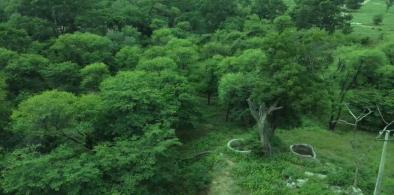
A democracy that is cutting down forests for votes risks mortgaging its ecological future for an electoral present. Welfare is essential; appeasement is corrosive. The difference lies in fiscal discipline, transparency and respect for citizens, who are not beneficiaries, but are owners of the republic. If we do not draw that line now, next year’s burden will demand another forest.

More on Perspective

Are growth numbers more important than the people? The Indian economic story begs some hard questions

Communal divides are bad, Economic divides being created can be equally so, with increasing concentration of wealth in the hands of fewer people so that we have a nation split, literally and metaphorically, between the few within gated communities and the majority who cannot step in. 

Romanticizing overwork: How corporations blur market and social norms in India

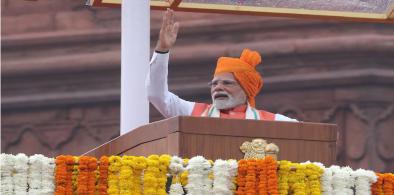
The BJP, time and again, has highlighted how PM Narendra Modi works 24X7 and sleeps for four hours, symptomatic of his due diligence pertaining to work. The idea of overworking is often draped as self-sacrifice, a cultural phenomenon typically revered in Indian society. 

Jimmy Carter: An Indian perspective on a US president

I think Jimmy Carter was one of the most decent and honest occupants of the White House who probably was undone by the Washington establishment who always considered him an outsider. His presidency was called a failed one, though in retrospect people feel he did not get the credit due to him.

Why fringe Hindu outfits are opposing Bhagwat: Genie unleashed from bottle is difficult to put back

And lo and behold most of the fringe organizations of Hindutva politics are coming out to oppose Bhagwat. One knows that RSS is a strict disciplinarian organization, and its members do not disobey the commands of its leader. So who are these Senas, Dharma Sansads springing up by a dozen and going against the appeal of Bhagwat?

Grace vs gracelessness: Why fulsome tributes are pouring in for Dr Manmohan Singh

On the one hand, we can see India pouring its heart out in memory of a life journey of grace. On the other hand, is a path of bitterness, a pulling down of civility and finger-pointing. It is the plain truth that the government delayed in naming a memorial spot so that the last rites for Dr. Singh was per force conducted at a public crematorium.

The Manmohan Singh I knew

In my many discussions with him we discussed where the country was going.  He felt sad about the present situation and said that this is not the India he recognizes.  He said that India is a pluralistic society and the leader has to respect the diversity of opinion, divisive politics will not work, and will be harmful for the country.

Dr. Manmohan Singh: A peacemaker who embodied South Asia's composite culture

In 2008, there was a new visitor to the PM house. A man from village Gah in district Chakwal, Pakistan, crossed the border to meet his old school friend 'Mohna'. He carried soil and water from the village in Punjab for the friend with whom he shared a bench in his school. Ali Raja Mohammad and Manmohan Singh had parted in 1947 and met in 2008. Not only this region but all of South Asia was Dr. Singh's very own.

India 2025 could witness widening inequalities and flight of rich people

The Indian rupee is expected to depreciate due to strong dollar policies of the Trump administration compounded by a wider trade deficit in India. The worry about how to increase foreign direct investment will remain. It has been falling for several years. The outflow of capital as well as the flight of rich people to other countries is also a matter of concern. Indians are expected to spend 70 billion dollars on the “import” of education, i.e. on students studying abroad.

The hypocrisy of Imran Khan exacerbating Pakistan's political divide

For years, Imran Khan and his party have been vocal critics of foreign interference in Pakistan’s internal matters. They’ve consistently defended Pakistan’s sovereignty, opposing any foreign meddling in the country’s political affairs. Yet now, when the PTI finds itself in a political struggle, it is calling on the international community to intervene.

India's strategic conundrums and the future of Indo-Bangladesh relations

India’s neighbourhood policy can be tweaked by making conditional every foreign aid, technical assistance, bilateral cooperation and multilateral facilitation. Bangladesh is the largest beneficiary of Indian grants and assistance under the Neighbourhood First Policy. Attaching conditionalities—akin to the Chinese BRI loans— can act as a deterrent to any anti-India adventurism

India a transactional democracy, government beholden to its people

The debate around freebies and promises in a democracy often centers on balancing short-term relief with long-term solutions to societal problems. Often, in these giveaways, economic prudence is a casualty in favour of transactional political advantage.

India Inc. needs to give better compensation to its blue-collar workers

The share of workers in industry has stagnated for far too long. And so have wages. As per a report of WorkIndia, more than 57 percent of blue-collar jobs in India pay less than 20,000 rupees a month.  That is probably justified because of low average productivity.

Forty years after Bhopal gas disaster: Court ruling reveals 'sorry state of affairs'

A strong India is not only about protecting the borders but equally about systems and processes that do not allow companies, particularly giants from foreign shores, to get away with anything less than standards that some of these companies are required to follow in their home countries. Even if the clean up happens, at long last, the other lesson for holding companies to account is yet to be learned.

India should institutionalise arbitration, avoid unilateral appointment of arbitrators

Allowing neutral arbitration institutions to appoint and administer arbitrators will help to address the challenges of unilateral arbitrator appointment by interested organisations, reduce the additional burden on courts to appoint arbitrators, and eliminate our arbitrators' bias in awards issued by arbitrators appointed by financial institutions.

Mosque-temple dispute in India: How far back can surveys go in determining ancestry?

Indian polity and judiciary have opened a Pandora’s Box which is deepening the religious divides in society. What is the need of the hour? To search for temple underneath every mosque or to build the ‘temples of Modern India’ as defined by Jawaharlal Nehru, “while starting the construction of the Bhakra Nangal Dam to describe scientific research institutes, steel plants, power plants, dams being launched in India after independence to jumpstart scientific and industrial progress.”