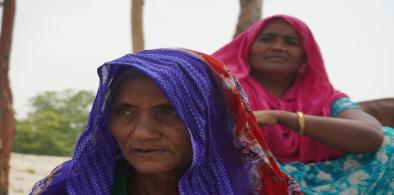
Panelists discussing Nepal’s shifting political landscape. (L-R) Khushi Kabir, Tanuja Pandey, Bhakta Bishwakarma, Dr. Pramod Jaiswal, Bhojraj Pokharel, Rima Bishwokarma

Nepal's Political Transition: An Unfinished Business

Moderator Khushi Kabir repeatedly situated Nepal’s uprising within a broader South Asian context, drawing parallels with recent mass movements in Sri Lanka and Bangladesh. She described Nepal’s experience as part of a regional reckoning driven by youth demanding accountability, dignity, and meaningful participation in governance.

PNS Khaibar: A Milestone in Pakistan-Turkey Strategic Cooperation

With PNS Khaibar's delivery Pakistan and Türkiye are taking their relationship to a new level which is not limited to traditional political friendship. At the handover ceremony, Erdoğan described the relationship between the countries as "brotherly ties" and emphasised the need to further collaborate in defence production. The naval leadership of Pakistan also pointed to the fact that the partnership should benefit Pakistan in achieving its overall maritime modernisation.

A Nation At Crossroads: Islamist Terror, Minority Persecution, And The Burning of Bangladesh’s Conscience

What is unfolding in Bangladesh bears unsettling resemblance to trajectories seen in Pakistan and Afghanistan, where false blasphemy accusations have long been used to terrorize minorities and silence dissent. Once such violence is tolerated, it expands - devouring journalists, artists, reformist Muslims, and eventually the state itself.

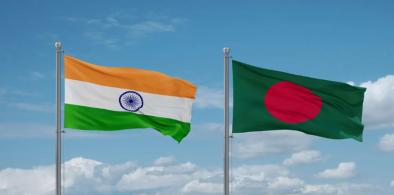
Bangladesh–India Relations at a Crossroads: Needed Recalibration, Not Rupture

The current strains in Bangladesh–India relations should therefore be seen not as an inevitable deterioration, but as a test of diplomatic maturity. Bangladesh and India share more than geography and history; they share a responsibility to ensure that temporary political frictions do not harden into structural mistrust. In a time of regional uncertainty, neither country benefits from a relationship defined by grievance or miscommunication. 

More on Spotlight

The Taliban’s return in Afghanistan will reinforce the Al Qaeda threat

Al Qaeda is leading a scattered existence along the Afghan-Pakistan border and its leadership is undergoing a constant shift, writes Anuttama Banerji for South Asia Monitor

Afghanistan's grim future and its huge regional implications

India won’t let the developments in Afghanistan affect its interests, more so because Pakistan and China are rubbing their hands in glee, waiting to move in to fill the vacuum in Afghanistan left by the United States, writes Mehraj udin Bhat for South Asia Monitor 

The American debacle in Afghanistan: Did US negotiators know early in 2020 that the Taliban could take over easily?

It is hardly surprising that in a mockery of the so-called US intelligence projection that Kabul could fall in 30 to 60 days, the capital caved in within 48 hours, writes Mayank Chhaya for South Asia Monitor

India needs labor-intensive manufacturing employment to stall reverse migration

Indian industry must have a conducive environment to invest and employ more workers from farms, writes  N Chandra Mohan for South Asia Monitor

Taliban needs to reform ideology, cut terror links for ruling Afghanistan

The Taliban are aware that if they shelter foreign militants with transnational agenda. It could turn neighboring powers like China, Russia, Iran, India, or Pakistan against them, writes Ainur Khan for South Asia Monitor

Monk and the prime minister: Did a Sri Lankan scholar help to ignite interest in Buddhist studies in Israel?

Today many Israeli universities have departments of Buddhist studies and South Asian philosophies as interest among Jewish scholars on Buddhist meditation continues to grow, writes Punsara Amarasinghe for South Asia Monitor 

Afghanistan, its sectarian divisions, and international stakeholders

Pakistan has checkmated India to some extent, though the Taliban has recognized India’s role in the reconstruction projects and Salma Dam, writes Brig Dinesh Mathur (retd) for South Asia Monitor

Will Taliban 2.0 signal a radical policy change?

To the extent that the Taliban keeps its word both on not letting it soil be used as a terrorist launch pad and keeping off Kashmir, there is a possible window for the Modi government in India to engage with it, writes Mayank Chhaya for South Asia Monitor

A prudent India should consider Bangladesh as its most suitable investment destination

India's poor record of implementing infrastructure projects in neighboring countries has pushed them even more towards China, writes Anup Sinha for South Asia Monitor

With Taliban on verge of wresting power, the US has a lot of explaining to do

Can the US pose as the champion of human rights after abandoning the Afghan population to this horrendous human tragedy? writes Lt Gen P. C. Katoch (retd) for South Asia Monitor

Independence Days of India and Pakistan tinged with some unfulfilled aspirations

For India and Pakistan, therefore, which were once a single country, the anniversaries of their independence days are burdened with thoughts of what might have been, writes Amulya Ganguli for South Asia Monitor

Ties soured by the China factor, Sri Lanka’s new policy document reaches out to India

The document seeks to achieve Sri Lanka’s foreign policy objective vis-à-vis India while coming closest to admitting that China has cast a long shadow over Colombo-New Delhi ties, writes M.R. Narayan Swamy for South Asia Monitor

75 years of Indo-Saudi diplomatic relations: Strong mutual interests reinforcing ties

Indo-Saudi economic ties have seen tremendous growth over time, writes Asif Rameez for South Asia Monitor

Tokyo Olympics showing: India should reach out to its South Asian neighbors to help them lift standards

India can offer to lend a helping hand in a new shared spirit of sporting togetherness that can bind South Asia, writes Sirshendu Panth for South Asia Monitor

Fears of a return to the dark days stalk Afghan women amid Taliban's advance

The forty years of protracted war has impacted Afghan society, especially women, in a way that has few parallels in human history, writes Shraddha Nand Bhatnagar for South Asia Monitor