
Bangladesh's leaders struggled to protect people's right to vote when they were out of power; in power, they continue their attempts to deprive them of the right to vote, writes Aashish Kiphayet for South Asia Monitor
Japan has also proposed developing a Bay of Bengal–Northeast India Industrial Value Chain aimed at transforming the region into an integrated industrial zone. As part of the Free and Open Indo-Pacific vision, this includes strengthening cross-border connectivity with Bangladesh, Myanmar, Nepal and Bhutan.
China's expressed interest in modernising and upgrading both Chattogram and Mongla ports suggests the emergence of an interconnected infrastructure network linking the Bay of Bengal with southwestern China through Myanmar. If realised, such connectivity would enhance trade flows, improve regional logistics and deepen China's economic footprint across the Bay of Bengal littoral, while simultaneously increasing Bangladesh's importance as a regional transit and connectivity hub.
While Washington and New Delhi seek to strengthen bilateral ties with Colombo, Beijing has strategically engaged with the political forces that control the government. By engaging directly with actors at the core of Sri Lanka’s governance, Beijing appears to be signalling its strategic intent—projecting influence and reinforcing ideological ties.
Some analysts accuse the EU of double-standards arguing that the EU has been condemning Taliban policies since they assumed power, but were now holding direct discussions with them. Such meetings undermine the EU's credibility as a defender of human rights and democratic values.
Bangladesh's leaders struggled to protect people's right to vote when they were out of power; in power, they continue their attempts to deprive them of the right to vote, writes Aashish Kiphayet for South Asia Monitor
If only the leaders in both India and Pakistan would listen for once to the voices of young people and the dreamers, and not be swayed by the fanatics, no time can be short enough to make a new beginning, not just for India and Pakistan, but for the two billion people of South Asia, writes Tarun Basu for South Asia Monitor
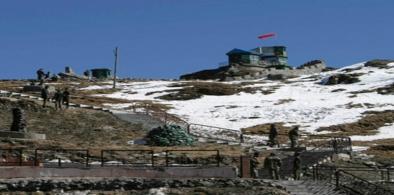
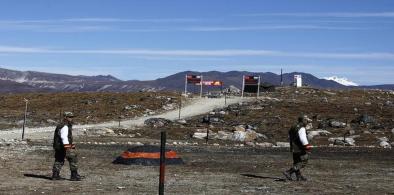
The reality is that Delhi had forfeited the tactical advantage that the Indian Army had acquired at considerable cost, to ostensibly facilitate the negotiations with China. However, despite multiple rounds of talks, the PLA has not moved back from all the areas that it had intruded into along the LAC, writes Cmde C Uday Bhaskar (retd) for South Asia Monitor
Bangladesh is a miracle story, while Sri Lanka and Pakistan are disaster tales, writes John Rozario for South Asia Monitor
Yameen’s ‘India Out’ campaign is centred on his firm belief that independent of change of governments and leaderships in New Delhi, India was against his becoming president, writes N. Sathiya Moorthy for South Asia Monitor
Even in these dark times, one can see bright rays of communal harmony. One only hopes these trends are encouraged and divisive loudmouths are punished, writes Dr Ram Puniyani for South Asia Monitor
Museums and art galleries are the preserves of the common heritage of South Asia, and it is a pity these are often destructively targeted during political conflicts, writes Mahendra Ved for South Asia Monitor
In another CSDS study of post-poll analysis after the 2019 Lok Sabha elections, it was found that between 2014 and 2019 support for the BJP among Dalits, Adivasis and Other Backward Class has more than doubled, writes Dr Ram Puniyani for South Asia Monitor
Unlike many other South Asian countries, Bangladesh's prudent and selective engagement with China's BRI has helped Dhaka avoid debt problems, writes Sheikh Abdur Rahman for South Asia Monitor
Bangladesh may not face the same situation as Sri Lanka in the near future but it has considerable weaknesses in its economy and good-governance processes, writes Aashish Kiphayet for South Asia Monitor
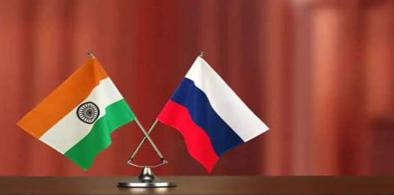
The allure of Russian oil for India, however, is more than the imperatives of energy security. It also has deep stakes with $16 billion of investments in various oil and gas projects in Russia, writes N. Chandra Mohan for South Asian Monitor
Given that Sri Lanka has a post-independence history of episodic JVP militancy in 1971 and 1987, there is concern about the direction the street protests may take, writes N. Sathiya Moorthy for South Asia Monitor
On two counts – annoying Army and America, two of the three pillars on which Pakistan’s polity stands -- may block Imran Khan's future comeback. Only the third, Allah, can help, writes Mahendra Ved for South Asia Monitor
Bangladesh has very strong leadership, pragmatic fiscal policy and foreign reserves. The Sri Lankan case is totally different, writes Mehjabin Bhanu for South Asia Monitor
From within the Muslim community there are extremist elements who in the name of Islam provide much-needed provocations to majoritarian politics, writes Dr Ram Puniyani for South Asia Monitor