

Balendra Shah’s Rise as Nepal PM: A Test of Political Maturity with Regional Ramifications
Balendra Shah’s rise as Prime Minister of Nepal represents a defining moment in the country’s contemporary political evolution. It signals a break from traditional party dominance and the emergence of a new political language shaped by youth aspirations and digital mobilization. At the same time, it introduces new uncertainties into Nepal’s regional relationships, particularly with India and China, both of whom will closely monitor Kathmandu’s evolving foreign policy orientation.
 Mar 30, 2026
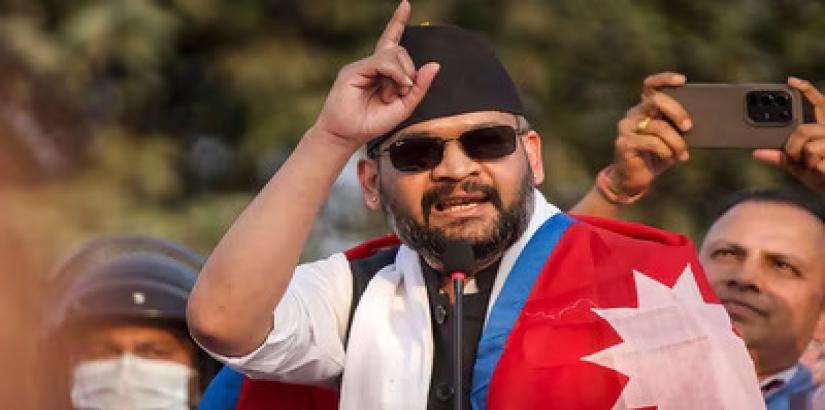
The ascent of Balendra Shah to the office of Prime Minister in Nepal marks one of the most striking political transitions in the country’s recent history. Emerging from outside the traditional party structure, Shah’s rise reflects a broader generational shift triggered by the 2025–26 Gen Z protests, which fundamentally reshaped Nepal’s political landscape. His leadership signals not only a domestic political reset but also a development closely watched across South Asia, particularly in India and China.
At home, Shah’s emergence represents a clear break from Nepal’s established political order. For decades, politics in Nepal has been dominated by a handful of parties and leaders whose influence persisted despite repeated cycles of instability. The Gen Z protests—driven by frustration over unemployment, corruption, and perceived political stagnation—created conditions for a dramatic reconfiguration of power. Shah, previously known as a rapper-turned-mayor of Kathmandu, became a symbol of anti-establishment sentiment and generational change.
His rise to national leadership has had an immediate impact on Nepal’s domestic political environment. Public expectations are exceptionally high, particularly among young voters who formed the backbone of the protest movement. The new government faces pressure to deliver on key promises, including anti-corruption reforms, job creation, and improved governance. At the same time, it inherits a fragile institutional framework marked by weak bureaucracy, coalition sensitivities, and economic dependence on remittances.
Recalibration of Foreign Policy?
However, the significance of Shah’s leadership extends well beyond Nepal’s borders. As a landlocked country situated between India and China, Nepal occupies a strategically sensitive position in South Asia. Any major political shift in Kathmandu inevitably draws attention from both neighbors, who have long competed for influence in the Himalayan region.
For India, Shah’s rise introduces both opportunity and uncertainty. Traditionally, New Delhi has maintained deep political, economic, and cultural ties with Nepal, shaped by open borders and extensive people-to-people linkages. A new leadership in Kathmandu, especially one rooted in anti-establishment sentiment, may seek to recalibrate aspects of this relationship to assert greater policy independence. While this does not necessarily signal confrontation, it could lead to a more assertive Nepali foreign policy that prioritizes autonomy in decision-making and a more balanced diplomatic posture.
At the same time, India is likely to view the new leadership as an opportunity to reset relations that may have been strained during earlier political transitions. Economic cooperation, infrastructure development, and energy partnerships remain central to bilateral ties, and a stable government in Kathmandu would be in New Delhi’s strategic interest. The challenge will lie in managing expectations on both sides while avoiding the perception of external influence in Nepal’s domestic politics.
For China, Shah’s rise is equally significant, though for different reasons. Beijing has steadily expanded its engagement with Nepal through infrastructure investment and connectivity projects under broader regional initiatives. A new government in Kathmandu may reassess the pace and scope of these engagements, particularly if domestic political sentiment favours a more cautious approach to external dependency. However, Nepal is unlikely to significantly alter its economic engagement with China, given its infrastructure and development needs.
Instead, the more likely outcome is a recalibration rather than a reversal of existing commitments. China will continue to view Nepal as an important component of its Himalayan diplomacy, particularly in the context of regional stability and connectivity. Shah’s leadership will therefore be closely observed for signals regarding continuity or change in Nepal’s external orientation.
A Broader Regional Trend?
Beyond bilateral dynamics, Shah’s rise also reflects a broader regional trend in South Asia: the growing influence of youth-driven political movements and digital mobilization. Across the region, traditional political structures are increasingly being challenged by leaders who emerge outside established party systems. In this context, Nepal’s political transition is being seen as part of a wider generational shift rather than an isolated event.
Nevertheless, the sustainability of this shift remains uncertain. While Shah’s ascent was enabled by mass mobilization and public discontent, governing a complex state requires institutional depth and political negotiation. Managing Nepal’s internal diversity, economic constraints, and geopolitical sensitivities will test the durability of his leadership.
The expectations placed on the new government are substantial. Beyond immediate political reform, there is pressure to deliver economic results in a context of limited fiscal space and high youth unemployment. Failure to meet these expectations could quickly erode the political capital generated by the protests.
Balendra Shah’s rise as Prime Minister of Nepal represents a defining moment in the country’s contemporary political evolution. It signals a break from traditional party dominance and the emergence of a new political language shaped by youth aspirations and digital mobilization. At the same time, it introduces new uncertainties into Nepal’s regional relationships, particularly with India and China, both of whom will closely monitor Kathmandu’s evolving foreign policy orientation.
Ultimately, the success or failure of this transition will depend not only on domestic governance outcomes but also on how effectively Nepal navigates its strategic position between two major powers. Shah’s leadership thus marks both an opportunity for renewal and a test of political maturity—for Nepal and for the region around it.
(The author is a News Reporter for IN-Depth Story in Nepal. She is also an activist of the Gen-Z movement. Views expressed are personal. She can be reached at pokharelsiya1@gmail.com )





Post a Comment