Pakistan’s nuclear tests of 28 May 1998 not only demonstrated the resolve of the Pakistani nation to safeguard the country's territorial integrity, independence and sovereignty but also the desire to preserve strategic balance in South Asia.


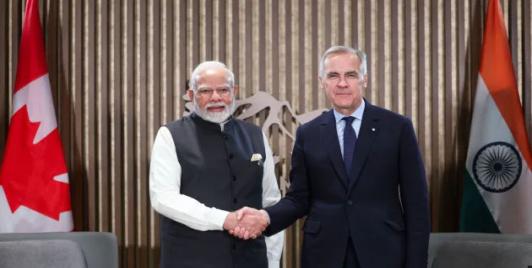
Canada hosts close to 1.9 million persons of Indian Origin (PIOs) and 3% of Canada’s population, one of the largest ethnic groups in Canada’s multiethnic and multicultural society. Although immigration policy of Canada has tightened in recent years, yet a lot of students who study in Canada prefer to stay back and work in Canada acquiring permanent residency and citizenship.
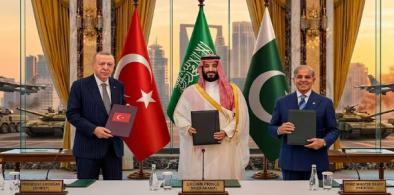
It would also explain why Pakistan is trying to preserve a distinction between supporting Saudi Arabia and fighting the Houthis. Pakistan has every reason to avoid another open-ended conflict in the Middle East. Its military is heavily committed to its own security challenges. Its economy cannot easily absorb the political and financial consequences
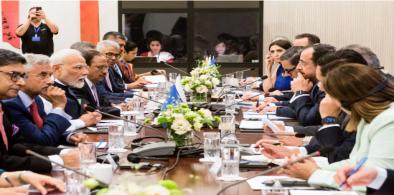
EU and India could establish a regular EU–India-Middle East Consultative Mechanism involving foreign-policy officials and experts. Its purpose would be to coordinate positions before major international gatherings and meetings.

For Sri Lankan politics, this is more than diplomatic sightseeing. It raises a fundamental question whether the JVP is developing a sophisticated strategy of balancing relations with India and China or is it gradually adapting itself to the organisational models of powerful one-party or dominant-party systems in China and India respectively?
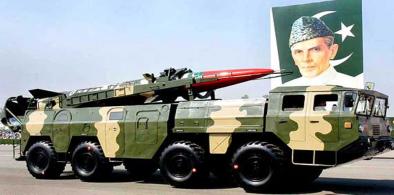
Pakistan’s nuclear tests of 28 May 1998 not only demonstrated the resolve of the Pakistani nation to safeguard the country's territorial integrity, independence and sovereignty but also the desire to preserve strategic balance in South Asia.

India should make concerted efforts to corner a bigger role in the governance of global multilateral bodies and should get involved in resolving global conflicts and issues. It should take its success to the world, contributing to capacity building wherever required, especially in Africa.
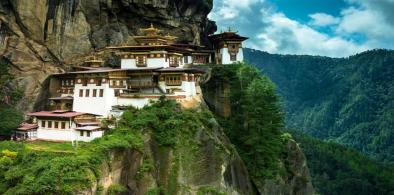
Bhutan is regarded as ‘the kingdom of happiness’ and also has the reputation of being the first to become the one and only carbon-negative country in the world. The international community sees Bhutan as a peaceful and traditional country, and that has helped its policymakers formulate a foreign policy that maintains its unique status in the world order.
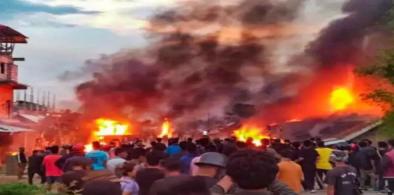
The danger is that the cracks in the Constitution are widening. The need of the hour is to find the true meaning of religion. A divisive agenda no matter how strong, will end up dividing the nation and enhancing a culture of division.
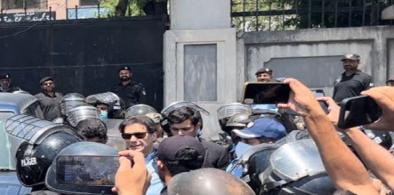
Since Pakistan’s birth over 75 years ago, it is the ‘establishment’ that has largely determined who gets political power and when to take it away. Out-of-favour politicians get disqualified from political office, imprisoned, or exiled. Some have been killed.
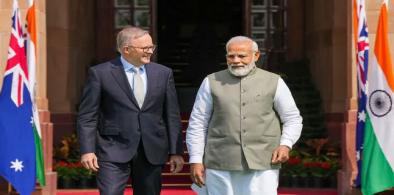
The research strengths of Australian universities in areas such as cyber security, quantum computing, space technology, robotics and AI, critical technologies, public health, water, waste utilization, teacher training, low-cost housing, and solar power, to name a few, are all initiatives and aspirations that PM Modi has identified for India and which Australian universities are well-placed to collaborate on.
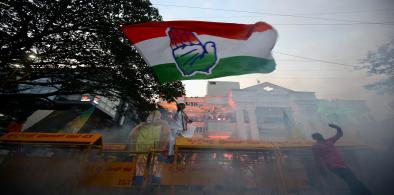
From the secular Bharat Jodo Yatra to the Karnataka elections, Indian civil society groups have played an important role. One does look forward to civil society groups committed to the rights of weaker sections of society playing a similar role in forthcoming elections to ensure that the country comes back to the path and idea of India envisaged by the freedom movement and the Constitution of India.
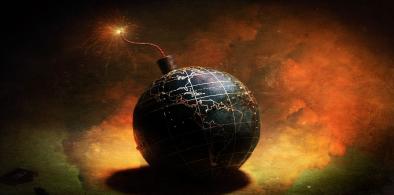
The warning is not only coming with unusual certainty but there is a clearer message that the world is failing in its pursuit to meet the Paris Climate Agreement.
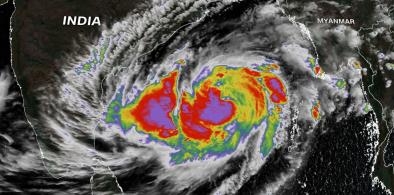
Cyclone Mocha only reminds us of the urgency of India-Bangladesh-Myanmar-Thailand-China-Sri Lanka cyclone management cooperation. As a start, Myanmar-Bangladesh-India trilateral cooperation is a must in this regard.
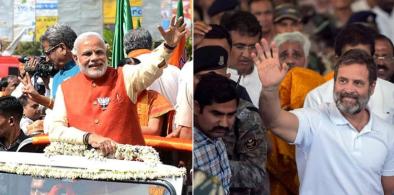
After Karnataka, however, the BJP may be wary of going down that path when the world will be watching Modi’s forthcoming steps in the run-up to the 2024 general election
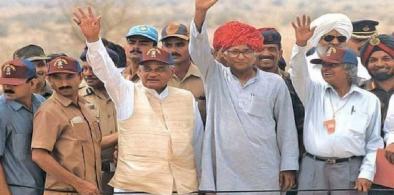
The lesson one can draw from 25 years of nuclear South Asia is that nuclear weapons are guarantors of stability at the highest or strategic levels, but they are certainly not the panacea to the security challenges faced by a nation, especially at the sub-conventional level. The case of the India-Pakistan conflict validates this point
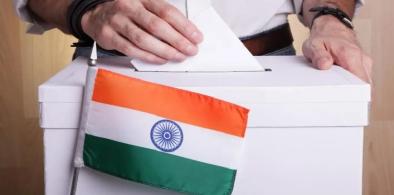
Herein lies the paradox of Karnataka. The rest of educated India and the world knows the state mostly through the stories of its tech leaders and the vibrancy of Bengaluru, which has sometimes been voted as the top city to work for many and certainly for IT professionals. On the other hand, the state of Karnataka has become a tinderbox of communal strife.
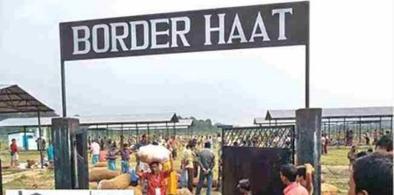
The concept of 'land-link' has already become operational. Credit is due to Bangladesh and its young foreign minister of state, Shahriar Alam, who has given a new dimension to ties between Northeast India and Bangladesh by showing the immense potential that can be exploited between the two countries by turning limitations into possibilities.
In a way, we are following the path of Pakistan and Sri Lanka. In Pakistan (Islamic nationalism), the hate manufactured against Hindus and Christians did result in their persecution there. In Sri Lanka (Buddhist Sinhala nationalism), Hindus (Tamils), Muslims and Christians have been on the receiving end of the consequences of hate.
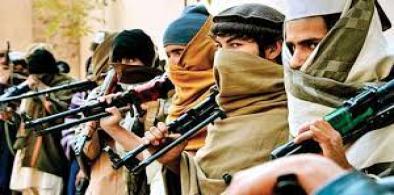
The unceasing political chaos and the absence of a national consensus regarding the existential threat that stares Pakistan in the face are deteriorating the already fragile state of affairs. Political instability and economic meltdown not only compounds the system of governance but also create a fertile breeding ground for terrorism.