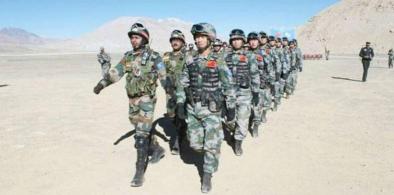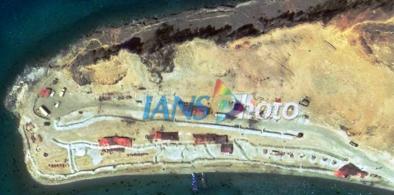




Top Indian and Chinese military officials will hold talks next week in the second phase of disengagement at Pangong Lake and Depsang areas in eastern Ladakh, the government said on Thursday
While low-level clashes may continue, the possibility of a large-scale conflict, as projected by recent U.S. intelligence reports, remains far-fetched. Both countries are acutely aware that they stand to lose far more than they can gain. Despite uneasy relations, several factors actively discourage conflict
The two incidents in India and Pakistan over the course of a week have shown that the coverage of terrorism by the Chinese media ecosystem largely reinforces the state’s foreign policy narratives and preferences for alignment in South Asia. Pakistan emerges as a clear preference for the public, which is reinforced by commentators and opinion makers on non-state news media platforms.
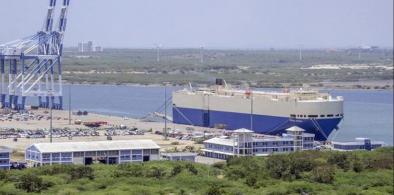
CPEC 2.0 is expected to serve as a major leverage tool for China to access Afghanistan’s untapped natural resources and enhance connectivity to Pakistan and Central Asia. However, for Afghanistan, the initiative may be more of a challenge than an opportunity. Countries such as Sri Lanka and the Maldives have already faced severe economic consequences from poorly structured Chinese-funded projects.
China's rise has, in the consensus view of most international relations scholars, fundamentally changed South Asia. The old, India-centric region is gone. Pakistan has tied its future to Beijing, seeing China as its ultimate guarantor. Bangladesh has played a smart game, using Chinese money for national development while maintaining its "friendship-to-all" foreign policy. The Teesta project shows Dhaka's new confidence in following its own national interest. For India, the challenge is immense, as it must now compete for influence in its own backyard.
Top Indian and Chinese military officials will hold talks next week in the second phase of disengagement at Pangong Lake and Depsang areas in eastern Ladakh, the government said on Thursday
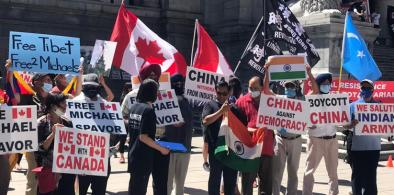
The deadly border conflict between India and China in the Ladakh region is now setting the ground for a first set of restrictions that India proposes to impose on imports from the Asian giant
A survey has found that around 49 percent of its respondents feel that Chinese companies should be allowed to sell products in India, but they want their data to be placed in India and not be transferred to the companies' China headquarters
Chinese Ambassador Hou Yanqi on Thursday met with Nepal Communist Party chair and former prime minister Pushpa Kamal Dahal as she continues her marathon meetings with the ruling party leaders since the party has plunged into a fresh round of crisis
Pakistan and China have considered a proposal to resume border trade from next week with stakeholders advising restriction on the number of cargoes to avoid crowding at the dry port, it was learned on Wednesday
The Chinese People's Liberation Army troops have pulled back around 2 kilometres at Patrolling Point 14 and Patrolling 15 in the Galwan Valley in eastern Ladakh while the process of pullback has started at the Hot Springs, sources said on Wednesday
China is frustrated with India in Ladakh because a journey that used to take 16 to 18 days for the Indian Army to reach the Line of Actual Control (LAC) in 1962 takes just a day today
The Indian military sees no pullback of Chinese People's Liberation Army troops and material from Pangong Lake and Depsang in eastern Ladakh, knowledgeable sources told IANS on Tuesday
Pakistan Prime Minister Imran Khan has said that China-Pakistan Economic Corridor (CPEC) will be a "game-changer", bringing unprecedented prosperity and progress to the country
Both Indian and Chinese troops have retreated two kilometres each along the Line of Actual Control (LAC) in the Galwan Valley, where 20 Indian and an unknown number of Chinese soldiers were killed in a violent face-off last month
China's cheap loans to Nepal in the garb of infrastructure development to facilitate trade will lead to another debt trap, concerned Indian government sources have said
After six months of closure, Rasuwagadhi-Kerung, a key crossing point for bilateral trade between Nepal and China, was reopened on Monday
Around 30,000 troops of Indian Army are in an eyeball-to-eyeball confrontation with Chinese troops along the Line of Actual Control (LoC) in Ladakh, following the additional deployment of three brigades since the violent face-off last month
Around 40 Indian soldiers who were seriously injured in the violent face-off with Chinese troops in the Galwan Valley along the Line of Actual Control (LAC) last month had been moved for specialized treatment to Chandigarh and New Delhi ten days before the Prime Minister Narendra Modi visited Ladakh on Friday
Whatever China might do -- attack neighbours, badmouth countries, sink fishermen's boats or even fly medicines across a world crippled by coronavirus -- the stain of the pandemic refuses to leave Wuhan, and China