
Indus Waters Treaty

Water Security and Regional Peace: Future of the Indus Waters Treaty in a Changing Climate

The Indus Waters Treaty has lasted more than 60 years, illustrating diplomacy's ability to handle one of South Asia's most sensitive resources. However, climate change and geopolitical tensions have called into question its significance. To guarantee that the treaty continues to prevent war and promote shared prosperity, Indian and Pakistani governments must update its provisions, invest in joint institutions, and view water as a shared strategic asset rather than a source of friction.

Iran at the Crossroads: In a Changing Region, Tehran’s Critical Choices Could Shape Change (Part IV)

Iran's demonstrated endurance to maintain its intrinsic rights to nuclear enrichment as an NPT state even under sanctions and its willingness to escalate without collapsing, is an important consideration for the Iranian regime. This issue was centre stage at the collapsed Islamabad negotiations. How Iran shapes its stand will be centre piece of future negotiations. 

The Strait as Leverage: Hormuz the New Geometry of Power? (Part III)

Iran’s role in this transformation is central. Its ability to influence the Strait has reshaped strategic thinking across the region and beyond. External powers must now operate within constraints that did not exist before. For the Gulf states, the implications are immediate and tangible. Their economic lifelines pass through this narrow corridor. Any disruption affects not only revenue but also national security.For the broader international community, the lesson is clear. 

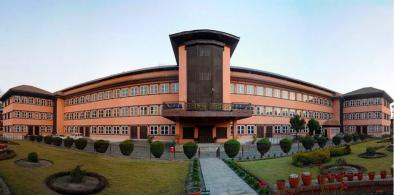
Nepal’s Gen Z Government Faces a High-Stakes Test

Nepal’s Gen Z government is not just an experiment in youth-led politics—it is a high-stakes test of whether disruption can evolve into governance. The same streets that once roared with revolutionary energy can just as easily erupt again in frustration. If this new leadership fails to translate momentum into meaningful change, the cycle of instability will repeat itself

More on Spotlight

Pakistan's slow assimilation of Gilgit-Baltistan: A strategic challenge for India

Pakistan so far has given limited autonomy to the local population after having wrested G-B after the accession. But it now wants to declare it as a provisional province of the country, writes Pushp Saraf for South Asia Monitor

Bangladesh economy showed resilience during COVID; but prosperity should reach all

By 2025, Bangladesh is forecast to be the 34th largest economy in the world and will continue at second place in South Asia after India, writes Mohammad Rubel for South Asia Monitor

Producing a world-class helicopter: India needs to develop a strong indigenous industry

If India were to write out a defence industrial policy it may read as follows: 'to establish and foster a strong indigenous helicopter industry with the design and production capacity to cater to all in-country military requirements and bid for export military and civil markets'. writes Rear Admiral Sudhir Pillai (retd) for South Asia Monitor

With SAARC stalled, India must invest in alternative regional mechanisms

With SAARC stalled, India must prioritize regional and sub-regional alternatives to recalibrate its neighborhood strategy and its overall foreign policy, writes Don McLain Gill for South Asia Monitor 

Battle for Bengal: Can Mamata Banerjee survive the BJP onslaught?

The rapid growth of the BJP in West Bengal since the 2014 parliamentary elections can unquestionably be seen as a turning point in the state's turbulent politics, writes Asif Rameez Daudi for South Asia Monitor

India beefs up air force with indigenous fighter jets: Dawn of a new era in military self-reliance

The most crucial justification for acquiring home-grown and home-built hardware is the military’s expectation that overhaul and replacement of parts, as well as repair of battle damage will be undertaken by the domestic industry in a most expeditious manner, writes Admiral Arun Prakash (retd) for South Asia Monitor

Is India headed for economic autarky?

The upshot of an inward-looking regime is a diminishing extent of trade openness - a sharp contrast with the East Asian miracle economies that prospered with export-orientation, writes N Chandra Mohan for South Asia Monitor

Is Imran Khan proxy for Pakistan Army's 'minus two' gambit?

The most significant thing at the several ‘jalsas’ (protest rallies) that opposition have been organising across the country in Pakistan is to challenge the army’s role and, for the first time, the top brass is being named, writes Mahendra Ved for South Asia Monitor

Bangladesh: When democracy becomes a 'hybrid regime'

According to the EIU, for a decade Bangladesh has been in the middle of an autocratic and flawed democratic system, known as the hybrid regime, writes Mahmudul Hasan for South Asia Monitor

Black days: January 6, 2021 in the US, December 6, 1992 in India

It is clear, therefore, that the politics of polarization which divides the citizens of a country - whether in the US, India or countries in Europe - between nationalists and anti-nationals is here to stay, writes Amulya Ganguli for South Asia Monitor

William Burns, who guided India-US nuclear deal but is critical of Modi, named CIA chief

Drawing on his experience of working with New Delhi, Burns wrote in what could be his roadmap for relations between New Delhi and Washington, emphasising continuity saying that it was bigger than the ties between President Donald Trump and Prime Minister Modi, writes Arul Louis for South Asia Monitor

Nepal and India: A shared history of subversion of democratic norms

Nepal’s story is not much different than that of India’s. Nepal’s prime ministers - Girija Prasad Koirala (1994), Manmohan Adhikari (1995), and K P Sharma Oli (2020-) have taken steps to dissolve the house despite their parties’ being in majority, write Jivesh Jha & Alok Kumar Yadav for South Asia Monitor

Hate and right-wing politics: Only secularism can ensure peace among communities

If white supremacism is the basis of right-wing politics in America and Europe, Hindu supremacism is in India. Both have their roots in the concept of the "Master Race" and the "Chosen Land", writes Amulya Ganguli for South Asia Monitor 

South Asia’s energy cooperation: Politics can play the spoiler

South Asia’s diverse topography lends itself to greater cross-border power trade, but political inhibitions have ensured that actual progress has been less than the potential, writes N Chandra Mohan for South Asia Monitor

Polarization and its corrosive implications: US happenings have lessons for India

Polarization over the prevailing socio-political orientation since Prime Minister Narendra Modi assumed office has been marked and a bitter sectarian fissure has emerged in India, writes Cmde C Uday Bhaskar (retd) for South Asia Monitor