A democratisation of art, drawing from folk culture that is in direct contact with the realities of those who live close to the cycles of nature, represents a modern outlook that draws inspiration from contemporary reality.


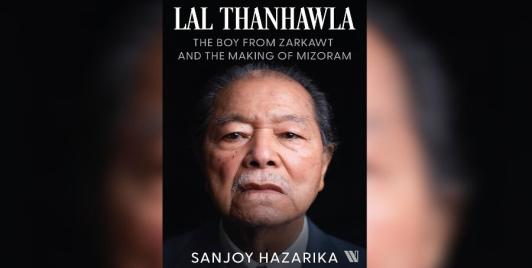
The enduring lesson of Mizoram is not that the state won and the insurgents lost. It is that both sides eventually found a political space in which neither needed to win everything. That is the essence of accommodation and perhaps the most enduring lesson Lal Thanhawla’s life offers India.

The Taliban, therefore, is not challenging whether Islam should shape women’s rights. Both the OIC and the Taliban begin from that premise. The disagreement is over what Islamic rights mean and, more importantly, who has the authority to define them.
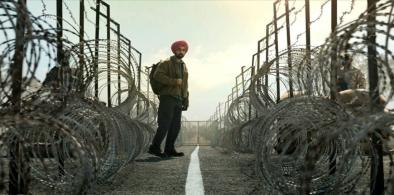
As of January this year, at least 296 Bangladeshis have died in border areas over the past decade, as India’s Border Security Forces (BSF) pushes “illegal Bangladeshis” across the border in the dead of night.

It is true that only a handful of newspapers have the resources and persistence to pursue big stories of the kind that came alive in the EC exposé. Nevertheless, to the extent that it inspires others to pursue even smaller news stories with steadfastness this could potentially redeem the otherwise sordid state of affairs in the Indian media.
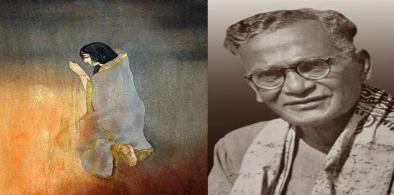
A democratisation of art, drawing from folk culture that is in direct contact with the realities of those who live close to the cycles of nature, represents a modern outlook that draws inspiration from contemporary reality.

The hyped technology has led us into a frenzied time where we either switch between TV channels or move our fingers on our smartphone screen for the next reel or newsfeed. Stuck within the labyrinth of visual images we are yet to find a new strategy to recover the lost humanity.
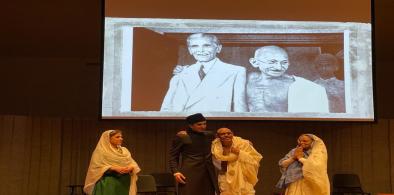
Against this backdrop, the staging of Dr Ahmed’s “Gandhi and Jinnah Return Home” in the Washington D.C. area offered a rare opportunity to witness peacebuilding at play. In one of the play's scenes, Jinnah and Gandhi resurface to debate the costs of partition alongside contemporary Indians and Pakistanis. After many rounds of dialogue, the two embrace one another.

The chemistry between Dharmendra and Shabana Azmi in the latest Karan Johar film ‘Rocky aur Rani’ suggests that Indian audiences are beginning to recognise that older people don’t just have a pulse, they actually have a heart!

Any serious conversation about AI also needs to take into consideration the role of deep fake using AI to wreak havoc among society and even intruding into private spaces for monetary and other gains.
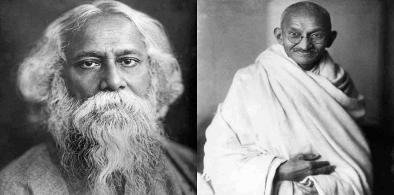
Today the distance between the vision and way of life of Tagore and Gandhi and current perspectives is growing. And though the effort and work done with fervour in their names continue, most of that energy is outside India.
Ironically, the forced migration also laid the seeds of a diaspora in countries where Indians of another generation looking for better economic opportunities would not have normally settled.
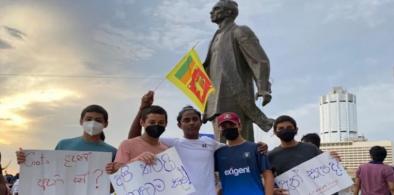
What had started as unrest – in response to decades of failed promises, nepotism – had been reduced to a mob seeking revenge. The question remains on how to preserve the spirit of the former whilst recognising the nature of the latter.
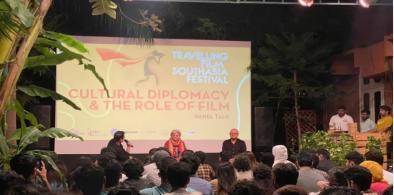
A well-connected and bonded youth of the region can ensure a much happier, more creative society and contribute to a better future.

After all how objective or desirable can the Nobel Prize for Peace be if Mahatma Gandhi, the greatest messenger of non-violence the world has seen for centuries, never got it? His name was nominated several times but Sweden did not want to annoy Britain.

I am thrilled that Pakistan will be playing in India. I’m thrilled that this format allows an India-Pakistan encounter. Obviously, it’s something any cricket fan would look forward to. This is the World Cup and not a bilateral series, so it’s extra special.

And now Rita’s idea for a Tasveer Art Center, a progressive, secular, and inclusive safe place that would house a state-of-the-art auditorium, filmmaker's studio, art gallery, and a hall to hold up to 300 people among other cutting-edge facilities, is her latest dream project.
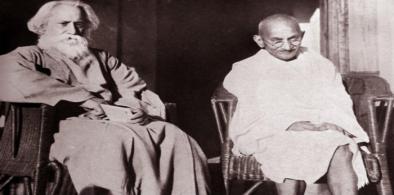
As we think of the relevance of ashram ideals in the thought of both Tagore and Gandhi, we realise that they were ecologically inspired. Gandhi Jayanti 2023 may help us consider the importance of an education engaging with our natural environment.

The industry prefers a winning formula to creative exploration, particularly in big-budget films populated by rocking stars with fancy fees. Will that change from hereon with the success of ‘Jawan’? We have on offer a new path for Bollywood, a path that can use its huge and unrivalled soft power to drive home some significant messages of the kind and in a way it has rarely attempted in a big-budget extravaganza.
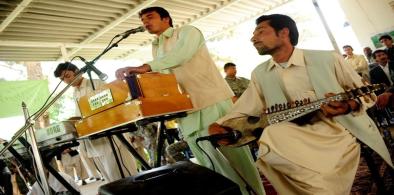
The famed Afghanistan National Institute of Music, the country’s only music school, had to shut down its campus in Kabul after the Taliban's crackdown. It has temporarily relocated to Lisbon, Portugal, where 273 students, faculty members and staff have been granted asylum.