"Gandi Baat" serves as a microcosm of a larger issue within popular culture, normalizing the silencing of female voices and perpetuating harmful behaviors.


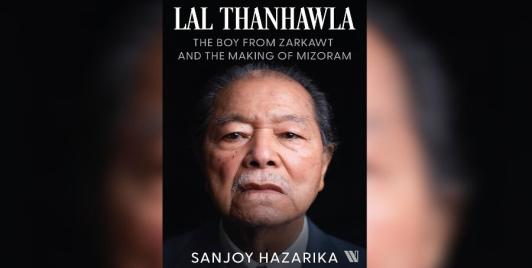
The enduring lesson of Mizoram is not that the state won and the insurgents lost. It is that both sides eventually found a political space in which neither needed to win everything. That is the essence of accommodation and perhaps the most enduring lesson Lal Thanhawla’s life offers India.

The Taliban, therefore, is not challenging whether Islam should shape women’s rights. Both the OIC and the Taliban begin from that premise. The disagreement is over what Islamic rights mean and, more importantly, who has the authority to define them.
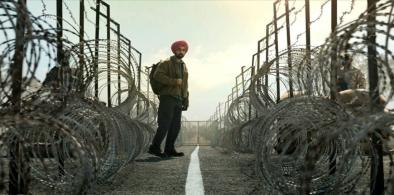
As of January this year, at least 296 Bangladeshis have died in border areas over the past decade, as India’s Border Security Forces (BSF) pushes “illegal Bangladeshis” across the border in the dead of night.

It is true that only a handful of newspapers have the resources and persistence to pursue big stories of the kind that came alive in the EC exposé. Nevertheless, to the extent that it inspires others to pursue even smaller news stories with steadfastness this could potentially redeem the otherwise sordid state of affairs in the Indian media.

"Gandi Baat" serves as a microcosm of a larger issue within popular culture, normalizing the silencing of female voices and perpetuating harmful behaviors.

The postcards from Jamnagar frame some other stories that have emerged as a theme in the 'New India'. These are stories of unrivalled pomp and power, of material riches beyond compare, of an elite space where forces work differently from the way they work elsewhere on the planet.
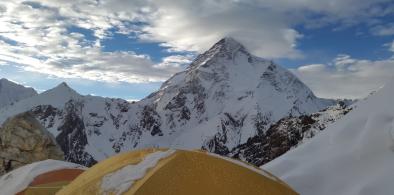
Everywhere I went I was greeted with great warmth and hospitality. It is a symbol of the decades-long ‘Enduring Friendship’ between the peoples of Pakistan and Sri Lanka.
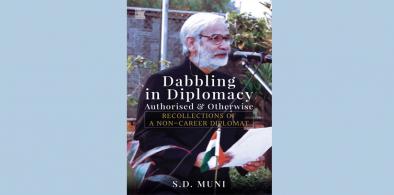
My passion was to strengthen SAARC, and I strongly felt that Rao’s decision was not appropriate.

For diaspora Indians around the world, Udhas became an emblem of their pining for their home back in India with his 1986 raging hit “Chitthi Aayi Hai” from the movie ‘Naam’, written by Anand Bakshi and composed by Laxmikant Pyarelal.
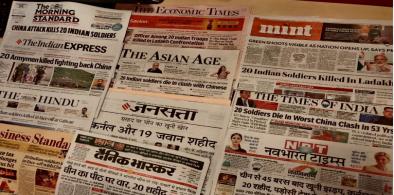
The mainstream Indian media, a section of which has mostly been a subject of the nationalist government’s monopolistic control, has often served the ends of the dominant elite

Sharply directed by Massimiliano Troiani, Sarabhai’s ‘Macbeth’ is an allegorical musical interpretation of this Shakespearean classic about power at any cost.

There is no feeling or empathy in AI. It can churn huge numbers and will be able to analyze, “think” and react to external inputs but has no wisdom and feelings. Till that happens humans will always have an upper hand.
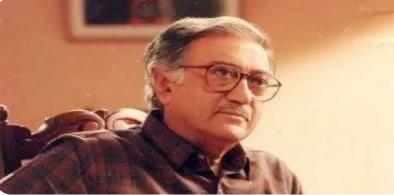
Since his was the only hit parade of its kind for at least two and half decades, Sayani became a formidable name within the Hindi cinema industry.
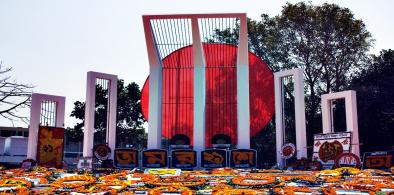
The whole world now recognizes the spirit and zeal for our culture and heritage. Bangladesh's people's sacrifices will be truly appreciated and commemorated when every nation imbibes the sense to pay proper homage to their linguistic heritage.

Facebook has become a tool for spreading hatred, sexual perversion and extremism. When people comment on sensitive topics like religion and gender, many cross the line of decency.
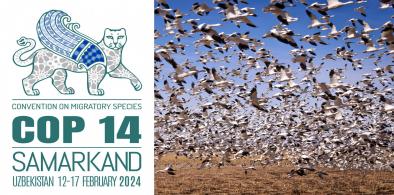
Keeping track of the migratory birds visiting the university campus, and how the impact of climate change would impact the migration of migratory birds, are among the subjects being promoted for research in universities across the globe. These include Beijing University, Royal University of Bhutan, University of SJP in Sri Lanka, HNB Garhwal University in India which are in the network of the Green TERRE Foundation.

In response to public interest litigation filed by Human Rights and Peace for Bangladesh (HRPB), Bangladesh's High Court recently issued a nine-point directive to authorities to tackle the capital's life-threatening air pollution.

During the conversations that took place afterward, the journalists discussed why Nepal’s government, press, and civil society have not been more vocal about what they termed as a genocide being enacted by Israel in Gaza.
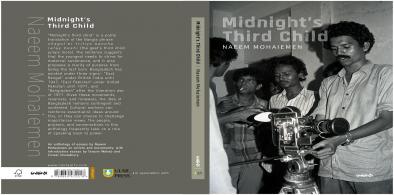
The essays cover distinct areas, exploring minority experiences and a wider Bengal, including, inevitably, West Bengal.